×
Our website is made possible by displaying online advertisements to our visitors. Please consider supporting us by whitelisting our website.

Blog

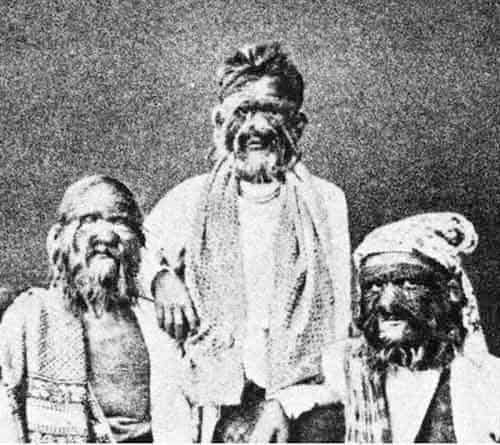
  • See the dog-faced boy. Briefing on the Cynocephalus

    See the dog-faced boy. Briefing on the Cynocephalus

    Briefing Document: Cynocephaly

    Date: October 26, 2023

    Subject: Review of the concept of Cynocephaly (dog-headed humans) in mythology, legend, and modern culture.

    Sources: Excerpts from the Wikipedia article “Cynocephaly”.

    Overview: Cynocephaly, literally meaning “dog-headedness,” refers to the widespread mythical phenomenon of beings with human bodies and the heads of canids, usually dogs or jackals. This concept appears in diverse cultures and time periods, ranging from ancient civilizations to modern media. While often depicted literally, cynocephaly is also interpreted as a symbol of transformation, otherness, or even a misunderstanding of cultural practices. This briefing will explore the key aspects of this fascinating figure.

    Key Themes and Ideas:

    1. Definition and Etymology:
    • Cynocephaly is derived from the Greek kynokephaloi, meaning “dog-headed.”
    • The term refers to a human-like body with the head of a dog, jackal, or similar canid.
    • It is distinguished from lycanthropy (werewolfism) and dogs that can talk.
    1. Ancient Origins:
    • Ancient Egypt: Egyptian deities like Duamutef, Wepwawet, and Anubis were depicted with jackal heads. These portrayals are seen as therianthropic, representing the ability to shift between human and animal forms, rather than literal hybrid beings. As Egyptologist Henry Fischer put it, “a lion-headed goddess is a lion-goddess in human form, while a royal sphinx, conversely, is a man who has assumed the form of a lion.” This may have caused Greeks to misinterpret Egyptian beliefs, thinking they worshipped literal dog-headed gods or had dog-headed people in their land.
    • Ancient Greece: Greek writers like Ctesias and Megasthenes reported the existence of cynocephali in India, living in the mountains, communicating through barking, and dressed in animal skins. Herodotus also mentions reports of similar creatures in Libya. Some Greek writers mentioned the Hemicynes, or “half-dogs”.
    1. Late Antiquity:
    • The legend of Coptic saints Ahrakas and Augani feature the saints with dog heads, demonstrating the visual and symbolic power of cynocephaly.
    • St. Augustine of Hippo debated whether cynocephali were descendants of Adam, highlighting the religious and philosophical implications of these creatures. He debated if they were human (“homo, id est animal rationale mortale“), and thus descendants of Adam.
    1. Saint Christopher:
    • Some icons of Saint Christopher in the Eastern Orthodox Church depict him with a dog’s head.
    • The origin is linked to the story of a man named Reprebus who was captured by Roman forces, who was described as large and having the head of a dog, common for the tribes he was from.
    • A separate theory is that the image of St. Christopher as dog-headed stemmed from a misreading of “Cananeus” (Canaanite) as “caninus” (canine).
    • Walter of Speyer portrayed St. Christopher as being a giant of a cynocephalic species in the land of the Chananeans. He ate human flesh and barked, but met the Christ child, was baptized, and received human form.
    1. Medieval Period:
    • Medieval East: Cynocephali appear in Christian legends where some convert and lose their “doggish aspect” after baptism. Ibn Battuta described “dog-mouthed” people who may have been a group practicing tooth sharpening.
    • He wrote, “Their men are shaped like ourselves, except that their mouths are shaped like those of dogs; this is not the case with their womenfolk, however, who are endowed with surpassing beauty.”
    • Medieval West:
    • Paul the Deacon wrote about the “Cynocephali” who “wage war obstinately, drink human blood and quaff their own gore” which may have been used as propaganda.
    • Ratramnus wrote a letter debating if they should be preached to as humans.
    • Vincent of Beauvais described a man with the head of a dog who could be both “tender” and “cruel.”
    • They are described as “healfhundingas” or “half-dogs” in The Wonders of the East, which is contained in the Nowell Codex (Beowulf).
    • In Anglo-Saxon England, wulfes heafod (wolf’s head) was a term for outlaws.
    • The Leges Edwardi Confessoris stated that an outlaw “bears a wolf’s head, which is called wluesheued by the English.”
    • In the Old Welsh poem Pa gur? they are called cinbin (dogheads), who Arthur’s men fight and defeat.
    • High and Late Medieval Travel Literature:
    • Giovanni da Pian del Carpine wrote that the armies of Ögedei Khan encountered dog-headed people near Lake Baikal.
    • Marco Polo mentions dog-headed barbarians on the Andaman Islands as cruel and “just like big mastiff dogs.”
    • The Voyage and Travels of Sir John Mandeville says dog-headed people inhabit the Nicobar Islands.
    • Christopher Columbus reported that the Taino people were familiar with cynocephali.
    • Piri Reis’ map of the New World depicts a dog-headed man fighting a monkey in South America.
    1. Modern European Speculation:
    • David Attenborough suggests that the indri lemur may have contributed to the myth of dog-headed men.
    1. Eastern Depictions:
    • China: The Chinese zodiac depicts a dog-headed human for the “dog” year. A Buddhist missionary Hui Shen described an island of dog-headed men to the east of Fusang.
    1. Modern Appearances:
    • Cynocephali appear in modern literature, especially comics, graphic novels, and role-playing games. They are often extras or have important roles in various works.
    • Examples:
    • Art Spiegelman’s Maus uses animal heads for different groups, with Americans depicted with dog heads.
    • The film Marquis portrays Marquis de Sade with a Spaniel head.
    • Mr. Peanutbutter in BoJack Horseman is a cynocephalic character with Labrador Retriever traits.
    • The Camp Half-Blood Chronicles and The Trials of Apollo books include the Cynocephali as monsters.
    • The video game series Dominions features Cynocephalians as a playable nation.
    • They serve as villains, allies, comic relief, and reflections of social commentary.
    1. Other Dog-Headed Creatures:
    • The Talmud states that before the Messiah the “face of the generation will have the face of a dog.”
    • The Greek Apocalypse of Baruch describes dog-faced beings with deer feet in the Second Heaven.
    • Saami mythology includes “Padnakjunne” (“Dog-Face”), cannibalistic humanoids with dog snouts.
    • There are modern-day legends of cryptids such as the Michigan Dogman, the Beast of Bray Road, and the “Koerakoonlane” of Estonia.

    Key Quotes:

    • “The literal meaning of cynocephaly is ‘dog-headedness’; however, that this refers to a human body with a dog head is implied.”
    • “Rather than literally depicting a hybrid human-animal state, these cynocephalic portrayals of deities conveyed those deities’ therianthropic ability to shift between fully human and fully animal states.” – On the use of canid-headed gods in Egypt
    • “Fifteen days after leaving Sunaridwan we reached the country of the Barahnakar, whose mouths are like those of dogs.” – Ibn Battuta’s description of a potential cynocephalic group.
    • “They pretend that they have in their camps Cynocephali, that is, men with dogs’ heads.” – Paul the Deacon on the image of cynocephali.
    • “For Polo, although these people grow spices, they are nonetheless cruel and “are all just like big mastiff dogs.” – Marco Polo’s account of the cynocephali.

    Analysis:

    • The concept of cynocephaly is incredibly persistent and cross-cultural.
    • It is used to represent a variety of themes, including:
    • The monstrous and “other”
    • Hybridity and transformation
    • Deities and religious symbolism
    • Moral and ethical questions of humanity
    • Social commentary
    • The portrayal of cynocephali can vary from monstrous and threatening to wise and noble, indicating its flexibility as a symbolic figure.
    • The persistence of this mythical image highlights the fascination with the boundary between human and animal.

    Conclusion: Cynocephaly is a rich and complex motif in folklore, mythology, and modern culture. It is not merely a curiosity but a symbol that reflects our ongoing preoccupation with our relationship to the natural world, the definition of humanity, and the perception of the “other.” The continued use of this image in contemporary media demonstrates the enduring power and relevance of this ancient myth.

    FAQ on Cynocephaly

    1. What is cynocephaly and what does the term literally mean?

    Cynocephaly refers to the condition of having the head of a canid, typically a dog or jackal, on a human body. The term literally means “dog-headedness,” derived from the Greek words kyno- (dog) and kephale (head). It describes a hybrid creature often found in mythology, legends, and various forms of artistic expression.

    2. In what cultures and contexts have cynocephalic figures appeared?

    Cynocephalic figures appear in a wide range of cultures and contexts across history. They are present in ancient Egypt, represented as deities like Anubis and Duamutef, often to symbolize the ability of deities to shift between human and animal forms. References to dog-headed races can be found in ancient Greece, with mentions of cynocephali in India by writers such as Ctesias and Megasthenes. Cynocephali were also present in medieval Europe and the East, often depicted as monstrous or barbaric beings. Finally, they appear in modern popular culture in literature, comics, graphic novels, games, and even film.

    3. How did ancient cultures, particularly the Greeks, interpret Egyptian deities with animal heads?

    The ancient Greeks often misinterpreted the therianthropic (part human, part animal) representations of Egyptian deities. The Egyptians depicted animal heads to symbolize the original form of a being; a lion-headed goddess was a lion-goddess in human form. However, the Greeks tended to view these figures literally, sometimes believing that Egyptians worshipped cynocephalic gods or that such beings populated Egypt. This misunderstanding contributed to broader tales of dog-headed people living in far-off lands.

    4. Who was Saint Christopher and how does he relate to cynocephaly?

    Saint Christopher is a Christian saint whose iconography in some Eastern Orthodox traditions includes a dog’s head. This depiction is not generally accepted by the Orthodox Church, with it being proscribed by Moscow in the 18th century. His association with cynocephaly stems from hagiographic narratives describing him as a large man with a dog’s head from the tribe of Marmaritae. It has also been theorized his depiction as dog-headed may have been due to a misreading of the Latin term for “Canaanite,” Cananeus, as caninus, meaning canine.

    5. How did medieval worldviews portray cynocephali, and what role did they play?

    In medieval worldviews, cynocephali were often portrayed as monstrous or barbaric creatures inhabiting distant lands, reflecting the era’s fascination with the exotic and unknown. Some medieval writers questioned whether they were human. For example, Ratramnus wrote on the duty of Christians to preach to them if human, and not if they were mere animals without souls. Cynocephali were also sometimes used to symbolize un-Christian or less-than-human qualities, as seen with Norse people at Charlemagne’s court, and as a general monstrous enemy for Arthur’s warriors. They were often perceived as being associated with savagery and cannibalism.

    6. What accounts of cynocephali are found in travel literature and how did travelers describe them?

    Medieval travelers like Ibn Battuta, Giovanni da Pian del Carpine, and Marco Polo mentioned encounters with or descriptions of cynocephali. Ibn Battuta described a group of “dog-mouthed” people, who may have been the Mentawai people who practice tooth sharpening, while Giovanni da Pian del Carpine wrote of dog-headed people living north of Lake Baikal. Marco Polo mentioned dog-headed barbarians on the Andaman Islands. These travelers often emphasized their barbarity, strangeness, and, in some cases, ferocity.

    7. How do cynocephalic characters appear in modern literature and popular culture?

    Cynocephalic characters appear frequently in modern literature, comics, graphic novels, and games. They are used in various roles, ranging from background characters to significant protagonists or antagonists. Examples include:

    • The use of dog heads to represent Americans in the graphic novel Maus
    • The villain Doghead in the comic book Ghost Rider.
    • Dog-headed creatures in RPGs like Dungeons & Dragons and Traveller.
    • The cynocephalic characters found in various video games such as Age of Mythology and Dominions 5.
    • Numerous literary examples like Terry Jones’s The Saga of Erik the Viking, Paolo Bacigalupi’s Ship Breaker trilogy, and Dav Pilkey’s Dog Man series.
    • Appearances in film and television such as in The Mummy Returns, Marquis, and BoJack Horseman.

    8. Besides the classic depiction, what other dog-headed creatures exist in various legends and mythologies?

    Beyond the classic cynocephali, various other dog-headed creatures appear in legends across the world. The Talmud references that before the arrival of the Messiah, “the face of the generation will have the face of a dog.” Other dog-headed creatures include:

    • Beings with dog-like appearances in the Greek Apocalypse of Baruch.
    • Variations of Fuxi, a Chinese deity, where he may have had a dog’s head.
    • Padnakjunne in Saami mythology.
    • Dog-headed creatures in American folklore, such as the Michigan Dogman and the Beast of Bray Road.
    • The Koerakoonlane of Estonia.
    • The Wulver of Shetland, Psoglav in Serbian mythology, Itbarak in Turkic mythology, and Adlet of Inuit mythology.
  • AI has trouble with Discordianism

    AI has trouble with Discordianism

    YouTube player

    I’d only give Google Notebook LM about a C- on comprehension on this one so We’ve added some visual aids

  • The Magic Path of Tantra from the International Nath Order

    The Magic Path of Tantra from the International Nath Order

    This post provides a summary and analysis of excerpts from “The Magick Path of Tantra” by Shri Gurudev Mahendranath, now available in our library.

     A little Introduction on the Shri from Thelemapedia: Shri Gurudev Mahendranath

    From Thelemapedia

    CategoriesGurus | Mystics | Occultists | Poets | Tantrics | Writers

    Shri Gurudev Mahendranath (April 29, 1911–August 30, 1991) was a British occultistmystic, writer, poet, sannyasisadhutantric guru, and Avadhut. He was introduced to Thelema by Aleister Crowley and espoused the tantric philosophy of Svecchachara which he considered the Sanskrit equivalent of Thelema.

    [edit]

    Biography

    Born Lawrence Miles in London, England on April 29, 1911, his interests in the area of spiritual investigation and the Pagan way of life began at an unusually early age. During his childhood, he had a number of unique experiences which began the course of his inner development and later led to his spiritual attainment and recognition by a vast public. He was initiated by his Great Aunt Madam Clay Palmer, the Witch of Rottingdean, near Brighton, England, into her line of Hereditary Witchcraft when he was in his early teens and he knew Gerald Gardiner, founder of Modern Witchcraft, or Wicca, was active in Gardiner’s Bricket Wood coven in Hertfordshire, and informed Gardiner of traditional rites, which seem to have otherwise been borrowed from Aleister Crowley’s writings.

    As a young man, Shri Mahendranath met and exchanged ideas with the advanced thinker and mystic, Aleister Crowley. Personal experiences and the advice of Mr. Crowley suggested that he might gain valuable insight by the deeper study of meditation and the I Ching oracle with Indian and other Asian Masters.

    After some years, and a detour to Australia where he was recorded as being active in Witchcraft, Shri Mahendranath travelled back across South East Asia and arrived in India on Guru Purnima, July 14, 1953. On this auspicious date, he was given initiation as a sannyasi into the Adinath sampradaya by H.H. Shri Sadguru Lokanath, the Avadhut of the Himalayas. He was later given Tantric initiation by Shri Pagala Baba of Ranchi into the Uttara Kaula sect of Northern Tantrics and became his successor.

    During his life as a sannyasi, Shri Mahendranath traveled to Ceylon, Thailand, Bangladesh, Burma, Cambodia, Laos, Malaysia, and Australia. He also received initiations as a Bhutanese Lama, Meditation Master in Soto ZenTaoism, and both Mahayana and Theravada Buddhism.

    He founded Amookos and the International Nath Order (originally Western Nath Order) to present and promote his own synthesis of the tantric teachings of the Adinath and Uttara Kaula lineages as a spiritual path for the western householder. Initiates of his International Nath Order and Amookos are known as Naths.

    Shri Gurudev Mahendranath left his body and achieved Mahasamadhi on August 301991. His last residence was his hermitage—Shambhala Tapowan—near the Vatrak river, in the state of GujaratIndia. He thought he was the last guru of both the Adi-Nath and Uttara Kaula tantric lineages, but was unaware that Pagala Baba’s guru in the Uttara Kaula line, Thakar Kalachand had also initiated a female yogini, Mahaswari Ma who had in turn initiated Kulavadhut Sampranand, who survives into the 21st Century. C.E., alongside the Westernised groups Shri Mahendranath started. He was therefore not in a position to merge the Uttara Kaula and Adi Nath traditions. The Adi Nath tradition is to rest in another Nath lineage as well as continuing in the various Westernised groups with Adi Nath origins that were begun with Shri Mahendranath’s initiatives.

    [edit]

    Writings

    Shri Gurudev Mahendranath wrote numerous articles and essays on tantra and the spiritual life, including the Twilight Yoga Trilogy, the Levogyrate Tantra, and The Londinium Temple Strain, subsequently collected under the title The Scrolls of Mahendranath. These works present the essentials of spiritual life and the tantric path in a humorous, non-dogmatic and non-sectarian manner.

    At one point your author reached out to join his order and never heard back.

    His text on The Magic Path of Tantra explores the Tantric tradition, particularly within the context of the Nath lineage, and presents a unique perspective on enlightenment, spirituality, and the nature of human existence. The document emphasizes the practical application of Tantric principles for achieving personal liberation and a more fulfilling life.

    Main Themes and Ideas:

    1. Tantra as a Way of Life, Not Just a Religion:
    • Tantra is presented not as a rigid religion but as a “way of life,” a practical approach to spiritual growth that emphasizes personal experience and transformation.
    • The author notes, “Although Tantra had a firm spiritual basis, it was not so much a religion as a way of life.”
    • Historically, Tantra is linked to the Kaula and Natha traditions, and these terms are often used synonymously.
    • The emphasis is on creating a lifestyle that integrates spiritual practices into daily living.
    1. Enlightenment Through Orgasm:
    • A central tenet of the text is the idea that enlightenment can be achieved through the intense experience of a “super orgasm” attained at the culmination of sexual intercourse.
    • The author explains, “The supreme moment when the mind awakens to this realization can also be attained at the moment (or seconds after) the attainment of a super orgasm at the termination of sexual intercourse.”
    • This attainment is not seen as solely a physical experience, but a “mind process and transformation”.
    • This requires a “trained shakti” (female partner), as enlightenment is considered an entitlement for both partners.
    • The text suggests an equality between partners, where both are equally valued on the spiritual path, “Although they both accept a standard of sexual equality, ability and entitlement; yet still the yogi will treat, worship, and think of his shakti as his goddess and a personification of the Earth Mother.”
    1. Rejection of Dogma and Routine:
    • The text criticizes passive acceptance of conventional life, urging readers to be active agents in their own lives and destiny.
    • The author states, “men and women are not machines, animals, or robots. They are not pawns in a cosmic game or order, nor must they accept the face value of the cards dealt out by the “Dealer””.
    • A central idea is to escape the “routine” that limits the “Think Power” and to cultivate the ability to control one’s life and circumstances.
    • Tantric tradition encourages an approach that values personal insight and practical experience over blind adherence to rules or dogmas.
    • “A Tantrik is not dedicated to serve God or religion. The only goal is to attain Enlightenment.”
    1. The Role of “Think Power” and Will:
    • The text emphasizes the importance of mental discipline, “positive powerful ‘think'” and the power of the will in achieving transformation.
    • Tantriks develop this “think power” through meditation, breath control, and a “relaxed attitude to the world” to create their own powerful energies and mantras.
    • “They energized the will and made things happen.”
    1. The Three Super-Psychic Faculties:
    • The text places a high value on the development of “Insight, Intuition, and Imagination.”
    • These faculties, cultivated through meditation, are considered essential for achieving understanding and union with the “Cosmic Purusha” (Cosmic Spirit).
    • These faculties enable the practitioner to determine errors in texts, and even create their own texts, mantras and rituals.
    • “The faculties of Insight, Intuition, and Imagination are the building blocks on which we build our occult world and magick way of life.”
    1. Rebirth and Liberation:
    • The text addresses the concept of rebirth, stating that both human and animal rebirths are a source of “pain and suffering” on a sensory material plane.
    • The goal is to end the cycle of rebirth through enlightenment.
    • The author states “The Tantrik, Nath, or Kaula way of life is based on the profound knowledge that men and women are not machines, animals, or robots.”
    • Tantra posits that liberation is achieved through meditation, breath control, and, uniquely, the experience of a “super orgasm,” which reunites the spirit with the Cosmic Spirit.
    1. The Amoral Nature of Tantra:
    • Tantra is presented as “amoral,” meaning that its practices and principles exist outside traditional moral frameworks.
    • The text suggests a neutrality in thinking, which transcends “discrimination.”
    • The goal is to move beyond the constraints of societal norms, allowing individuals to live more authentically.
    • The text suggests “The things we do or accept in its unique pattern are neither moral nor immoral.”
    1. The Author’s Personal Journey:
    • The author interweaves personal experiences to illustrate the path and principles of Tantra.
    • He shares his own experiences in achieving enlightenment through his “second great experiment in attaining realization” with the help of his female partner Shakti.
    • His experiences in the British Army, various spiritual locations, and his eventual time in India are cited as formative experiences in the development of his Tantric understanding.
    • The author’s interactions with gurus and his eventual initiation into the Uttara Kaula sect further reinforce the idea of direct transmission and lineage within Tantric practice.
    1. The International Nath Order
    • The text closes by mentioning the International Nath Order, which is presented as a vehicle for continuing and disseminating the teachings of the Nath tradition.
    • The INO is described as not-for-profit, and is based on the principles set forth in the authors works, particularly the Twilight Yoga Trilogy.

    Key Quotes:

    • “Tantra, as a way of life, is the golden thread which runs through all the manuscripts I have written for the International Nath Order…”
    • “From the Cosmic Spirit we came, to the Cosmic Spirit we must return.”
    • “The relationship of a yogi with his shakti is also unique. Although they both accept a standard of sexual equality, ability and entitlement; yet still the yogi will treat, wor-ship, and think of his shakti as his goddess and a personification of the Earth Mother.”
    • “The Tantra or Nath way of life can best be described as a state of mind. In no way can it be mistaken for an agglomeration of rules, morals, or prohibitions.”
    • “The International Nath Order has no rules, superstitions, or dogmas.”
    • “Initiation has its own specific vibes from which peculiar and dynamic experience explodes.”

    Conclusion:

    “The Magick Path of Tantra” presents a distinctive view of Tantra, emphasizing personal experience, the transformative power of orgasm, and a rejection of restrictive dogma. The text encourages readers to actively engage with their lives and develop their own “Think Power” to achieve liberation and a more fulfilling existence. The author positions himself as a guide, drawing upon personal experiences and lineage to offer insights into the Tantric path. The International Nath Order serves as the organization committed to maintaining and spreading these teachings.

    The Magick Path of Tantra: A Study Guide

    Quiz

    Instructions: Answer each question in 2-3 sentences.

    1. What is the main focus of the text, “The Magick Path of Tantra?”
    2. According to the text, what was the original term for what is now called “Tantra,” and what does “Tantra” mean literally?
    3. What is the ultimate spiritual goal in Tantra, and what two methods does the text suggest for achieving it?
    4. Describe the ideal relationship between a yogi and his shakti, according to the text.
    5. What are the three super-psychic faculties that are important to the Tantrik path?
    6. How does the text describe the Tantric way of life in relation to rules and morals?
    7. Explain the significance of Mehmadabad in the author’s spiritual journey.
    8. Briefly describe the author’s experience with Shakti and how it led to a significant moment of enlightenment.
    9. Why does the author consider initiation to be essential to progress on the Tantric path?
    10. What challenges did the author face after receiving initiation from Pagala Baba, and what was the ultimate outcome of those challenges?

    Quiz Answer Key

    1. The text focuses on the Tantrik way of life as a path to enlightenment, emphasizing the role of the supreme orgasm, meditation, and a unique relationship between the yogi and his shakti. It also explores the philosophy, practices, and historical context of Tantra within the Nath tradition.
    2. The original terms for Tantra were “Kaula” or “Natha.” The word “Tantra” literally means a treatise, particularly one dealing with occult and esoteric subjects.
    3. The ultimate spiritual goal in Tantra is self-realization (Atma Jnan) or enlightenment (Moksha), which involves uniting with the Infinite Cosmic Spirit (Purusha) and ending rebirth. The text suggests that this can be achieved through meditation, breath control, and the attainment of a super orgasm during sexual intercourse.
    4. The ideal relationship between a yogi and his shakti is based on equality, ability, and entitlement, where the yogi treats and worships his shakti as a goddess and personification of the Earth Mother. This relationship serves as a medium for spiritual attainment and enlightenment.
    5. The three super-psychic faculties important to the Tantric path are Insight, Intuition, and Imagination. These faculties, developed through meditation, enable the mind to awaken to understanding, achieve union with the Cosmic Purusha, and end rebirth on the Earth Dimension.
    6. The Tantric way of life is described as a state of mind that is amoral, free from rules, morals, and prohibitions. It provides guidelines for those seeking to avoid trouble and pain, while emphasizing that individuals are free to think and act as they wish.
    7. Mehmadabad was the author’s home for fifteen years and a place where he experienced a sense of peace and tranquility, unlike any other location in India. It was also the location where the author met Shakti, and ultimately had an enlightenment experience.
    8. The author’s experience with Shakti involved a complex relationship, marked by a shared experience with sex and Tantra. It culminated in a moment of enlightenment, triggered by a super orgasm, and it was similar to the experience the author had previously in London.
    9. The author considers initiation essential because it opens up new fields of investigation and provides a deeper insight into origins and motives. Initiation is described as a dynamic and explosive experience that aids progress on the occult path.
    10. After receiving initiation from Pagala Baba, the author had to navigate a challenging situation that included two conflicting requests, and an attempt to make him a “guru scene” by a wealthy Sikh. Ultimately, the author chose to leave for Benares, carrying a note of introduction from Pagala Baba to a Sindi Mahant and other Tantriks living there.

    Deeper questions for thought:

    1. Discuss the role of sexual energy and the orgasm in Tantric practice, as described in “The Magick Path of Tantra.” How is this view different from more conventional understandings of sexuality?
    2. Analyze the significance of the concepts of “rebirth” and “enlightenment” in the text. How do Tantriks seek to transcend the cycle of rebirth, and what does enlightenment mean in this context?
    3. Examine the importance of the three super-psychic faculties (Insight, Intuition, and Imagination) within the Tantric tradition. How do these faculties contribute to the Tantrik’s ability to create their own reality?
    4. Explore the author’s personal journey toward self-realization, focusing on key experiences like his meditation in various locations, his encounter with Shakti, and his initiation by Pagala Baba. What do these experiences suggest about the path to enlightenment?
    5. Evaluate the author’s claim that the Tantric way of life is amoral, free from rules, morals, and prohibitions. Is it possible to live a spiritual life without conventional morality?

    Frequently Asked Questions on the Magick Path of Tantra

    • What is Tantra, and how is it different from religion? Tantra, as discussed in this text, is not primarily a religion but a way of life. It’s a tradition rooted in ancient India and associated with the terms Kaula and Natha. While it has a spiritual basis, it’s less about formalized worship and more about integrating spiritual practices with daily existence. It focuses on esoteric subjects like astrology, medicine, numerology, and the spiritual dimensions of sexuality. It aims for enlightenment through practices like meditation, breath control, and the harnessing of sexual energy. Tantra emphasizes personal experience and development over adherence to rigid dogma or moral rules.
    • What is the significance of the “supreme orgasm” in Tantra? In Tantra, the supreme orgasm experienced during sexual intercourse, ideally achieved simultaneously by both the yogi and his shakti, is considered a powerful catalyst for spiritual awakening. It’s not merely a physical act but a pathway to self-realization and union with the Cosmic Spirit. The text emphasizes the need for a “trained shakti” who understands the spiritual dimensions of sex, as it’s not simply a sensory pleasure but a means to an enlightened state. This approach does not advocate for promiscuity or casual sex but a focused and spiritually oriented practice within a specific relationship.
    • How does Tantra view rebirth and what is its goal regarding it? Tantra views rebirth on the earth plane as a cycle of pain and suffering that one should strive to overcome. The goal is not simply to be reborn as a god, which is considered temporary, but to end the cycle of rebirth altogether and achieve reunion with the Cosmic Spirit (Purusha). This is accomplished through practices that lead to self-realization, such as meditation, breath control, and the spiritual use of sexual energy. The ultimate aim is to transcend the limitations of the sensory planes of existence and reach a higher dimension.
    • What are the three super-psychic faculties emphasized in the Nath Tradition? The three super-psychic faculties essential to the Nath tradition are Insight, Intuition, and Imagination. These faculties, developed through meditation, are the building blocks for both occult and magical practices and personal spiritual growth. They enable individuals to not only understand the cosmos but to also create their own realities and transform the world around them. Developing these faculties empowers individuals to move beyond the confines of conventional thinking and tap into deeper sources of understanding and creativity.
    • How does the Nath tradition view rules, morals, and prohibitions? The Nath tradition does not emphasize rigid rules, morals, or prohibitions. It acknowledges that human beings are capable of living without them. Guidelines provided are intended to steer one away from potential suffering. However, individual freedom to think and act as one wishes remains essential. The emphasis is on internal transformation through the development of one’s thinking power and personal agency. The goal is not to follow external laws blindly but to cultivate a state of mind that leads to spiritual freedom and understanding.
    • What is the process of initiation in the Uttara Kaula sect, and why is it important? Initiation, or diksha, in the Uttara Kaula sect, as described in the text, involves a specific transmission of energy and knowledge from a guru to a disciple. It is not a mere formality but a dynamic experience that can open up new avenues of spiritual growth. The process usually includes the receiving of mantras and spiritual guidance. The text explains it as a way to receive not only information but a deeper insight into occult origins and motives. The author emphasizes the personal and transformative nature of initiation, which supports further development in the occult world.
    • What is the role of the International Nath Order? The International Nath Order is a not-for-profit organization established to disseminate the teachings of the Nath tradition. The order is rooted in the fundamental principles found in the author’s writings and aims to help others build a more fulfilling spiritual experience. They focus on higher wisdom, meeting places, and the continuation of a spiritual lineage through initiation practices. The order seeks to offer access to practical methods for developing one’s own path to enlightenment and expanding one’s spiritual understanding.
    • What is the meaning of a “cosmopolitan” identity in this context? The text frames “cosmopolitan” not as simply being a global citizen, but as someone who is not limited by nationalistic ideas or social constraints. It describes it as freedom from labels, locations, and the expectations to conform to the patterns and ideas of a country or region. It reflects the idea that the world is a city and the cosmos is the land. The text challenges the need for people to conform to social norms. Instead, it emphasizes the ability to think for oneself and transcend the limits of cultural and political boundaries in one’s pursuit of spiritual truth.

    Glossary of Key Terms

    Atma Jnan: Self-realization, the understanding of one’s true nature, and an essential step towards enlightenment in Tantra.

    Diksha: Initiation into a spiritual tradition or path; involves a formal ceremony or transmission of knowledge.

    Kaula: An early term for what is now known as Tantra, referring to a specific lifestyle and spiritual practice.

    Kleshas: The five pain-bearing obstructions or causes of suffering, identified in yoga philosophy: ego, ignorance, repulsion, attachment, and clinging to life.

    Kutir: A small hut or simple dwelling, often used as a place of retreat and meditation.

    Mahasamadhi: The conscious and intentional departure of a yogi’s soul from their physical body; the final step towards complete enlightenment.

    Moksha: Liberation or enlightenment; the state of freedom from the cycle of rebirth and suffering.

    Natha: Another early term for Tantra, often associated with a specific lineage or tradition.

    Parampara: A traditional lineage or succession of teachers, passing down spiritual knowledge and practices.

    Purusha: The Cosmic Spirit or Conscious Thinking Power that permeates the universe, according to Nath philosophy.

    Shakti: The divine feminine energy, often seen as a goddess, and the counterpart to Shiva’s masculine energy. In Tantra, it also refers to the female partner in spiritual practice.

    Shmashan: A cremation ground, a place often used by sadhus for meditation and contemplation on death.

    Sannyas/Sannyasi: The renunciation of worldly attachments and the adoption of an ascetic way of life; a sadhu is a sannyasi.

    Uttara Kaula: A specific sect or lineage within the Tantric tradition, often referred to as the Northern Tantric sect.

  • Raja Yoga by Swami Vivekenanda

    Raja Yoga by Swami Vivekenanda

    YouTube player

    Book available in the library above to subscribers

  • YOGAPUNX discussion of Konx Om Pax

    YOGAPUNX discussion of Konx Om Pax

    YouTube player

    Okay, here is a detailed briefing document summarizing the main themes and important ideas from the provided excerpts of Aleister Crowley’s “Konx Om Pax”: The text is available in the library.

    Briefing Document: Aleister Crowley’s Konx Om Pax

    Overview:

    Konx Om Pax is a collection of essays and stories by Aleister Crowley that explores themes of truth, illusion, morality, and spiritual awakening through a unique and often provocative lens. Crowley utilizes diverse forms including allegorical tales, philosophical dialogues, and poetic expressions. The work is characterized by a rejection of conventional morality and dogma, emphasizing individual experience and the transcendence of dualities. The text is filled with esoteric symbolism and references, including Qabalah, Tarot, and Eastern religions, which serve to illustrate Crowley’s unique worldview. The overall tone is challenging, irreverent, and often satirical, aiming to provoke the reader into a deeper understanding of themselves and the universe.

    Main Themes & Key Ideas:

    1. The Transcendence of Opposites (Konx):
    • Central to Crowley’s philosophy is the concept of “Konx,” which represents a state beyond the duality of opposites (A or not-A, good or evil, true or false). He states: “A thing is not necessarily A or not-A. It may be outside the universe of discourse wherein A and not-A exist.”
    • This idea is directly tied to the LVX of the Rosicrucians, suggesting an illumination that transcends the limitations of conventional thinking.
    • He uses the analogy of spherical trigonometry for those who don’t understand: “But to those who do not, it must (I fear) remain as obscure and ridiculous as spherical trigonometry to the inhabitants of Flatland.”
    1. The Nature of Truth and Lying:
    • Crowley challenges conventional notions of truth, arguing that truth is subjective and dependent on one’s perspective and level of understanding. “Let Mr. Straightforward and Mr. Veracity and Mr. Scorn-to-tell-a-lie and Mr. George Washington Redivivus reflect that there are people in the world with sensoria sighted to a different range from themselves! There is such a thing as a point of view.”
    • Lying is not seen as inherently wrong; context and intent are paramount. “If my truth is not the truth of the Divorce Court, it is because my world (thank God!) is not the Divorce Court.”
    • Truth is intimately connected to one’s purpose and Work, stating that “This is Truth, that one should be concerned with one’s own business, and with nothing else whatever.”
    • He stresses that the Adept, through their advanced perception, might appear to lie to those of a lower consciousness: “Know that the greater the Adept, the more truthful; should he—in error—speak, the more must he appear a liar to those of his fellows who hear his voice.”
    1. Rejection of Conventional Morality & Dogma:
    • The text is highly critical of organized religion and traditional morality, often depicting them as hypocritical or ignorant. He satirizes people: “St. Paul spoke up on the Hill of Mars To the empty-headed Athenians; But I would rather talk to the stars Than to empty-headed Athenians…”
    • He attacks the “pedant” with his “Scylla of Ay and the Charybdis of Nay,” and advocates for “infinite skepsis”: “Do not defend thy Christ; attack the place of thine opponent; challenge all his premisses, dispute the validity of his most deepest axioms, impugn his sanity, doubt his existence!”
    • He advocates for the breaking of conventional rules: “As above so beneath! said Hermes the thrice greatest. The laws of the physical world are precisely paralleled by those of the moral and intellectual sphere. To the prostitute I prescribe a course of training by which she shall comprehend the holiness of sex.”
    1. The Path to Illumination (The Great Work):
    • Spiritual enlightenment is not achieved through passive faith but through active engagement with the self and the world.
    • He talks about the need for action, such as in the allegorical tale The Wake World, as opposed to simply dreaming or passively playing: “The difference is that we are going through. Most people play without a purpose; if you are travelling it is all right, and play makes the journey seem shorter.”
    • This journey involves confronting and integrating the shadow self and the “pairs of opposites” to reach a state of union with the Divine, an idea he refers to as “Samadhi.”
    1. Individualism and Self-Reliance:
    • The texts repeatedly emphasize the importance of individual will, challenging readers to follow their own path, rather than conforming to societal pressures.
    • He uses the idea of a personal “True Will”: “The Kingdom of Heaven is like unto the Man in the Moon,” suggesting each person is looking at things through their unique individual experience.
    • The poem The Symbolists emphasizes the unique nature of individual paths to enlightenment: “To yourselves be slaves and masters; stand or fall to self alone; Human ethics will not loosen our Astarte’s crimson zone. You will never fit your forehead with your father’s fancy hats: You know more about salvation that the Reverend Robert Rats.”
    1. The Nature of Reality as Illusion (Maya):
    • The text suggests that reality as perceived by most people is a construct, an “illusory veil of the Indicible Arcanum.”
    • This idea is explored through his critique of language and the limitations of human perception. He writes, “If all’s illusion, gentle youth, All is the enemy of Truth.” and then responds: “I do not think you prove it quite That truth and lies are opposite.”
    • This also includes the idea of understanding that the world and everything in it is “Maya”, an illusion in this context: “Mr. Jones, said the doctor, is (on this illusory plane of Maya) one of the wonders of the world. He is never seen or heard, felt or smelt. Nor hath he been at any time tasted of any.”

    Specific Examples & Notable Passages

    • “The Wake World”: This allegorical tale is a journey through different states of consciousness, filled with symbolic imagery that can be linked to Qabalistic and alchemical concepts. The protagonist Lola’s journey through the palace illustrates the spiritual path, with each “House” representing a different level of understanding and initiation, and challenges her ideas of the nature of truth: “…really only the First House where his Father lived was really a wake-House, all the others had a little sleep-House about them, and the further you got the more awake you were, and began to know just how much was dream and how much wake.”
    • “Ali Sloper; or, The Forty Liars”: This section utilizes a satirical dramatic format to explore the nature of truth and falsehood through the dialogues of various characters. It explores the problem of language and the limitations of conventional definitions in a humorous way. “Listen to the Jataka, O child of wonder and the innocent eyes, and if you yell you will be deposited in the coal-hole.”
    • The Poem “Ovariotomy”: This poem reflects Crowley’s exploration of bodily experience and the nature of truth through the lens of the physical body. It challenges conventional notions of what is beautiful or grotesque, and posits that the experience itself, with all its flaws, has value in itself: “O fool! to deem dissection truth And paint and patches but a blind! The enthusiasm of a youth Is worth the sage and cynic mind.”
    • The Poem “The Return of Messalina”: This poem pushes back on Christian values, and shows that even in supposed “sin”, the person can be considered a hero: “Hear the roar of after aeons that acclaim me Messaline!”
    • The recurring theme of “There is none other God than He”: This chant, delivered from varied sources (including the Devil himself), suggests a pantheistic vision where all things are expressions of a single divine source. It emphasizes the unity behind apparent duality: “The riddle’s simple—here’s the key! There is none other God than He.”
    • The Story of the Suspicious Earl: This tale illustrates the dangers of fixed ideas and interpretations, showing that they are self-created prisons. It makes the point that “Every one must trust somebody.”

    Conclusion:

    Konx Om Pax is a complex and challenging text that demands active engagement from the reader. Crowley’s ideas, often presented in a provocative and satirical manner, aim to dismantle conventional thinking and encourage a more individual and experiential approach to understanding life and the universe. The text is an exploration of the nature of truth and reality itself, urging the reader to question their own assumptions and to seek enlightenment by embracing the entirety of human experience, transcending perceived polarities. It’s a call to action, encouraging the reader to embrace their “True Will,” and to walk their own path towards spiritual realization.

  • YOGAPUNX discussion of Raja Yoga

    YOGAPUNX discussion of Raja Yoga

    YouTube player

    Google can instantly generate podcasts now from any uploaded content. Let me know what you think.

  • Everybody loves the Ape of Thoth

    Everybody loves the Ape of Thoth

    YouTube player

    Nobody would have become followers of “Jesus” at all if it weren’t for the mockeries of Apollonius.

  • Highly Powerful Magical Item Added to the Shop

    Highly Powerful Magical Item Added to the Shop

    If you use balms or salves in your magic or healing, I have the most potent available.