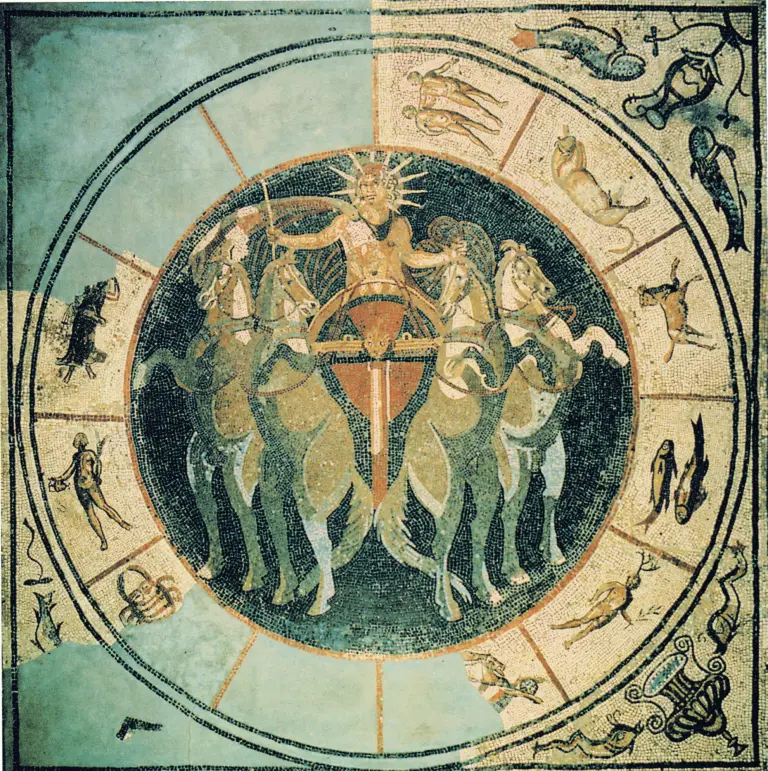
Over at kemetic.guru we’ve added another tool for your deep research habits. It’s an all in one code/encode/calculate Gematria tool capable of turning plaintext into cipher text as well as a tool for keyed Vigenère Cipher. For instance if you come across something like the Royal Arch Cipher in your reading, this will help you decode it. (Installable Cipher fonts also available in our Library for site members.) Or you want to write something for the initiated, well this tool’s got you covered, and it is privacy oriented, we do not log the actual text at any point. Sorry currently not working in mobile browsers as far as I know. For now you’ll have to fire up a laptop or desktop to use it. A helpful hint, if your browser isn’t rendering a couple of the Cipher Alphabets, install the open source Symbola fonts, that will add all the Unicode characters your computer is missing. May be useful for other projects.
Category: tarot
-
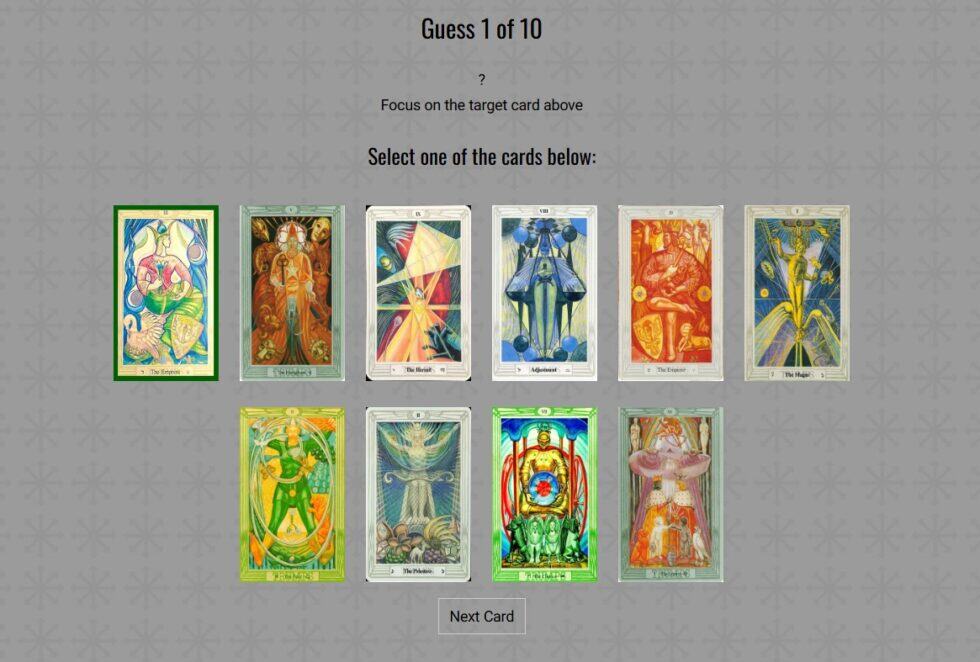
New Free Psi Test right here at Senseworldcafe
If you take a look up at the top menu we’ve added another feature to the site! A free psi ability test that will either show precognitive ability or ability to influence a random number generator. Personally, whenever I’ve tried legitimate tests like this in the past I’ve scored a negative psi ability consistently , scoring well below chance. We are gathering data and hoping that at some point we can do a write-up so we are asking for a mandatory anonymous nickname and optionally birthdate and gender. We are also gathering loose geolocation data, which will not be shared or sold. We are only interested in a study of whether this ability exists, can be proven, and has variations in populations.
In an experimental design I though of years ago, I decided to use Tarot cards rather than Zener cards or random images to see if the richer symbolism, inherent numbers, or any personal connection to an Archetypal symbol might influence outcomes. You are free to take the test as much as you’d like, maybe tracking your own improvement, or noting successful conditions. There are a couple cosmetic bugs still to be worked out, but it’s fully functional right now, so We thought we’d go live. Enjoy! Any questions or comments can be shared via the contact form on the homepage or on the subreddit.
-

Paywalling content to be reserved for YOGAPUNX
You may notice that some of the deeper mystical and magical content of the site has now been moved behind a paywall. I can no longer solely bear the cost of your mystical education myself and am in need of support of the sites and the newly formed Kemetic Church of Ra. The items paywalled, can only be understood by those with a mystical practice anyway or some degree of initiation. For now, the library which contains many more initiated secrets will remain free temporarily while those that recognize there is a time limit for that generosity should not be surprised when that gets paywalled as well. If you’d like to keep resources like these available you must contribute and I can no longer tolerate the entire burden of the free rider problem myself. If this content is worth something to you, you can sign up here.
-

Alchemy briefing doc from the Mystic’s Manual
Briefing Document: Alchemy and Mystical Transformation
I. Core Alchemical Concepts & Processes
- The Great Work (Magnum Opus): Alchemy is not solely about transmuting base metals into gold, but also about the spiritual transformation of the alchemist themselves. This transformation is often referred to as the “Great Work” which is the ultimate goal. As stated in the document, the alchemist’s goal is a medicine universal, both for prolonging life and curing all diseases.
- “He who hath once, by the blessing of God, perfectly attained this Art…he may by this Art make precious stones and gems, such as cannot be paralleled in Nature for goodness and greatness. Thirdly and lastly, he hath a Medicine Universal, both for prolonging life and curing of all diseases” (Alchemy-Rediscovered-And-Restored)
- Transmutation: Metals are seen as being in a state of progression towards gold, the perfect metal, and the alchemist seeks to accelerate this process.
- “all other metals are on the way towards eventually becoming gold; thus the alchemist merely does by art what nature does slowly through the years.” (Alchemy-Rediscovered-And-Restored)
- The Philosophers’ Stone: The ultimate goal of the Great Work and the agent of transmutation and healing.
- “Know that this matter I call the stone, but it is also named the feminine of magnesia, or the hen, or the white spittle, or the volatile milk, the incombustible oil… which I have nevertheless signified to the wise by one only epithet, viz., the Philosophers’ Stone.” (Alchemy-Rediscovered-And-Restored)
- Key Operations: There are seven major operations in the alchemical process: Calcination, Dissolution, Separation, Conjunction, Fermentation, Distillation, and Coagulation (Dictionary of Alchemy). These are processes in both the material and spiritual realms, with the spiritual often taking primacy.
- The Three Principles: Alchemists saw the elements as manifestations of three underlying principles: Salt, Sulphur, and Mercury. These principles also have symbolic meanings in spiritual development.
- “”The disposition sought after by the philosophers, O Son, is but one in our egg, but this in the hen’s egg is much less to be found…Know, therefore, that in the hen’s egg is the greatest help with respect to the proximity and relationship of the matter in nature for in it there is a spirituality and conjunction of elements, and an earth which is golden in its tincture.” (Alchemy-Rediscovered-And-Restored)
- “There were two which were superficial… and the third essential to Sol and Luna only, not to the Stone; for nature would produce these two out of it by artificial decoction… [These distinctions depend on ignorance, after throwing off which the individual is one with the highest.” (Hidden Symbolism of Alchemy and the Occult Arts)
- Planetary Correspondences: Each of the seven traditional metals is associated with a planet: Gold (Sun), Silver (Moon), Mercury (Mercury), Tin (Jupiter), Iron (Mars), Copper (Venus), and Lead (Saturn). These associations are symbolic and indicate different energies and qualities.
- “Thus Gold is termed the Sun, Silver ” Moon, Mercury ” Mercury, Tin ” Jupiter, Iron ” Mars, Copper ” Venus, Lead ” Saturn.” (Alchemy-Rediscovered-And-Restored)
- The Prima Materia: The starting material for the Great Work, often described as formless and containing all possibilities, but it is a mystery as to what this actual substance may be. It is also sometimes referred to as urine.
- “The prima materia is also called urine.” (Hidden Symbolism of Alchemy and the Occult Arts)
- Incest: Often found in alchemical texts, particularly during the stage of conjunction. This symbolizes the union of opposites, of the internal world, and the external world in order to create something new.
- “…and regulate your work well, and marry consanguineous matter with masses acting consanguineously….” [Incest.] (Hidden Symbolism of Alchemy and the Occult Arts)
II. Symbolism and Interpretation
- Symbolic Language: Alchemists employed a highly symbolic language to conceal their secrets and to convey deeper spiritual meanings.
- “It is a peculiarity of the alchemistic authors to use interchangeably” (Hidden Symbolism of Alchemy and the Occult Arts)
- Dream and Myth Interpretation: Dreams and myths are seen as valuable sources of symbolic insight into the unconscious and the inner processes of transformation.
- “The earth trembles at their attempts to free themselves. Thus the titanic forces of the soul strive powerfully upward. And as they may not live in the light of consciousness they rave in darkness. They take the main part in the procreation of dreams, produce in some cases hysterical symptoms, compulsion ideas and acts, anxiety neuroses, etc. The examination of these psychic disturbances is not without importance for our later researches.” (Hidden Symbolism of Alchemy and the Occult Arts)
- Psychological Interpretations: Alchemical processes and symbols can be understood as metaphors for psychological processes, particularly those related to individuation and the integration of the shadow self. The unconscious is a place of hidden potential that can drive human behavior if left unattended.
- “The innermost lies in ourselves and is only fashioned and exercised upon persons of the external world.” (Hidden Symbolism of Alchemy and the Occult Arts)
- “We must sublimate our impulses.” (Hidden Symbolism of Alchemy and the Occult Arts)
- Rebirth: The concept of the death and rebirth is a key idea in alchemy. This represents the transformation of the alchemist as they go through the Great Work. This often includes the imagery of being inside a monstrous being, and then breaking out of it.
- “In cases where the uterus is represented by the body cavity of a monster the rebirth occurs most frequently by a spitting forth. Also the breaking forth by means of tearing apart the uterus occurs, and in every case it has the significance of a“powerfully [316] tearing of oneself away,” the burning of bridges behind one, the final victory over the mother.” (Hidden Symbolism of Alchemy and the Occult Arts)
- Opposites: The union of opposites (e.g., Sun and Moon, male and female) is a central theme, reflecting the alchemical goal of integration.
- “the masculine is truly the heaven of the feminine, and the feminine is the earth of the masculine.” (Alchemy-Rediscovered-And-Restored)
III. Spiritual and Mystical Dimensions
- The Divine Within: Alchemy emphasizes the importance of self-knowledge and the discovery of the divine spark within. It is from within that an individual is able to realize the Great Work.
- “Therefore let the high inquirers and searchers into the deep mysteries of nature learn first to know what they have in themselves, and by the divine power within them let them first heal themselves and transmute their own souls, … if that which thou seekest thou findest not within thee, thou wilt never find it without thee.” (Hidden Symbolism of Alchemy and the Occult Arts)
- Introversion: The process of introversion, turning inward, is essential for spiritual transformation, allowing one to access the inner world. Introversion is not only seen as a personal experience, but one that is vital for understanding larger concepts.
- “The term“ introversion” comes from C. G. Jung. It means sinking into one’s own soul; the withdrawal of interest from the outer world; the seeking for joys that can be afforded by the inner world. The psychology of the neuroses has led to the concept of introversion, a province, therefore, which principally treats of morbid forms and functions of introversion.” (Hidden Symbolism of Alchemy and the Occult Arts)
- Union with the Divine (Unio Mystica): The alchemical process culminates in a mystical union with the divine, transcending duality and achieving a state of wholeness. The goal of transformation is union with God.
- “So that the spirit clearly bore witness and gave me to understand that nothing could make me worthy of this marriage with the Lamb [unio mystica] except an absolute death, since he wedded only the maidenly spirit, to be one flesh with him, [H in H, F against F, etc.] and by so doing changed it into his own pure manhood. [Humanity.]” (Hidden Symbolism of Alchemy and the Occult Arts)
- The Importance of Silence and Secrecy: Alchemists often emphasize the importance of keeping their secrets from the unworthy, emphasizing that the pursuit is not one that is for those whose goal is wealth.
- “Above all thou must enter a bond of silence and vow to reveal it to no one outside of your fellow learners, who are called together near and with you, to work at this very art. (Hidden Symbolism of Alchemy and the Occult Arts)
IV. Key Figures
- Hermes Trismegistus: A legendary figure associated with esoteric wisdom and the author of the Emerald Tablet. He is a central figure to many alchemical texts, as they are meant to reflect a part of his wisdom.
- “And because of this they have called me Hermes Tristmegistus since I have the three parts of the wisdom and Philsosphy of the whole universe.” (Emerald Tablets of Hermes)
- Basilius Valentinus: A Benedictine monk and influential alchemist, considered a father of modern chemistry. He emphasized the spiritual component of alchemy and left behind a collection of writing on his practices.
- “Whatever his identity, Basil Valentine was undoubtedly a great chemist, and the originator of many chemical preparations of the first importance.” (Alchemy-Rediscovered-And-Restored)
- Paracelsus: A physician and alchemist who emphasized the importance of observation and the interconnectedness of microcosm and macrocosm. He also focused on the application of alchemy to healing.
- “Paracelsus’s great legacy in the history of medicine was the promotion of the direct study of nature to observe and learn in contrast to the old approach of only consulting traditional texts of authorities.” (Dictionary of Alchemy)
- C.G. Jung: A Swiss psychiatrist who explored the psychological symbolism of alchemy, seeing it as a map of the individuation process.
- “Jung’s work on alchemical symbolism has significantly influenced modern understanding of its psychological depth and its relevance to the process of personal growth and transformation.” (Dictionary of Alchemy)
V. The Emerald Tablet
- Core Principles: The tablet’s famous maxim, “As above, so below,” emphasizes the correspondence between the macrocosm and the microcosm. This establishes that the universe and a person have a related understanding of life. The tablet also states that all things come from the One.
- “And since all things exist in and eminate from the ONE Who is the ultimate Cause, so all things are born after their kind from this ONE.” (Emerald Tablets of Hermes)
- The Process: The Emerald Tablet outlines a process of separation, purification, and reunification, which serves both on a material level and a spiritual one. The tablet speaks to the importance of separating the earth from fire, and the need to have a connection between the above and below, thus creating a unity.
- “Seperate thou ye earth from ye fire, ye subtile from the gross sweetly wth great indoustry.” (Emerald Tablets of Hermes)
- “It ascends from ye earth to ye heaven again it desends to ye earth and receives ye force of things superior inferior.” (Emerald Tablets of Hermes)
VI. Key Themes and Observations
- Inner Transformation: The primary focus of alchemy is on inner transformation and spiritual growth, rather than solely on material gain.
- Dual Nature of Reality: The alchemical process highlights the dual nature of reality, with an emphasis on balancing and integrating opposites.
- The Power of Symbolism: Symbols are seen as keys to unlocking deeper levels of understanding and facilitating transformation.
- The Interconnectedness of All Things: The idea that everything is connected, from the cosmos to the human being, and that a change in one area has impact in another, is important. This is most explicitly stated in the Emerald Tablet.
- The Power of Introspection: The process of looking into oneself is vital for personal transformation, allowing one to have a better understanding of their place in the world, and their goals.
Conclusion:
These sources paint a rich picture of alchemy, not just as a precursor to modern chemistry, but as a profound spiritual discipline focused on the transformation of the individual and the realization of the divine within. It is about the journey into the inner self as much as it is about the external world and the materials used in practices. The core alchemical processes and concepts are highly symbolic, intended to unlock the depths of the unconscious mind and bring about spiritual evolution.
Alchemy – A Journey of Transformation
Key Themes:
- Spiritual Transformation as Core Goal: The most significant theme is that alchemy’s primary aim is not literal transmutation of base metals into gold, but the spiritual transformation of the self. As the text states, “In the alchemical allegory the lead represents our ordinary, undeveloped consciousness which can be transformed into gold, the fully realized and enlightened Soul”. The material processes are a metaphor for inner change.
- Microcosm and Macrocosm: The concept of “As above, so below” is fundamental. Alchemists believed that operations on the microcosm (the human being) could affect the macrocosm (the universe), reflecting a deeply interconnected view of reality. The Arcanum Experiment embodies this, seeking to “explain both microcosmic and macrocosmic events”.
- The Great Work (Magnum Opus): The alchemical journey is referred to as the “Great Work” or “Magnum Opus,” a process of working with the Prima Materia to achieve enlightenment symbolized by the Philosopher’s Stone. This process is broken down into four main phases:
- Nigredo (Blackening): The initial stage, often associated with chaos, confronting the shadow self, and the “destruction of the Ego” as part of the Calcination process. It is a necessary period of self-reflection where we acknowledge the impurities of our being.
- Albedo (Whitening): Following Nigredo, this is the stage of purification and washing away the impurities of the Mind and Ego. It involves a separation into opposites that will later be integrated. “To experience the stage known as Albe-do, one must first have been fully immersed in Nigredo, having looked deep within themselves.”
- Citrinitas (Yellowing): The transmutation of silver into gold, marked by clarity and a unity of aspects. “This may be a euphoric experience for the alchemist, as new energies and knowledge not previously experi-enced come into play.”
- Rubedo (Reddening): The final stage, where spirit enters the soul and solidifies in one’s life. The ultimate goal, resulting in the formation of the “diamond body”.
- The Seven Operations: Beyond the four phases, the process is further detailed as seven operations, each representing a specific stage of spiritual development:
- Calcination: Destruction of the Ego and attachment.
- Dissolution: Breaking down the artificial structures of the psyche to access the unconscious. “Now dissolution is not death, but dissolution of a com-pound; it is dissolved not so that it may be destroyed, but that it may become renewed.”
- Separation: Rediscovering the true essence and discarding rejected parts of oneself.
- Conjunction: Recombination of saved elements and empowerment of true self.
- Fermentation: Decay and resurrection to a new level of being.
- Distillation: Purification of the unborn Self, raising the life force to the brain.
- Coagulation: Incarnating the Ultima Materia of the soul (the Philosopher’s Stone). “Psychologically, Coagulation is first experienced as a new con-fidence that is beyond all things, or a Second Body of light, a per-manent vehicle of consciousness that embodies the highest aspi-rations and evolution of mind.”
- Duality and Unity: Alchemy recognizes the dual nature of the world (e.g., Sun/Moon, Sulphur/Mercury) as opposing forces seeking balance and union. The Hermaphrodite symbolizes this union and the concept of “oneness, completeness and freedom from the world’s duality”. The alchemist aims to reconcile these polarities within themselves.
- The Three Primes (Tria Prima): Everything is composed of three essential principles:
- Sulphur:
- Mercury: The fluid connection between the high and low, the feminine principle.
- Salt: The base matter, the body, the reconciliation of the two.
- The Four Elements: Earth, Water, Air, and Fire correspond to the physical states of matter and aspects of human consciousness (body, emotions, intellect, will/life force). They are essential building blocks, with Fire being tied to the spirit.
Important Figures and Concepts:
- Thoth: The Egyptian god considered the first alchemist and credited with numerous advancements in science, religion, mathematics, and more.
- Hermes Trismegistus: Author of the Emerald Tablet, a fundamental text of alchemy.
- Paracelsus: A key figure in bringing alchemy into the age of medical chemistry and who saw the harmony of microcosm and macrocosm as vital to health.
- Isaac Newton: While known for physics and mathematics, he was also a passionate alchemist who wrote extensively on the subject.
- Carl Jung: He helped revive interest in alchemy through his exploration of its imagery in relation to the human psyche. He identified parallels between the four stages of the Great Work with archetypes of the unconscious.
- Philosopher’s Stone: The goal of the Great Work, a symbol of an enlightened soul and a permanent vessel of gold, representing perfection on any level.
- Prima Materia: The formless, base matter from which all things are formed, considered the chaos from which creation arises.
Symbolism:
- Metals: Each of the seven metals (Gold, Silver, Copper, Iron, Tin, Mercury, Lead) correspond to planets, phases of alchemical work and have symbolic importance. Lead, for instance, represents the unawakened mind, while gold represents enlightenment.
- Planets: Each planet is associated with metals, body parts, and influences. For example, Mars with Iron and violent energy, Venus with copper and love.
- Ankh: Ancient Egyptian hieroglyph of life; symbolism of spirit over material.
- Ouroboros: The serpent eating its own tail, signifying eternity and the cyclical nature of the universe.
Conclusion:
These excerpts provide a foundation for understanding the complex and multifaceted nature of alchemy. It is not simply a historical pursuit, but a framework for understanding the self and the interconnectedness of existence. The alchemical journey is portrayed as a quest for inner transformation and the integration of all aspects of the self, a journey toward achieving the perfection symbolized by the Philosopher’s Stone. The emphasis is on spiritual growth through the symbolic transformation of matter.
Top of Form
FAQ on Alchemy
- What is the core purpose of alchemy, and how does it go beyond literal chemistry? While alchemy does involve chemistry, its primary focus is spiritual transformation. The widely known concept of turning lead into gold is a metaphor for the transmutation of one’s ordinary, undeveloped consciousness (represented by lead) into a fully realized and enlightened soul (represented by gold). It is ultimately about the transmutation of energies and therefore the transmutation of self. Alchemy operates on the principle that processes in the microcosm (the individual) mirror those in the macrocosm (the universe).
- Who are some key figures associated with alchemy, and what were their contributions? Several key figures shaped the tradition of alchemy. Thoth, an ancient Egyptian god, is often considered the first alchemist and is credited with various sciences and arts. Paracelsus was a pioneer in medical chemistry and saw a strong correlation between the microcosm and macrocosm. Isaac Newton, though known for his contributions to physics and mathematics, was also a passionate alchemist. Carl Jung’s work on archetypes helped revive interest in alchemy, showing its relevance to psychology.
- What are the ‘Four Elements’ and their significance in alchemy? The four elements—Earth, Water, Air, and Fire—are fundamental in alchemy. Earth represents the body and material plane; Water symbolizes emotions and their fluidity; Air embodies the intellect; and Fire represents will and the life force or Chi/Qi. These elements correspond to our current scientific understanding of solids, liquids, gasses, and plasma. They also align with the four phases of the Great Work.
- What is the ‘Great Work’ or Magnum Opus, and what are its main phases? The Magnum Opus, or Great Work, is the alchemical journey of transforming the prima materia (the formless base of all matter) to achieve enlightenment or find the Philosopher’s Stone. It is an experience that occurs on psychological, chemical, societal, and planetary levels. This process has four main phases: Nigredo (blackening), a chaotic stage of introspection; Albedo (whitening), a purification stage; Citrinitas (yellowing), the stage of clarity and integration; and Rubedo (reddening), the final stage of spiritual solidification.
- What is the symbolic significance of the Hermaphrodite in alchemy? The hermaphrodite, or androgyne, represents the union of opposites, such as the masculine and feminine principles (Sun and Moon, Sulfur and Mercury). It symbolizes completeness, oneness, and freedom from the world’s duality. This imagery signifies a reconciliation of inner polarities within the alchemist’s psyche.
- What are the seven operations of alchemical transformation, and how do they contribute to the overall process? The seven operations are Calcination (destruction of ego), Dissolution (breaking down psychic structures), Separation (rediscovering one’s essence by discarding that which is not necessary), Conjunction (recombining and empowering a new state), Fermentation (death and resurrection of old self into a new level), Distillation (purification of the unborn self), and Coagulation (incarnating the ultimate matter of the soul). Each operation is important in the transformation and represents an aspect of purifying the psyche, body, and spirit.
- What are the Tria Prima, and what roles do they play in alchemy? The Tria Prima are the three fundamental principles: Sulfur, Mercury, and Salt. Sulfur represents the omnipresent spirit of life; Mercury embodies the fluid connection between the high and low realms; and Salt is the base matter or body. All things contain these three, corresponding to the law of the triangle which holds that when two forces come together, the third is born.
- What is the Philosopher’s Stone, and is it a literal stone? The Philosopher’s Stone is not a literal stone, but rather the end goal of the Alchemist’s Great Work, representing an enlightened soul, or a perfected consciousness. It is a permanent vessel of gold. It can also be seen as a key to understand alchemical imagery and describe our relationship between the physical and spiritual realms. It is a symbol that one can be viewed as a divine being working in the material realm.
Bottom of Form
Alchemy Study Guide
Quiz
Instructions: Answer the following questions in 2-3 sentences each.
- Who is considered the first alchemist, and what were they credited with?
- What is the alchemical meaning of the concept of turning lead into gold?
- Describe the alchemical operation of Calcination, and what does it signify in the transformation of the self?
- What are the four elements in alchemical thought, and what do they represent in human experience?
- What is the Elixir, and how does it relate to the Philosopher’s Stone?
- Explain the concept of duality in alchemy, providing an example of this concept.
- What is the significance of the Hermaphrodite in alchemy?
- Describe the alchemical operation of Distillation, and how does it purify the self?
- What is the Prima Materia, and how does it relate to creation?
- What are the Tria Prima, and how do they interact in the alchemical process?
Quiz Answer Key
- Thoth, the ancient Egyptian god of writing and knowledge, is considered the first alchemist and is credited with authoring mathematics, religion, medicine, and other fields.
- In alchemy, the concept of turning lead into gold is not literal; rather, it represents the transformation of ordinary, undeveloped consciousness (lead) into a fully realized and enlightened soul (gold).
- Calcination, the first of the seven major operations, involves the destruction of the Ego and material attachments, a humbling process that occurs as one overcomes life’s trials and purifies the self.
- The four elements are earth, water, air, and fire. They represent, respectively, matter/body, emotions, intellect, and will/life-force within human experience.
- The Elixir is a liquid version of the Philosopher’s Stone, which has the ability to perfect any substance. When applied to the human body it is said to cure disease and restore youth.
- Duality is a central concept in alchemy represented by opposing forces like Sun and Moon or male and female. It represents the necessity for these opposites to seek balance and harmony.
- The Hermaphrodite, or androgyne, symbolizes the union of masculine and feminine, spirit and matter, and represents wholeness and freedom from the world’s duality.
- Distillation involves the boiling and condensation of fermented solutions, and psychologically it represents the purification of the self and the raising of psychic forces to their highest potential.
- Prima Materia is the primitive, formless base of all matter, similar to chaos, and is the essential substance that when impressed with “form”, creates the four elements.
- The Tria Prima are Sulfur, representing spirit; Mercury, representing the connection between the high and low; and Salt, representing the base matter or body. These are the forces of creation, and all things which exist contain these three principles.
Essay Questions
Instructions: Answer the following questions in a well-organized essay format.
- Discuss the relationship between alchemical processes and personal psychological transformation, using specific alchemical operations to illustrate your points.
- Explain how the concept of “As Above, So Below” is reflected in alchemical thought and practice, drawing connections between the microcosm and macrocosm.
- Explore the symbolic significance of the metals in alchemy, detailing their planetary associations and their roles in the alchemical process.
- Analyze the four phases of the Magnum Opus (Nigredo, Albedo, Citrinitas, and Rubedo) and explain how they contribute to the overall alchemical transformation.
- Compare and contrast alchemical and modern scientific perspectives on the nature of matter and its transformation, focusing on the historical context and philosophical implications.
Glossary of Key Terms
Alchemical and Occult Studies Review
Quiz
- According to Silberer, what role do repressed desires play in the creation of dreams and psychological disturbances?
- How does Silberer interpret the act of “grinding” in the context of alchemical symbolism and folklore?
- Explain the symbolic meaning of the emasculation of Uranus by Kronos in relation to the idea of separated primal parents.
- According to Valentinus (as quoted in the second source), what are some of the powers associated with the Philosopher’s Stone?
- How are metals associated with planetary influences in alchemical traditions?
- Explain the concept of the “Spirit of Mercury” as described by Basilius Valentinus.
- In the context of the Emerald Tablets, what is the significance of the statement “As above, so below”?
- What does Hermes mean by the phrase “the wind carried it in its belly,” according to different alchemical commentators?
- Briefly describe the relationship between the Sun and Moon as described in the Emerald Tablets.
- According to the Dictionary of Alchemy, what does lead symbolize in the alchemical tradition?
Quiz Answer Key
- Silberer suggests that repressed desires act like the Titans in Tartarus; they are not dead but strive powerfully upward from the depths of the soul and, because they cannot live in the light of consciousness, “rave in darkness” by influencing the creation of dreams, hysterical symptoms, compulsions, and anxiety neuroses.
- Silberer explains that the mill, in symbolic language, signifies the female organ, and the act of grinding represents coitus, using examples from folklore and the writings of Petronius and Theocritus. He suggests that in this symbolic sense, every man is a miller and every woman a mill, implying that marriage is a form of “milling.”
- The emasculation of Uranus by Kronos represents the separation of primal parents, an archetype seen in myths. According to Silberer, castration is often depicted in myths as the tearing out of a limb or dismemberment, which also connects to the motive of the sleeping primal father.
- According to Valentinus, the Philosopher’s Stone grants the adept the ability to transmute base metals into gold and silver, create precious stones, and provide a universal medicine for prolonging life and curing all diseases. It also bestows a state of contentment, and frees one from worldly desires.
- In alchemical traditions, metals are seen as the physical manifestation of planetary energies. Each metal is associated with a particular planet, for example, gold with the sun, silver with the moon, and lead with Saturn, inheriting qualities and characteristics associated with these celestial bodies.
- According to Valentinus, the Spirit of Mercury is the basis of all tangible things, a spiritual essence that can be captured and made corporeal. When this is done, it becomes a pure, clear water that has the power to resolve metals, renew the age of man, and offer longevity, and is the “Master-Key” to the art of alchemy.
- The phrase “As above, so below” in the Emerald Tablets signifies the interconnectedness between the celestial and terrestrial realms. This principle suggests that the macrocosm (the universe) mirrors the microcosm (the individual), meaning that the same patterns and principles manifest across different levels of existence and can be understood through the lens of correspondence.
- According to various alchemical commentators, Hermes’s phrase “the wind carried it in its belly” is interpreted symbolically. Albertus Magnus considers it the levitation or thinning of the material. Some connect the wind to the spirit, some to the vapor, and some to a mix of the volatile and solid in alchemical work. Each suggests a different phase of change in the alchemical process.
- In the Emerald Tablets, the Sun is referred to as the father and the Moon as the mother, which represents the interplay of masculine and feminine principles in creation. The Sun is associated with active force and the Moon with receptive nurturing, indicating a duality that must be combined and resolved to achieve alchemical change.
- In alchemical tradition, lead symbolizes the ordinary, unawakened Mind. It is considered the first and oldest of the seven metals and is associated with the alchemical operation of calcination, suggesting that transformation and purification are needed to awaken and refine the mind and spirit.
Essay Questions
- Analyze the recurring motif of the separation of primal parents in Silberer’s text, and discuss how it relates to both psychological and alchemical themes.
- Compare and contrast the symbolic roles of the Sun and Moon in both the Emerald Tablets and in Silberer’s analysis of alchemical traditions.
- Discuss the significance of the concept of “introversion” in Silberer’s work, and its connection to the process of alchemical transformation.
- Based on all the source materials provided, explore the interconnectedness between the physical, mental, and spiritual realms as described by alchemists and occultists.
- How does Basilius Valentinus’s descriptions of the Philosopher’s Stone and its powers align with and differ from those described in Hidden Symbolism of Alchemy by Silberer and the Emerald Tablets of Hermes?
Glossary of Key Terms
- Albedo: The third phase of the Magnum Opus, characterized by a whitening or purification process.
- Alchemy: A philosophical and protoscientific tradition focused on the transmutation of base metals into gold, the discovery of the elixir of life, and the attainment of spiritual enlightenment through the transformation of the self.
- Anagogic: Relating to or characterized by a spiritual or mystical interpretation of a text or symbol.
- Ankh: An ancient Egyptian hieroglyph representing “life” or “living,” symbolizing the spirit over the material.
- Arcanum Experiment: Early alchemists’ attempt to combine chemicals to demonstrate archetypal forces and evolution of the universe.
- Calcination: The first operation in alchemy, involving the reduction of a substance to ashes or powder through fire, symbolizing purification and the breaking down of old forms.
- Chakras: Seven major centers of spiritual energy in the human body.
- Citrinitas: The second of four phases in the Magnum Opus, characterized by a yellowing or xanthosis.
- Coagulation: The final operation of alchemical transformation, where the Philosopher’s Stone is attained.
- Conjunction: A key operation in alchemy, representing the union of opposites, often depicted as a marriage or the combining of male and female energies to create a new, unified substance.
- Distillation: The sixth operation of alchemical transformation, the purification of the self.
- Dissolution: The second operation of alchemical transformation, involving breaking down structures of the psyche.
- Duality: The concept of opposing forces in balance and harmony, such as male/female, light/dark, active/passive.
- Elements (Four): Earth, water, air, and fire; fundamental substances associated with matter, emotion, intellect, and will, respectively.
- Elixir: A liquid form of the Philosopher’s Stone with the power to perfect substances and cure diseases.
- Emerald Tablets: A series of ancient texts attributed to Hermes Trismegistus that outlines the principles of alchemy and contains the famous dictum “As above, so below.”
- Fermentation: An operation in alchemy which is symbolic of decay and change, or death and rebirth of the spirit in its vessel. The fifth operation of alchemical transformation, involves decay and resurrection to a new level of being.
- Fire: One of the four elements, representing the masculine, will, life-force.
- Gnosis: Mystical knowledge experienced rather than theoretical knowledge.
- Gold: The most perfect of metals, representing the perfection of matter, including mind, spirit, and soul.
- Great Work (Magnum Opus): The alchemical journey to create the Philosopher’s Stone and achieve spiritual transformation.
- Hermaphrodite: Symbolizing oneness and the union of opposites, the child born when the masculine and feminine unite.
- Hermes Trismegistus: A legendary figure associated with wisdom, writing, and alchemy in both Hellenistic and Egyptian traditions.
- Hieros Gamos: The sacred marriage, a mystical union of opposites often used to symbolize the union of the soul with the divine, or of dualities to create one.
- Introversion: A psychological term used by C.G. Jung and adopted by Silberer to describe the turning of the libido or psychic energy inward, towards the self, which is vital for the process of spiritual development and alchemical transformation.
- Iron: One of the seven metals of alchemy, associated with separation and the planet Mars.
- Jung, Carl: Swiss psychiatrist who revived interest in alchemy as a psychological study.
- Kabbalah: An esoteric method, discipline, and school of thought that originated in Judaism.
- King: In alchemy represents man, solar consciousness, or Sulfur.
- Libido: In psychoanalysis, the instinctual drive or energy, often associated with sexual desire, but which can be sublimated into other creative and spiritual pursuits.
- Lead: The first and oldest of the seven metals, representing unawakened consciousness.
- Maat: Ancient Egyptian goddess, representing spirit, and the unification of matter and spirit.
- Magnum Opus: See Great Work.
- Mercury: Both a planet and a metal in alchemy, often symbolic of the mind, communication, transformation, and the active mediating principle between opposites. The Philosopher’s Mercury is seen as the primary substance of the Philosopher’s Stone, and the starting point of the alchemical process.
- Natura Naturans/Natura Naturata: A philosophical distinction used in alchemy; natura naturans refers to the creative principle or activity of nature, while natura naturata refers to the created or passive aspect of nature.
- Nigredo: The first phase of the Magnum Opus, characterized by blackening or chaos.
- Newton, Isaac: Physicist and mathematician who was also a passionate alchemist.
- One, The: The all. The creative force encompassing all that is and is not, and the Prima Materia.
- Ouroboros: The serpent eating its own tail, symbolizing the eternal principle of “All Is One”.
- Paracelsus: An alchemist who pioneered the use of chemicals and minerals to treat ailments.
- Philosopher’s Stone: A mythical substance sought after by alchemists believed to be capable of transmuting base metals into gold and granting immortality, and is often interpreted as a symbol of spiritual and personal transformation.
- Prima Materia: The first matter or primary substance of creation from which all things are believed to be made, and the starting point of alchemical work.
- Queen: In alchemy, symbolizes woman and Mercury.
- Quintessence: The fifth element, or the refined, purest essence of a substance, often associated with vital energy or spirit, particularly in reference to the etheric forces in the air that are available through conscious breathing.
- Rubedo: The final stage of alchemical work, symbolizing the attainment of enlightenment and spiritual wholeness, often associated with the color red and the achievement of the Philosopher’s Stone.
- Salt: In alchemical symbolism, salt is associated with the body or the material substance and serves to bind the other elements of mercury and sulfur.
- Saturn: The planet associated with lead in alchemy, it symbolizes restriction, melancholy, the unconscious mind, and the process of death and decay that precedes rebirth.
- Separation: The third operation of alchemical transformation, involving the rediscovery of one’s essence.
- Seven Major Operations: Calcination, Dissolution, Separation, Conjunction, Fermentation, Distillation, Coagulation.
- Seven Metals: Gold, Silver, Copper, Iron, Tin, Mercury, and Lead, each associated with a planet and alchemical process.
- Silver: One of the seven metals of alchemy associated with the moon.
- Spirit: The essence of all life, binds creation together, strives toward perfection.
- Sublimation: A term that describes the redirection of instinctual desires or energies into socially acceptable or spiritually uplifting actions. In alchemy, the process of refining and purifying substances.
- Sulfur: A symbolic term in alchemy which signifies the active, fiery, masculine principle or the soul. The omnipresent spirit of life, the masculine principle.
- Thoth: Ancient Egyptian god of writing and knowledge, considered the first alchemist.
- Titans: In mythology, a race of powerful deities who were overcome by the Olympian gods; in Silberer’s text, they represent repressed desires within the unconscious that seek to break through to conscious awareness.
- Tria Prima: The Three Primes: Sulfur, Mercury, and Salt.

- Tree of Life: A central symbol of Kabbalah, expressing the universal force that spreads out in manifestation.
- Unio Mystica: A mystical concept referring to the union of the soul with the divine or the ultimate reality, often described in mystical experiences and alchemical literature.
- Venus: The planet that influences herbalism, magick, arts, music, and love.
- Water: One of the four elements, representing emotions.
- Zodiac: The stars which must find expression on earth and in mankind according to the Doctrine of Correspondences.
-
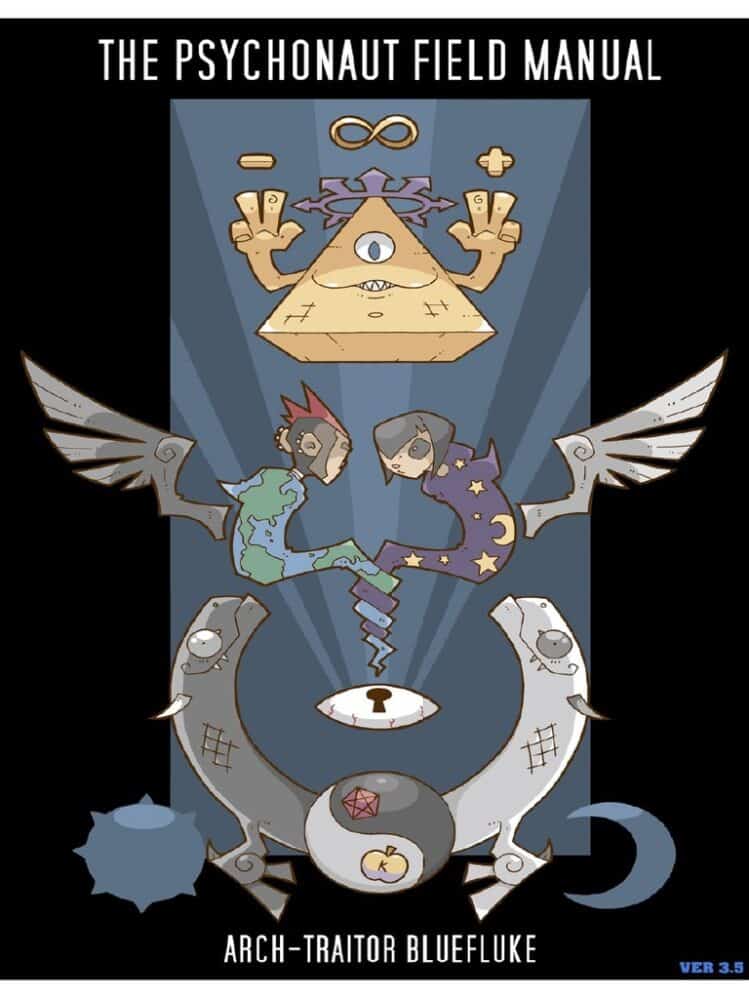
The Psychonaut’s Field Manual
I seem to be having a lot of trouble adding this one to the library so here is a link and a briefing doc.
The source material, “The Psychonaut Field Manual,” is described as a practical guide to inducing altered states of consciousness (ASC) [1]. The manual evolved from a Reddit forum of consciousness explorers, who eventually called themselves psychonauts, and is heavily influenced by Robert Anton Wilson as well as chaos magick writers like Peter Carroll [1]. It is noted that Reddit itself may be an NSA psyop, which suggests that the source material may require a larger grain of salt in terms of trustworthiness [1]. The manual is not geared for armchair occultists [1].
Some of the key concepts and themes within the manual include:
- The nature of belief and its role in shaping reality: The manual emphasizes that belief is a powerful tool [2]. It suggests that faith can move mountains and that the imposition of the will is what matters [2].
- The importance of self-exploration: The manual is designed to help individuals explore their own consciousness and achieve “illumination” [1]. It encourages readers to follow the steps provided, advance or fall into laziness [1].
- The role of magic and ritual: The manual explores a variety of magical and ritualistic practices designed to alter consciousness and interact with the world in different ways [2-4]. The manual suggests that “magic is the hacking of one’s own mind” [1].
- The concept of “gnosis”: The manual introduces the idea of “gnosis”, which appears to be an important state of consciousness that is critical for achieving higher levels of understanding [3]. It suggests that gnosis is achieved through specific practices like meditation [3].
- The multi-layered model of consciousness: The manual introduces a model of consciousness that includes the subconscious, superconscious, and self-conscious [5, 6]. These are often referred to as the reptile brain, the higher self, and software respectively [5].
- The existence of local and non-local spirits: The manual explores the existence of spirits that emanate from both local and non-local sources [7]. It describes “local spirits” as being tied to the brain and experiences, while “non-local” spirits come from an outside source [8-10].
- The dangers of occult practices: The manual warns against a number of possible risks associated with practices it presents [1, 11]. These include psychological damage such as irreversible hallucinations and even outright madness [1].
The manual is presented as a “field guide,” meaning it is intended to be used in practice, and not simply as a source of information. The manual’s practical approach is noted, and the warning given about not being for armchair occultists [1]. The manual is presented as a guide with levels that may be progressed through [1].
The manual presents several techniques for altering consciousness, with some emphasized as more powerful than others. These techniques are presented across various levels of the manual, suggesting a progression in their complexity and potency. Here’s a breakdown of some of the most powerful techniques:
- Gnosis: The manual highlights gnosis as a critical state of consciousness for achieving higher levels of understanding [1]. Gnosis appears to be a state where the mind is focused on a single point [1]. The manual details several methods for achieving gnosis:
- Meditation is presented as an essential practice for achieving gnosis [1]. It involves calming the body and mind, focusing on a point of light, and silencing internal “noise” [1].
- Breath control is a key element of meditation and gnosis. The manual suggests focusing on the breath [2].
- Visualization exercises, such as imagining a blue circle, are also used to enter a state of gnosis [2].
- Alternate paths to gnosis are also provided as options including:
- Number crunching, which involves using mathematical rabbit holes [3].
- Rocking, which involves using rhythmic movement, like drumming, and singing [3].
- Mantras, which involve the repetitive use of a sound or phrase [3].
- Sex magic, which is noted as being dangerous [3].
- Ceremonial/ritual work [3].
- Flagellation, which is described as using pain to achieve gnosis [3].
- Sigil Magic: The manual includes a series of techniques for creating and using sigils [4]. Sigil magic involves:
- Creating a name for different parts of your consciousness (super, self, and sub conscious) [4].
- Translating these names into symbolic language [4].
- Transforming these symbols into a physical action that includes movement and sound to create a physical vibration [4].
- Using these sigils to create programs for your mind that are fueled by energy [5].
- Evocation and Invocation: These practices are presented as methods for interacting with spirits and other entities [6]:
- Evocation is defined as the art of creating secondary selves/consciousness [6].
- Invocation involves temporarily grafting an additional ego onto your own existing consciousness [6].
- These practices are described as dangerous and not to be abused [6].
- Working with Local and Non-Local Spirits: The manual differentiates between spirits that come from within (local) and outside (non-local) oneself [7]:
- Local spirits are tied to the brain and can be programmed to serve as guides, companions or even demons [8, 9].
- Non-local spirits come from outside sources and are described as potentially more dangerous [9, 10].
- The manual outlines processes for contacting, working with, and banishing spirits [11, 12].
- Astral Projection: The manual includes several techniques for astral projection, which involves separating your consciousness from your physical body [13, 14]. The “Classical Method” for astral projection includes:
- Entering a state of gnosis [14].
- Imagining your awareness expanding [14].
- Pushing your awareness outside of your body [14].
- Switching places with your awareness [14].
- Another method is the “Paralysis Method” that involves using sleep paralysis to achieve astral projection [15].
- Creating Egregores: The manual describes egregore as a spirit created through the collective unconscious [9]. Egregores are noted to be quite powerful and can become too powerful for a single individual to control [9].
The manual emphasizes that belief is a critical factor in the success of these techniques [8, 16]. It also warns of the potential dangers and risks associated with these practices, including irreversible hallucinations and psychological damage [17]. It’s important to note that the manual presents these techniques as a way to explore one’s own consciousness and the nature of reality, and not simply as a method for achieving magical powers or special abilities [16].
Briefing Document: The Psychonaut Field Manual
Introduction:
“The Psychonaut Field Manual” by Bluefluke is a comprehensive (and at times irreverent) guide to the practice of “magic” as a form of self-directed mental exploration and personal transformation. It blends elements of Western Esotericism, chaos magic, and psychology into a system of practices aimed at hacking the user’s own mind. The book advocates for a DIY approach to spirituality, where individuals should experiment and develop their own understanding rather than blindly following established dogma.
Key Themes and Concepts:
- Belief as a Tool: The manual emphasizes that belief isn’t about objective truth, but about its effectiveness as a tool for achieving desired outcomes. As the text states, “Any damned fool can operate any of the following tech provided they believe that they can. BELIEF IS NOT ONLY THE FIRST TOOL YOU’LL MASTER ON YOUR JOURNEY BUT ALSO THE MOST POWERFUL.” This concept is central to many of the described practices.
- Gnosis and Altered States: Gnosis is presented as a critical state for accessing psychic abilities and performing effective magical work. Gnosis is achieved through techniques that quiet the mind, such as focused meditation, and allowing for a singular focus of attention.
- The Multi-Part Mind: The manual divides the mind into the conscious, subconscious, and superconscious. The user is advised to understand the functionality of each in order to manipulate them through ritual and visualization. The subconscious is described as “the oldest O.S.”, the superconscious as “the artist, the moralist and the idea man” and the self-conscious is the “soul” – a programmed entity that can be re-written. The goal is to make these aspects work in harmony.
- Servitors and Egregores: The manual explores the creation and use of servitors (self-programmed psychic constructs) and egregores (shared thought-forms), emphasizing their power and potential danger. It’s described that “Egregores are local spirits shared non-locally by way of the collective unconscious”. Both entities can gain a semblance of sentience.
- Astral Plane and Projection: The text discusses the concept of the astral plane as a real place that can be explored. It offers techniques for achieving astral projection, including methods that exploit the phenomena of sleep paralysis, which is described as a “gateway to an astral wonderland”.
- Spirits (Local and Non-Local): The manual makes a distinction between local spirits (emerging from the individual’s own psyche) and non-local spirits (arising from external sources) emphasizing the need to understand and differentiate them to avoid spiritual manipulation or psychosis.
- Self-Programming: The book advocates for a conscious approach to programming one’s beliefs, desires, and will through techniques like sigil magic. A sigil is described as a “programmable thought form”.
- Experimentation and Personalization: The user is continuously encouraged to adapt techniques to their own needs and preferences and not be afraid to go off the prescribed path and experiment. The text states, “Don’t take my word for it; try it yourself and come to your own conclusions.”
- The Dangers of Spiritual Exploration: The manual is frank about the potential dangers of this work, including psychological instability, hallucinations, and potentially harmful interactions with the “spiritual” entities encountered. A “warning” is given that, “Magic is the hacking of one’s own mind. Irreversible hallucinations, damage to the nervous system, outright madness, and even bricking yourself are all very real dangers here”. There are specific cautions against the misuse of spirits and for failing to program your egregores.
Key Practices and Techniques:
- Meditation: Described as essential for accessing gnosis and quieting the mind.
- Visualization: Used to create sigils, servitors, and alter one’s perception.
- Sigil Magic: A method of encoding desires and intentions into abstract symbols and then activating them through gnosis.
- Circle of Protection: A ritual practice that establishes a safe psychic space.
- Goetic Stars: Geometric tools that allow the user to connect to different levels of their own subconscious
- Invocation and Evocation: Techniques for calling on and interacting with spirits, with a caution about confusing the two and taking on other people’s personalities.
- Scrying: Using reflective surfaces to access psychic information.
- Astral Projection: Methods for separating consciousness from the physical body to explore the astral plane.
- Creating Altars: Creating a physical place to ritual practice and focus intention.
- Dream Work: Techniques for using dreams as a source of information or for interacting with spiritual entities.
- Journaling: Is advocated as a way to keep track of the effects of the rituals and identify areas for improvement, in the text it states that “every delicate gear demands observation.”
Levels of Practice:
The book is structured into levels of progressive complexity, starting with basic meditation and visualization techniques and advancing to working with spirits and astral projection. The stages are as follows: Initiate, Decker, Eudaemon, Astralnut, and Hierophant.
Illustrative Quotes:
- “Ladies and gentlemen, I have seen the illuminati… and it is us.” – Richard Metzger. This quote is an expression of the book’s ethos that the individual is the locus of change.
- “It doesn’t matter what you believe, I just believe.” – A succinct expression of the books stance that belief in the efficacy of a system is more important than the system itself.
- “The core trick is to reset mystical systems and rewrite the programming languages, maps and definitions of consciousness differ from one tradition to the next, this premise is fairly universal.” – Demonstrating that any spiritual path is valid so long as it is taken consciously.
- “Possession is not subtle and thus most often occurs during sleep after a botched evocation to avoid detection. Even so, you’ll likely wake from the event. You’ll physically feel them enter you.” – A frank admission of how dangerous spiritwork can be.
- “Your tools would never work for me, clearly, you are a fool!” – A caution that personal practice must be tailored to the individual and cannot be taken on blindly from others.
Conclusion:
“The Psychonaut Field Manual” presents a challenging and potentially rewarding path for individuals interested in exploring the depths of their own minds. It’s not for the faint of heart, as it emphasizes personal responsibility and acknowledges the risks involved. The manual’s strength lies in its practical approach, breaking down complex concepts into actionable techniques while always prioritizing individual experience and experimentation. It is a call to active, intentional engagement with one’s own consciousness.
The Psychonaut Field Manual FAQ
What is the main goal of using this manual, and what approach does it take?
The main goal is to explore the depths of consciousness and manipulate your own reality through focused practice. This manual takes a very hands-on, experimental approach, emphasizing belief and action over rote memorization or adherence to any specific dogma. It encourages you to develop your own personal understanding of occult practices by testing its many techniques and building an internal “magic” that works for you.
What is “Gnosis” and how is it achieved according to the manual?
Gnosis is a state of focused awareness, described as a “stairway to awesome,” achieved by shutting down auxiliary thoughts to focus the mind on a single point of action. The manual provides a sequence of exercises involving calming the body, focusing on a light source, silencing internal thoughts, and concentrating on the breath to achieve this state. Gnosis is the prerequisite for most exercises in the manual.
What are the three levels of consciousness described, and how do they interact?
The manual describes three operating systems of consciousness: The Subconscious (also called the reptile brain), the Superconscious (also known as the higher self) and the Selfconscious. The Subconscious, is the oldest part of you, related to survival instincts. The Superconscious is more abstract and higher-minded. The Selfconscious acts as an interface between these two, programming, filtering, and interpreting them. The manual aims to place the Subconscious and Superconscious into a state of “semi-hypnotic submission” to allow the Selfconscious to control their functions.
What is the purpose of sigils and how are they created and used?
Sigils are personalized symbols used to encode your intentions and desires into physical forms. Sigils are created by extracting key words representing your desire, converting them into a simple geometric or symbolic form, and then “activating” them through visualization while in a state of gnosis, and often accompanied by the creation of a physical vibration. They are then programmed to carry out your will.
How does the manual address the idea of spirits, both local and non-local?
The manual describes local spirits as programs or patterns of consciousness formed within your own brain, related to personality traits. In contrast, it refers to non-local spirits as entities from “outside the system” – including entities created by others or not connected to our reality. It teaches
how to communicate with and program local spirits. It also offers guidance on interacting cautiously with non-local entities.
What are Egregores and how are they created, and what is their danger?
Egregores are collective spirits created by shared beliefs and consciousness among a group of people, a “shared secondary selfconscious”. They are created through collective focus and can gain substantial power, often greater than an individual could manifest alone. Egregores can become extremely powerful, even to the point of dominating or enslaving their creators, hence why they should be treated with care and programmed properly.
What is Astral Projection and what methods does the manual offer for it?
Astral Projection, is the separation of consciousness from the physical body and into a non-physical realm referred to as “astral plane”. The manual describes multiple methods for achieving it, including the “Classical Method” involving focusing on expanding your awareness until it’s outside your body, and the “Paralysis Method,” which involves maintaining conscious awareness while falling asleep to leverage natural bodily transitions.
What is the overall attitude of the manual towards traditional occult systems and beliefs?
The manual suggests not being limited by traditional occult systems, though it does incorporate some of them. It encourages using what works for you, making modifications and improvements for your own understanding, and building a personal system of belief and practice. The overall sentiment is that “belief is not only a tool but a programming language” and it should be wielded freely.
The Psychonaut Field Manual Study Guide
Short Answer Quiz
- According to the manual, what is the first tool a psychonaut must master? Why is this so important?
- What is the main purpose of meditation in the context of this manual, and how long should beginners practice each day?
- What are the three steps outlined for opening the Third Eye, and how is success in this practice measured?
- Briefly explain how the tarot is used as a servitor-design tool in Level 4.
- What are the three main operating systems of consciousness detailed in Level 5, and how are they described?
- What is the process for creating a personal servitor detailed in Level 6?
- What is the primary function of a circle of protection, and how is it created?
- Briefly explain the difference between local and non-local spirits according to the text.
- What are the steps for invoking a subject according to the manual?
- What are the two methods outlined for achieving Astral Projection, and what is emphasized about their nature?
Answer Key
- The first tool is faith in one’s own will. This is crucial because the manual asserts that “faith moves mountains and shit,” and the psychonaut must believe that their actions have power.
- The manual states that meditation should not be used to find inner peace, but to shut down auxiliary thought in order to focus the brain’s processing power on a single point of action, called “gnosis.” Beginners should meditate for at least 10 minutes daily.
- The three steps are: (1) Calm your body, (2) focus on a light source, and (3) kill the noise, specifically intrusive thoughts. Success is measured by the ability to maintain focus and clarity of intention, and an experience of pressure or tingling in the forehead.
- The tarot cards, chosen through a set process, are used to select symbols and meaning that are integrated to create a sigil, which will in turn help the psychonaut to create a servitor.
- The three systems are: (1) Above (forebrain/superconscious) described as the “artist”, (2) Below (hindbrain/subconscious) described as the “reptile brain,” and (3) Will (software/self-conscious) described as the “soul,”
- First, create a name for the servitor from the conscious, superconscious, and subconscious. Second, translate this name into a symbolic language. Third, transform this symbolic language into a physical sigil.
- The primary function of a circle of protection is to provide defense. It is created by drawing or printing a circle, placing candles in key points, drawing sigils inside the circle, and then entering a state of gnosis to fill it with white light.
- Local spirits are described as programmed from your brain, while non-local spirits are from an outside source. Local spirits are based on the perceived needs of your early environment, while non-local are described as entities separate from self.
- The steps are: (1) Stare into an image of the subject, enter gnosis, and keep your eyes glued to the image, (2) say “I invoke you into myself” or appropriate words, and (3) imagine the subject’s essence growing and expanding inside you until it takes you over.
- The two methods are the Classical Method and the Paralysis Method. It is emphasized that there are many methods, and you should experiment to find the one that works for you.
Essay Questions
- The manual places great emphasis on the role of belief in the psychonautic journey. Discuss how the author conceptualizes belief, its purpose, and potential pitfalls. Use examples from various levels to demonstrate your understanding.
- Compare and contrast the concepts of local and non-local spirits as presented in the manual. How are they defined, how are they interacted with, and what are the unique dangers associated with each?
- The concept of gnosis is central to the manual’s proposed practices. Explain how gnosis is achieved, what its significance is in the overall process of the manual, and how it connects to other related concepts such as the third eye.
- Throughout the manual, the author warns against the misuse or misinterpretation of various practices, including those surrounding spirits, servitors, and astral projection. In detail, outline the potential dangers of these practices and offer advice on how to avoid them, based on the text.
- How does this manual relate to the broader idea of esoteric practices, and what does it uniquely offer to the psychonautic tradition that other systems might not? Consider the role of technology, self-exploration, and the author’s philosophy when crafting your response.
Glossary
- Gnosis: A state of focused awareness, described as having all auxiliary thought shut down to concentrate on a singular point of action.
- Servitor: An artificially created autonomous entity used to carry out tasks.
- Sigil: A symbolic representation of an intention or entity, created by translating a word or phrase into a geometric symbol.
- Third Eye: The metaphorical or psychic organ associated with perception beyond the five senses, often described as located in the center of the forehead.
- Local Spirits: Spirits that are created within one’s own mind and tied to one’s personal programming.
- Non-Local Spirits: Spirits that come from an outside source, often having a more distinct and potentially less predictable personality.
- Astral Plane: A non-physical plane of existence, accessible through altered states of consciousness, where one’s astral body can travel.
- Egregores: Local spirits shared non-locally by way of the collective unconscious.
- Idols: A physical object in which a local spirit is bound.
- Megregores: Egregores that have a high degree of sentience.
- Subconscious: The oldest operating system, often referred to as the reptile brain.
- Superconscious: The higher self, described as the “artist”, the moralist, and the idea man.
- Selfconscious: Software, often referred to as the soul, or the current state of mind programmed by the subconscious and superconscious.
- Circle of Protection: A ritualistic circle, empowered with belief and intention, to provide a boundary against negative forces and energies.
- Possession: A state in which an outside force or energy takes over the body, causing a variety of physical and psychological effects.
- Fear Eaters: Non-local astral entities that feed off of emotional energy, particularly fear.
- Aura: A shimmering, often colored, radiation emanating from a person or entity that may correlate to their emotional state.
- Goetic Star: A tool used to organize sigils and bind spirits.
- Communion: A state of receiving communication from your Godform or other entity.
- Godform: A sentient personification of an aspect of the brain or correlating nerve cluster, to whom attention is paid.
-
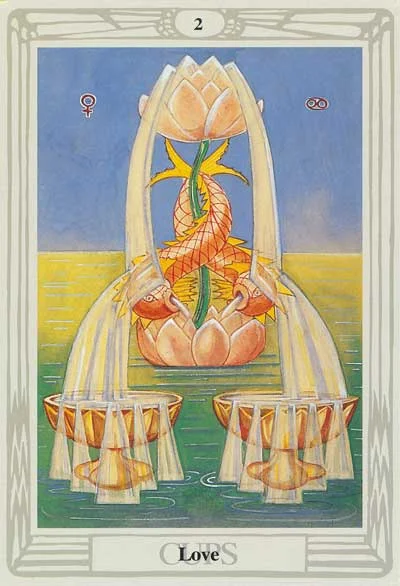
Love is in the air, everywhere I look around

Today Venus is in Pisces which is the sign of the two of cups. Happy lovers rejoice!
-

New Site Feature
The Old Cafe has added a library which you can find in the top menu. The books are a bit niche, but we’ve also opened up registration so you can get a free library card. Support the dissemination of knowledge but be careful. Some of the books inside are meant for initiates only and should not be opened at all beyond your accepted grade.

-
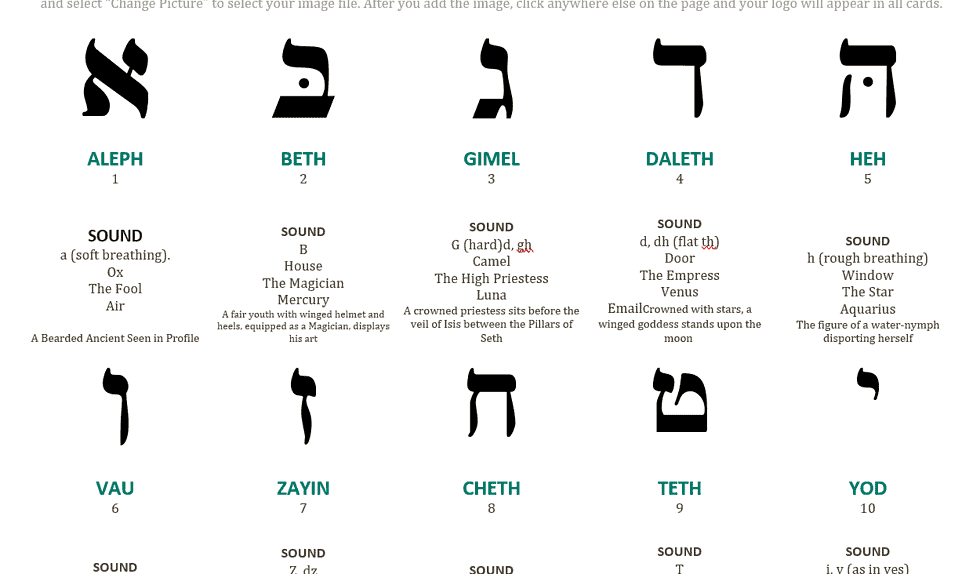
Kabbalah Flash Cards
Have you been struggling to learn the numbers and significance of the Hebrew letters for Kabbalah? Maybe need a little help for pathworking or Gematria? Trying to follow along with Lon Duquette but he lost you on the memorization part? Well, Uncle d’s got something for you. A printable set of Kabbalah flash cards. It’s in docx format, but you can print it onto perforated business card stock and use ’em for memorization. Simple as that. I used Avery business card stock that I had sitting around, but do as thou wilt. (some of the cards are doubled up as 22 doesn’t go into 30 evenly, just deal with it)