So I’m sure as a reader of this site, you’d like to know why it’s so damn weird and cryptic, and seemingly far-ranging in obscure topics. Well your humble editor, was a part of the programs first described in this book since childhood, and for most of you the reality of what happens in this country is unfathomable. We learn by degrees, yes? What started out incomprehensible, provides flashes of understanding, as the necessary details emerge. MK-ULTRA, Project Monarch, Poppy, Eyes in triangles, these are all explainable without resorting to fully-Messianic delusions, or David Icke style lizard people. The truth is both more horrific and mundane. As part of Project Paperclip, as has been well established as true for decades, the U.S. Imported Nazi scientists to work for the CIA. That they worked on the Rocket program is well known, and the reason it was tolerated by the public as well as the military industrial complex, just emerging at the time. They didn’t just import rocketeers however, they also wanted the juicy and gruesome details, of the experiments they’d been performing on Jewish prisoners. None of these specialist Dr. Mengles were subject to the Nuremberg trials, as their knowledge was too valuable to the newly reformed OSS into the main intelligence unit of U.S. interests, domestic and abroad. One of the main items you may want to consider in perusing this text, is the expansion and normalization of the mental illness industry as well as the drug-war pharmaco-empire, that has been normalized increasingly since the time this book was first written. Everything important is secret. You just have to know where to look.
Briefing Document: Esoteric Science, Spiritual Development, and the Path to Freedom
I. Overview
This document synthesizes key concepts from Rudolf Steiner’s works (primarily “An Outline of Esoteric Science” and “Theosophy: An Introduction to the Spiritual Processes”), and a paper that explores the Yoga practices found in the work of Steiner (“The Dark Abyss of Freedom: Yoga in Works of Rudolf Steiner”), focusing on spiritual development, the nature of the human being, the cosmos, and the path to achieving inner freedom. A core theme revolves around the development of the individual’s “I” or higher self through self-knowledge, moral purification, and understanding the interconnectedness of all things. This path often involves esoteric practices and a shift in perception, moving beyond the limitations of ordinary sensory experience.
II. The Nature of the Human Being
Fourfold Constitution: Steiner describes the human being as composed of four parts: the physical body, the ether body (or body of formative forces), the astral body (or soul body), and the “I” (or ego).
The “I” is unique to humans and is the source of self-awareness and the capacity to transcend purely instinctual or externally driven actions. “We can produce wishes and desires that are not adequately accounted for by causes either within or outside of our bodies. We must acknowledge that everything falling into this domain has a special source. In spiritual scientific terms, this source can be seen in the human ‘I,’ which can therefore be called the fourth part of our human makeup.” (An Outline of Esoteric Science)
The physical body is governed by the physical laws of the mineral kingdom, but in humans, it is imbued with mineral substance. (An Outline of Esoteric Science)
The ether body holds the substances of the physical body together. (Theosophy)
The Soul: The soul is the mediator between the “I” and the body, and is the seat of thinking, feeling, and willing. It is not a static entity but undergoes constant change and development.
Aura: Steiner describes the aura as a manifestation of the individual’s spiritual development and inner state. Different colors and patterns in the aura reflect various aspects of the person’s character, emotions, and spiritual progress. “Thus what individuals have made of themselves in the course of their incarnations comes to expression in their auras.” (Theosophy)
III. The Spiritual World and its Relationship to the Physical World
Three Worlds: Steiner posits the existence of three interconnected worlds: the physical world, the soul world, and the spirit world.
Correspondences: The physical world is a reflection of the spiritual world. Objects and phenomena in the physical world have corresponding archetypes or prototypes in the spiritual world. “This thought image is a reflection of the archetype of the entire mineral sense-perceptible world, and can be found as a whole in the spiritual world.” (Theosophy)
Spiritual Perception: To access the spiritual world, one must develop spiritual perception through practices like meditation and contemplation. This involves transcending the limitations of ordinary sensory perception.
The Country of Spirit Beings: In the spirit world, after death, individuals become aware of their essential being and their relationship to all things. “We become ever more aware that, in our essential being, we belong to the spiritual world. We perceive ourselves as spirits among spirits, as organs of the primal spirits.” (Theosophy)
IV. The Path of Spiritual Development
Self-Knowledge: A crucial step in spiritual development is gaining self-knowledge through introspection and self-examination. This involves confronting one’s character traits, both positive and negative, without self-deception.
Moral Purification: The path requires actively working to overcome negative tendencies like egoism, hatred, and greed. “For every single step that you take in seeking knowledge of hidden truths, you must take three steps in perfecting your character toward the good.” (How to Know Higher Worlds)
Reverence and Devotion: Cultivating a reverent attitude toward the world and a devotion to higher ideals is essential for spiritual growth.
Control of Thoughts and Feelings: Developing the ability to control one’s thoughts and feelings is a key aspect of spiritual discipline. This involves redirecting attention, cultivating inner peace, and resisting negative impulses.
Meditation and Contemplation: These practices are used to quiet the mind, focus attention, and develop spiritual insight.
V. Key Concepts from Yoga and Steiner’s Esoteric Science
Yoga as a Path to Freedom: The paper “The Dark Abyss of Freedom” explores the Yoga practices that are found in the work of Steiner. It highlights Steiner’s debt to Yoga philosophy, in particular Patanjali’s Yoga Sutras, especially regarding meditation and attaining higher levels of consciences.
Non-Attachment: This Yoga principle is also vital for Steiner’s understanding. “…Patanjali points out, is non-attachment.” (The Dark Abyss of Freedom: Yoga in Works of Rudolf Steiner)
The Goal of Samadhi: Both Yoga and Steiner’s esoteric science aim to achieve a state of pure consciousness, transcending the limitations of the material world. “All steps of yoga, all its ‘limbs’ (ashtanga) lead to the last of them, to samadhi (samādhi) as a state of pure consciousness and to breaking free from the conditionality of material and psychic existence.” (The Dark Abyss of Freedom: Yoga in Works of Rudolf Steiner)
VI. The Guardian of the Threshold
Confronting the Past: This is a symbolic figure representing the sum of one’s past actions and their consequences. Encountering the Guardian is a crucial stage in spiritual development. “I am that self-same being, who made a body for itself out of your good and your wicked deeds. My ghostly form is spun, so to speak, from the account book of your life.” (How to Know Higher Worlds)
Taking Responsibility: The encounter forces the individual to take responsibility for their past and to actively work to purify themselves.
VII. The Trials of Initiation
Testing and Transformation: The path to higher knowledge involves undergoing trials that test one’s character, will, and capacity for self-control. These trials are designed to transform the individual and prepare them for higher levels of consciousness.
Developing Intuition and Self-Control: As the student progresses through the trials, they develop their intuition and self-control. “In everyday life, this inner sentiment is usually call ‘intuition’, but Steiner calls it ‘self-control’.” (The Dark Abyss of Freedom: Yoga in Works of Rudolf Steiner)
VIII. Conclusion
The sources present a complex and challenging path to spiritual development, requiring dedication, self-discipline, and a willingness to transform oneself. The ultimate goal is to achieve inner freedom, a deeper understanding of oneself and the cosmos, and to contribute to the evolution of humanity. The integration of Yoga practices, as highlighted in “The Dark Abyss of Freedom,” underscores the practical methods involved in this transformative journey.
FAQ on Esoteric Science, Higher Worlds, and Yoga in Steiner’s Works
1. What is the “I” in Steiner’s esoteric science, and why is it important?
The “I,” according to Steiner, is the fourth part of the human makeup, a unique source of wishes and desires not solely determined by external or internal causes. It is the aspect of our being that experiences permanence amidst the changing flow of inner experiences. Unlike animals, humans possess an “I” that allows them to retain awareness of past experiences and drive their desires and actions, distinguishing human experience from purely instinctual behavior. This “I” is central to self-awareness and our relationship with the outer world, setting us apart from animal existence.
2. How does Steiner describe the spiritual world in relation to the physical world?
Steiner describes the spiritual world as a realm where the qualities of physical objects are experienced in reverse. A solid mass, like a rock, appears as a cavity, while colors are perceived as their complements (e.g., red as greenish). These formations constitute the “land masses” of the spiritual world, mirroring the continents of the physical world. This reflects a fundamental principle that the spiritual world is the archetype of the physical, with each aspect of the physical world having a corresponding spiritual reality.
3. What does Steiner mean by the “physical body,” and how does it relate to our understanding of the human being?
Steiner distinguishes between the “physical body” governed by physical laws and the mineral substance that composes our present-day physical bodies. He explains that our physical bodies are “imbued with mineral substance.” This distinction is crucial when considering the evolution of the human being and the different stages of planetary existence (like Saturn), where the composition and governing laws of the physical body differ significantly from those we observe today.
4. What is the significance of developing reverence, impartiality, and trust in spiritual development?
Reverence is a foundation for esoteric knowledge, akin to the awe felt when entering a sacred space. Impartiality and trust are crucial for openness to new experiences and revising existing opinions, fostering a receptive attitude toward all phenomena. Trust in one’s goals and actions, even in the face of setbacks, is vital for spiritual progress, enabling one to move mountains through unwavering faith.
5. What is the “Guardian of the Threshold,” and what role does it play in spiritual development?
The Guardian of the Threshold represents the accumulated consequences of one’s past deeds, both good and bad, taking on an independent form visible to the spiritual seeker. It serves as a mirror, reflecting one’s faults as distortions in its appearance. Overcoming the Guardian requires wisdom and the ability to correct past wrongs, purifying oneself to the point where evil is no longer possible. Only then can the seeker reunite with the Guardian, benefiting from its blessings in future activity.
6. How does the concept of karma, or destiny, relate to spiritual growth, and how can it be understood?
Karma, or destiny, is the result of past actions and influences future spiritual development. While fate may present challenges or misfortunes, Steiner suggests that these are often exactly what is needed for growth. By recognizing this and integrating past experiences into future intentions, one develops the “spirit self” and prepares to fulfill spiritual purposes in subsequent incarnations.
7. How does Steiner view the relationship between thinking, feeling, and willing, and how does this relate to spiritual development?
Steiner sees thinking, feeling, and willing as soul forces that are unified by the “I.” In ordinary life, these forces interact in specific ways (e.g., thought followed by feeling). However, on the path to higher cognition, the forces of the personality are held together differently, requiring conscious effort to harmonize and direct them toward spiritual goals. Development of these forces are key aspects of esoteric study.
8. How do Steiner’s ideas connect with the practice of yoga, particularly in achieving inner freedom?
Steiner’s esoteric science shares common ground with yoga, emphasizing mental discipline, introspection, and the attainment of inner freedom. Like the limbs of yoga that lead to samadhi, Steiner’s path encourages mental silence, focused meditation, and the ability to transcend the limitations of material and psychic existence. This inner freedom is achieved through self-control, intuition, and the development of the “higher I,” ultimately leading to a state of unity and liberation from desires.
Navigating Esoteric Science and Higher Worlds: A Comprehensive Study Guide
Quiz
Answer each question in 2-3 sentences.
According to Steiner, what distinguishes human desires from those of animals?
How does spiritual sight perceive physical objects like rocks?
What governs a “physical body,” as Steiner uses the term in the context of Saturn’s evolution?
Describe the sensory experience that Steiner attributes to Saturn’s interior.
What is the “golden rule of the occult sciences,” and why is it important?
Explain the concept of “the Guardian of the Threshold” and its significance.
According to Theosophy, how are abstract thoughts related to clairvoyance?
How does Steiner define the significance and uniqueness of the word “I”?
According to Theosophy, what happens to everything that an individual has experienced in the past, and how does that relate to future incarnations?
Explain Steiner’s concept of the human aura and how it reflects an individual’s development and inner states.
Quiz Answer Key
Humans can generate wishes and desires not caused by internal or external bodily causes. The human “I” is the source of these desires and is responsible for being aware of pleasure on a previous occasion when our hunger was satisfied, so that our desire for food is driven by past experience, as well as by our current experience of hunger. Animals are driven by recurrent causes (of hunger).
Spiritual sight perceives the space occupied by a mass of rock as a cavity, surrounded by the force that shapes the stone. The color of the stone is also experienced as its complementary color in the spiritual world (e.g., a red stone appears greenish).
A physical body is governed by the physical laws observed in the mineral kingdom. A physical body is also imbued with mineral substance, however that does not apply to the planet Saturn.
Saturn’s interior was experienced as surging sensations of taste (sweet, bitter, sour), which reverberated into celestial space as sound and music.
“For every single step that you take in seeking knowledge of hidden truths, you must take three steps in perfecting your character toward the good.” This rule ensures that moral development accompanies spiritual insight, preventing misuse of occult knowledge.
The Guardian of the Threshold is a being formed from one’s past deeds. Upon encountering this being, individuals confront the consequences of their actions and must demonstrate sufficient wisdom to guide their future development. If one cannot correct any past wrongs, then they will be dragged into a dark, corrupted world.
Abstract thoughts contain a “pearl of clairvoyance,” indicating that clairvoyance begins in something common and everyday. Steiner asserts that clairvoyance occurs from the start and everyday; we simply need to recognize the supersensible nature of our concepts and ideas.
The word “I” is unique because it can only be used by an individual to refer to themself. It originates from within the soul and is not externally imposed, unlike other names for objects in the world.
According to Theosophy, an individual’s experiences are absorbed into intentions that must be realized in the future. In this fifth region, a certain capacity to remember earlier lifetimes as well as a prophetic preview of later ones flares up, indicating a connection between past, present, and future incarnations.
The human aura is a multi-layered energy field that reflects an individual’s degree of spiritual development, thoughts, feelings, and overall state of being. The colors and qualities of the aura change according to one’s inner state and moral choices.
Essay Questions
Compare and contrast Steiner’s concept of the “I” with traditional psychological or philosophical views of the self. How does Steiner’s spiritual perspective alter our understanding of identity?
Discuss the relationship between moral development and spiritual insight in Steiner’s teachings. Why is it necessary to cultivate virtue alongside seeking higher knowledge?
Explore the significance of the “Guardian of the Threshold” in the process of spiritual initiation. What lessons can be learned from this encounter, and how does it impact one’s future actions?
Analyze Steiner’s description of the spiritual worlds. How do these realms differ from the physical world, and what is their purpose in human evolution?
Synthesize the concepts of karma, reincarnation, and destiny as presented in the provided sources. How do these ideas shape Steiner’s understanding of human existence and personal responsibility?
Glossary of Key Terms
Anthroposophy: A spiritual science developed by Rudolf Steiner, emphasizing the development of human consciousness and spiritual understanding.
Astral Body: Also known as the soul body, it is the vehicle of feelings, desires, and passions.
Aura: An energy field surrounding a living being, reflecting their thoughts, feelings, and spiritual state.
Chakras (Lotus Flowers): Energy centers within the etheric body that regulate spiritual and physical well-being.
Clairvoyance: The ability to perceive events or objects beyond the range of normal sensory perception.
Ether Body: Also known as the life body or body of formative forces. It is responsible for growth, reproduction, and the maintenance of physical form.
Esoteric Science: A path of knowledge seeking to understand the deeper spiritual realities underlying the physical world.
“I” (Ego): The individual self, the conscious center of human experience.
Karma: The law of cause and effect, where actions create consequences that shape one’s future experiences.
Physical Body: The material body, composed of physical substances and subject to physical laws.
Reincarnation: The process of being reborn into a new physical body after death.
Samadhi: In Yoga, a state of pure consciousness and transcendence of the material and psychic conditions.
Sentient Soul: The aspect of the soul responsible for processing sensory experiences and emotions.
Spirit Self: In Theosophy, part of one’s consciousness that exists in the spirit world; previous lives affecting spirit self.
You may notice that some of the deeper mystical and magical content of the site has now been moved behind a paywall. I can no longer solely bear the cost of your mystical education myself and am in need of support of the sites and the newly formed Kemetic Church of Ra. The items paywalled, can only be understood by those with a mystical practice anyway or some degree of initiation. For now, the library which contains many more initiated secrets will remain free temporarily while those that recognize there is a time limit for that generosity should not be surprised when that gets paywalled as well. If you’d like to keep resources like these available you must contribute and I can no longer tolerate the entire burden of the free rider problem myself. If this content is worth something to you, you can sign up here.
In the shadows, a clandestine program may be lurking, designed to identify, exploit, and control gifted children, known as “starseeds.” These individuals, believed to possess unique abilities and a mission to help humanity, may be the target of a sinister cabal, comprising elements of government, Hollywood, and organized crime.
The alleged program’s objectives are multifaceted and ominous. By exploiting the stories and abilities of starseeds, the cabal may be attempting to suppress the truth about humanity’s connection to other civilizations and spiritual dimensions. This could be achieved through the creation of films and media productions that distort the narrative around starseeds, portraying them as troubled or maladjusted.
The ultimate goal of this cabal may be to maintain their grip on power and control over humanity, exploiting the abilities and experiences of starseeds for their own nefarious purposes. This could involve using the starseeds’ unique qualities to further their own agenda, effectively using their light for dark purposes.
The implications of this alleged program are far-reaching and unsettling. If true, it would suggest that a shadowy cabal is actively working to undermine the mission of starseeds and prevent the collective awakening of humanity.
As we delve deeper into this conspiracy, it becomes increasingly clear that the stakes are high. The fate of humanity may be hanging in the balance, as a select group of individuals with unique abilities and a mission to help humanity are being targeted and exploited.
But what can be done to thwart this alleged program and protect the starseeds? Awareness is key. By shedding light on this sinister agenda, we may be able to prevent further exploitation and control. It is essential that we support and empower starseeds, allowing them to fulfill their mission and help humanity ascend to a new level of consciousness.
The truth, much like the starseeds themselves, remains elusive. But one thing is certain – the stakes are high, and the fate of humanity hangs in the balance.
I seem to be having a lot of trouble adding this one to the library so here is a link and a briefing doc.
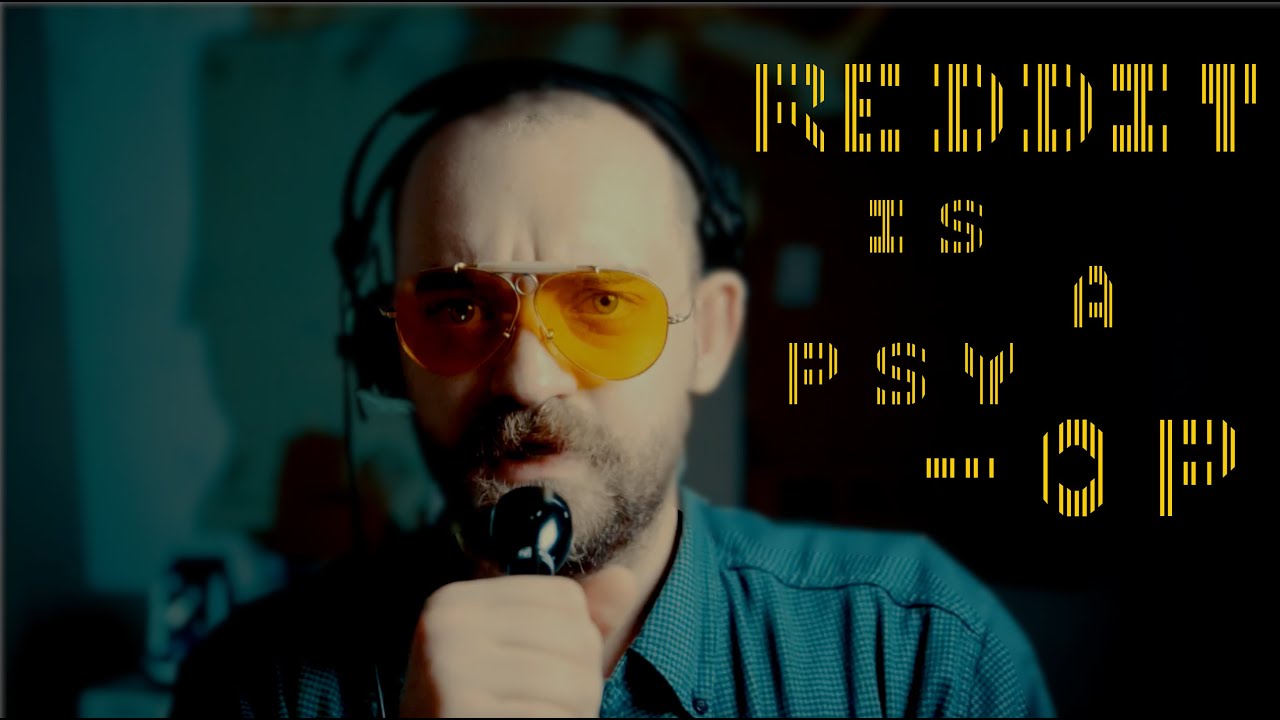
The source material, “The Psychonaut Field Manual,” is described as a practical guide to inducing altered states of consciousness (ASC) [1]. The manual evolved from a Reddit forum of consciousness explorers, who eventually called themselves psychonauts, and is heavily influenced by Robert Anton Wilson as well as chaos magick writers like Peter Carroll [1]. It is noted that Reddit itself may be an NSA psyop, which suggests that the source material may require a larger grain of salt in terms of trustworthiness [1]. The manual is not geared for armchair occultists [1].
Some of the key concepts and themes within the manual include:
The nature of belief and its role in shaping reality: The manual emphasizes that belief is a powerful tool [2]. It suggests that faith can move mountains and that the imposition of the will is what matters [2].
The importance of self-exploration: The manual is designed to help individuals explore their own consciousness and achieve “illumination” [1]. It encourages readers to follow the steps provided, advance or fall into laziness [1].
The role of magic and ritual: The manual explores a variety of magical and ritualistic practices designed to alter consciousness and interact with the world in different ways [2-4]. The manual suggests that “magic is the hacking of one’s own mind” [1].
The concept of “gnosis”: The manual introduces the idea of “gnosis”, which appears to be an important state of consciousness that is critical for achieving higher levels of understanding [3]. It suggests that gnosis is achieved through specific practices like meditation [3].
The multi-layered model of consciousness: The manual introduces a model of consciousness that includes the subconscious, superconscious, and self-conscious [5, 6]. These are often referred to as the reptile brain, the higher self, and software respectively [5].
The existence of local and non-local spirits: The manual explores the existence of spirits that emanate from both local and non-local sources [7]. It describes “local spirits” as being tied to the brain and experiences, while “non-local” spirits come from an outside source [8-10].
The dangers of occult practices: The manual warns against a number of possible risks associated with practices it presents [1, 11]. These include psychological damage such as irreversible hallucinations and even outright madness [1].
The manual is presented as a “field guide,” meaning it is intended to be used in practice, and not simply as a source of information. The manual’s practical approach is noted, and the warning given about not being for armchair occultists [1]. The manual is presented as a guide with levels that may be progressed through [1].
The manual presents several techniques for altering consciousness, with some emphasized as more powerful than others. These techniques are presented across various levels of the manual, suggesting a progression in their complexity and potency. Here’s a breakdown of some of the most powerful techniques:
Gnosis: The manual highlights gnosis as a critical state of consciousness for achieving higher levels of understanding [1]. Gnosis appears to be a state where the mind is focused on a single point [1]. The manual details several methods for achieving gnosis:
Meditation is presented as an essential practice for achieving gnosis [1]. It involves calming the body and mind, focusing on a point of light, and silencing internal “noise” [1].
Breath control is a key element of meditation and gnosis. The manual suggests focusing on the breath [2].
Visualization exercises, such as imagining a blue circle, are also used to enter a state of gnosis [2].
Alternate paths to gnosis are also provided as options including:
Number crunching, which involves using mathematical rabbit holes [3].
Rocking, which involves using rhythmic movement, like drumming, and singing [3].
Mantras, which involve the repetitive use of a sound or phrase [3].
Sex magic, which is noted as being dangerous [3].
Ceremonial/ritual work [3].
Flagellation, which is described as using pain to achieve gnosis [3].
Sigil Magic: The manual includes a series of techniques for creating and using sigils [4]. Sigil magic involves:
Creating a name for different parts of your consciousness (super, self, and sub conscious) [4].
Translating these names into symbolic language [4].
Transforming these symbols into a physical action that includes movement and sound to create a physical vibration [4].
Using these sigils to create programs for your mind that are fueled by energy [5].
Evocation and Invocation: These practices are presented as methods for interacting with spirits and other entities [6]:
Evocation is defined as the art of creating secondary selves/consciousness [6].
Invocation involves temporarily grafting an additional ego onto your own existing consciousness [6].
These practices are described as dangerous and not to be abused [6].
Working with Local and Non-Local Spirits: The manual differentiates between spirits that come from within (local) and outside (non-local) oneself [7]:
Local spirits are tied to the brain and can be programmed to serve as guides, companions or even demons [8, 9].
Non-local spirits come from outside sources and are described as potentially more dangerous [9, 10].
The manual outlines processes for contacting, working with, and banishing spirits [11, 12].
Astral Projection: The manual includes several techniques for astral projection, which involves separating your consciousness from your physical body [13, 14]. The “Classical Method” for astral projection includes:
Entering a state of gnosis [14].
Imagining your awareness expanding [14].
Pushing your awareness outside of your body [14].
Switching places with your awareness [14].
Another method is the “Paralysis Method” that involves using sleep paralysis to achieve astral projection [15].
Creating Egregores: The manual describes egregore as a spirit created through the collective unconscious [9]. Egregores are noted to be quite powerful and can become too powerful for a single individual to control [9].
The manual emphasizes that belief is a critical factor in the success of these techniques [8, 16]. It also warns of the potential dangers and risks associated with these practices, including irreversible hallucinations and psychological damage [17]. It’s important to note that the manual presents these techniques as a way to explore one’s own consciousness and the nature of reality, and not simply as a method for achieving magical powers or special abilities [16].
Briefing Document: The Psychonaut Field Manual
Introduction:
“The Psychonaut Field Manual” by Bluefluke is a comprehensive (and at times irreverent) guide to the practice of “magic” as a form of self-directed mental exploration and personal transformation. It blends elements of Western Esotericism, chaos magic, and psychology into a system of practices aimed at hacking the user’s own mind. The book advocates for a DIY approach to spirituality, where individuals should experiment and develop their own understanding rather than blindly following established dogma.
Key Themes and Concepts:
Belief as a Tool: The manual emphasizes that belief isn’t about objective truth, but about its effectiveness as a tool for achieving desired outcomes. As the text states, “Any damned fool can operate any of the following tech provided they believe that they can. BELIEF IS NOT ONLY THE FIRST TOOL YOU’LL MASTER ON YOUR JOURNEY BUT ALSO THE MOST POWERFUL.” This concept is central to many of the described practices.
Gnosis and Altered States: Gnosis is presented as a critical state for accessing psychic abilities and performing effective magical work. Gnosis is achieved through techniques that quiet the mind, such as focused meditation, and allowing for a singular focus of attention.
The Multi-Part Mind: The manual divides the mind into the conscious, subconscious, and superconscious. The user is advised to understand the functionality of each in order to manipulate them through ritual and visualization. The subconscious is described as “the oldest O.S.”, the superconscious as “the artist, the moralist and the idea man” and the self-conscious is the “soul” – a programmed entity that can be re-written. The goal is to make these aspects work in harmony.
Servitors and Egregores: The manual explores the creation and use of servitors (self-programmed psychic constructs) and egregores (shared thought-forms), emphasizing their power and potential danger. It’s described that “Egregores are local spirits shared non-locally by way of the collective unconscious”. Both entities can gain a semblance of sentience.
Astral Plane and Projection: The text discusses the concept of the astral plane as a real place that can be explored. It offers techniques for achieving astral projection, including methods that exploit the phenomena of sleep paralysis, which is described as a “gateway to an astral wonderland”.
Spirits (Local and Non-Local): The manual makes a distinction between local spirits (emerging from the individual’s own psyche) and non-local spirits (arising from external sources) emphasizing the need to understand and differentiate them to avoid spiritual manipulation or psychosis.
Self-Programming: The book advocates for a conscious approach to programming one’s beliefs, desires, and will through techniques like sigil magic. A sigil is described as a “programmable thought form”.
Experimentation and Personalization: The user is continuously encouraged to adapt techniques to their own needs and preferences and not be afraid to go off the prescribed path and experiment. The text states, “Don’t take my word for it; try it yourself and come to your own conclusions.”
The Dangers of Spiritual Exploration: The manual is frank about the potential dangers of this work, including psychological instability, hallucinations, and potentially harmful interactions with the “spiritual” entities encountered. A “warning” is given that, “Magic is the hacking of one’s own mind. Irreversible hallucinations, damage to the nervous system, outright madness, and even bricking yourself are all very real dangers here”. There are specific cautions against the misuse of spirits and for failing to program your egregores.
Key Practices and Techniques:
Meditation: Described as essential for accessing gnosis and quieting the mind.
Visualization: Used to create sigils, servitors, and alter one’s perception.
Sigil Magic: A method of encoding desires and intentions into abstract symbols and then activating them through gnosis.
Circle of Protection: A ritual practice that establishes a safe psychic space.
Goetic Stars: Geometric tools that allow the user to connect to different levels of their own subconscious
Invocation and Evocation: Techniques for calling on and interacting with spirits, with a caution about confusing the two and taking on other people’s personalities.
Scrying: Using reflective surfaces to access psychic information.
Astral Projection: Methods for separating consciousness from the physical body to explore the astral plane.
Creating Altars: Creating a physical place to ritual practice and focus intention.
Dream Work: Techniques for using dreams as a source of information or for interacting with spiritual entities.
Journaling: Is advocated as a way to keep track of the effects of the rituals and identify areas for improvement, in the text it states that “every delicate gear demands observation.”
Levels of Practice:
The book is structured into levels of progressive complexity, starting with basic meditation and visualization techniques and advancing to working with spirits and astral projection. The stages are as follows: Initiate, Decker, Eudaemon, Astralnut, and Hierophant.
Illustrative Quotes:
“Ladies and gentlemen, I have seen the illuminati… and it is us.” – Richard Metzger. This quote is an expression of the book’s ethos that the individual is the locus of change.
“It doesn’t matter what you believe, I just believe.” – A succinct expression of the books stance that belief in the efficacy of a system is more important than the system itself.
“The core trick is to reset mystical systems and rewrite the programming languages, maps and definitions of consciousness differ from one tradition to the next, this premise is fairly universal.” – Demonstrating that any spiritual path is valid so long as it is taken consciously.
“Possession is not subtle and thus most often occurs during sleep after a botched evocation to avoid detection. Even so, you’ll likely wake from the event. You’ll physically feel them enter you.” – A frank admission of how dangerous spiritwork can be.
“Your tools would never work for me, clearly, you are a fool!” – A caution that personal practice must be tailored to the individual and cannot be taken on blindly from others.
Conclusion:
“The Psychonaut Field Manual” presents a challenging and potentially rewarding path for individuals interested in exploring the depths of their own minds. It’s not for the faint of heart, as it emphasizes personal responsibility and acknowledges the risks involved. The manual’s strength lies in its practical approach, breaking down complex concepts into actionable techniques while always prioritizing individual experience and experimentation. It is a call to active, intentional engagement with one’s own consciousness.
The Psychonaut Field Manual FAQ
What is the main goal of using this manual, and what approach does it take?
The main goal is to explore the depths of consciousness and manipulate your own reality through focused practice. This manual takes a very hands-on, experimental approach, emphasizing belief and action over rote memorization or adherence to any specific dogma. It encourages you to develop your own personal understanding of occult practices by testing its many techniques and building an internal “magic” that works for you.
What is “Gnosis” and how is it achieved according to the manual?
Gnosis is a state of focused awareness, described as a “stairway to awesome,” achieved by shutting down auxiliary thoughts to focus the mind on a single point of action. The manual provides a sequence of exercises involving calming the body, focusing on a light source, silencing internal thoughts, and concentrating on the breath to achieve this state. Gnosis is the prerequisite for most exercises in the manual.
What are the three levels of consciousness described, and how do they interact?
The manual describes three operating systems of consciousness: The Subconscious (also called the reptile brain), the Superconscious (also known as the higher self) and the Selfconscious. The Subconscious, is the oldest part of you, related to survival instincts. The Superconscious is more abstract and higher-minded. The Selfconscious acts as an interface between these two, programming, filtering, and interpreting them. The manual aims to place the Subconscious and Superconscious into a state of “semi-hypnotic submission” to allow the Selfconscious to control their functions.
What is the purpose of sigils and how are they created and used?
Sigils are personalized symbols used to encode your intentions and desires into physical forms. Sigils are created by extracting key words representing your desire, converting them into a simple geometric or symbolic form, and then “activating” them through visualization while in a state of gnosis, and often accompanied by the creation of a physical vibration. They are then programmed to carry out your will.
How does the manual address the idea of spirits, both local and non-local?
The manual describes local spirits as programs or patterns of consciousness formed within your own brain, related to personality traits. In contrast, it refers to non-local spirits as entities from “outside the system” – including entities created by others or not connected to our reality. It teaches
how to communicate with and program local spirits. It also offers guidance on interacting cautiously with non-local entities.
What are Egregores and how are they created, and what is their danger?
Egregores are collective spirits created by shared beliefs and consciousness among a group of people, a “shared secondary selfconscious”. They are created through collective focus and can gain substantial power, often greater than an individual could manifest alone. Egregores can become extremely powerful, even to the point of dominating or enslaving their creators, hence why they should be treated with care and programmed properly.
What is Astral Projection and what methods does the manual offer for it?
Astral Projection, is the separation of consciousness from the physical body and into a non-physical realm referred to as “astral plane”. The manual describes multiple methods for achieving it, including the “Classical Method” involving focusing on expanding your awareness until it’s outside your body, and the “Paralysis Method,” which involves maintaining conscious awareness while falling asleep to leverage natural bodily transitions.
What is the overall attitude of the manual towards traditional occult systems and beliefs?
The manual suggests not being limited by traditional occult systems, though it does incorporate some of them. It encourages using what works for you, making modifications and improvements for your own understanding, and building a personal system of belief and practice. The overall sentiment is that “belief is not only a tool but a programming language” and it should be wielded freely.
The Psychonaut Field Manual Study Guide
Short Answer Quiz
According to the manual, what is the first tool a psychonaut must master? Why is this so important?
What is the main purpose of meditation in the context of this manual, and how long should beginners practice each day?
What are the three steps outlined for opening the Third Eye, and how is success in this practice measured?
Briefly explain how the tarot is used as a servitor-design tool in Level 4.
What are the three main operating systems of consciousness detailed in Level 5, and how are they described?
What is the process for creating a personal servitor detailed in Level 6?
What is the primary function of a circle of protection, and how is it created?
Briefly explain the difference between local and non-local spirits according to the text.
What are the steps for invoking a subject according to the manual?
What are the two methods outlined for achieving Astral Projection, and what is emphasized about their nature?
Answer Key
The first tool is faith in one’s own will. This is crucial because the manual asserts that “faith moves mountains and shit,” and the psychonaut must believe that their actions have power.
The manual states that meditation should not be used to find inner peace, but to shut down auxiliary thought in order to focus the brain’s processing power on a single point of action, called “gnosis.” Beginners should meditate for at least 10 minutes daily.
The three steps are: (1) Calm your body, (2) focus on a light source, and (3) kill the noise, specifically intrusive thoughts. Success is measured by the ability to maintain focus and clarity of intention, and an experience of pressure or tingling in the forehead.
The tarot cards, chosen through a set process, are used to select symbols and meaning that are integrated to create a sigil, which will in turn help the psychonaut to create a servitor.
The three systems are: (1) Above (forebrain/superconscious) described as the “artist”, (2) Below (hindbrain/subconscious) described as the “reptile brain,” and (3) Will (software/self-conscious) described as the “soul,”
First, create a name for the servitor from the conscious, superconscious, and subconscious. Second, translate this name into a symbolic language. Third, transform this symbolic language into a physical sigil.
The primary function of a circle of protection is to provide defense. It is created by drawing or printing a circle, placing candles in key points, drawing sigils inside the circle, and then entering a state of gnosis to fill it with white light.
Local spirits are described as programmed from your brain, while non-local spirits are from an outside source. Local spirits are based on the perceived needs of your early environment, while non-local are described as entities separate from self.
The steps are: (1) Stare into an image of the subject, enter gnosis, and keep your eyes glued to the image, (2) say “I invoke you into myself” or appropriate words, and (3) imagine the subject’s essence growing and expanding inside you until it takes you over.
The two methods are the Classical Method and the Paralysis Method. It is emphasized that there are many methods, and you should experiment to find the one that works for you.
Essay Questions
The manual places great emphasis on the role of belief in the psychonautic journey. Discuss how the author conceptualizes belief, its purpose, and potential pitfalls. Use examples from various levels to demonstrate your understanding.
Compare and contrast the concepts of local and non-local spirits as presented in the manual. How are they defined, how are they interacted with, and what are the unique dangers associated with each?
The concept of gnosis is central to the manual’s proposed practices. Explain how gnosis is achieved, what its significance is in the overall process of the manual, and how it connects to other related concepts such as the third eye.
Throughout the manual, the author warns against the misuse or misinterpretation of various practices, including those surrounding spirits, servitors, and astral projection. In detail, outline the potential dangers of these practices and offer advice on how to avoid them, based on the text.
How does this manual relate to the broader idea of esoteric practices, and what does it uniquely offer to the psychonautic tradition that other systems might not? Consider the role of technology, self-exploration, and the author’s philosophy when crafting your response.
Glossary
Gnosis: A state of focused awareness, described as having all auxiliary thought shut down to concentrate on a singular point of action.
Servitor: An artificially created autonomous entity used to carry out tasks.
Sigil: A symbolic representation of an intention or entity, created by translating a word or phrase into a geometric symbol.
Third Eye: The metaphorical or psychic organ associated with perception beyond the five senses, often described as located in the center of the forehead.
Local Spirits: Spirits that are created within one’s own mind and tied to one’s personal programming.
Non-Local Spirits: Spirits that come from an outside source, often having a more distinct and potentially less predictable personality.
Astral Plane: A non-physical plane of existence, accessible through altered states of consciousness, where one’s astral body can travel.
Egregores: Local spirits shared non-locally by way of the collective unconscious.
Idols: A physical object in which a local spirit is bound.
Megregores: Egregores that have a high degree of sentience.
Subconscious: The oldest operating system, often referred to as the reptile brain.
Superconscious: The higher self, described as the “artist”, the moralist, and the idea man.
Selfconscious: Software, often referred to as the soul, or the current state of mind programmed by the subconscious and superconscious.
Circle of Protection: A ritualistic circle, empowered with belief and intention, to provide a boundary against negative forces and energies.
Possession: A state in which an outside force or energy takes over the body, causing a variety of physical and psychological effects.
Fear Eaters: Non-local astral entities that feed off of emotional energy, particularly fear.
Aura: A shimmering, often colored, radiation emanating from a person or entity that may correlate to their emotional state.
Goetic Star: A tool used to organize sigils and bind spirits.
Communion: A state of receiving communication from your Godform or other entity.
Godform: A sentient personification of an aspect of the brain or correlating nerve cluster, to whom attention is paid.
Mostly on concepts from Cosmic Trigger but hopefully in this Century that RAW will be recognized as one of the most important philosophers of the late 20th Century.
I’ve been meaning to produce this book for a while and AI finally got good enough to be a decent assistant. Come by and get a paper copy or a kindle version. It will help you make sense of our free library. Amazon Link
The Old Cafe has added a library which you can find in the top menu. The books are a bit niche, but we’ve also opened up registration so you can get a free library card. Support the dissemination of knowledge but be careful. Some of the books inside are meant for initiates only and should not be opened at all beyond your accepted grade.
We use cookies on our website to give you the most relevant experience by remembering your preferences and repeat visits. By clicking “Accept”, you consent to the use of ALL the cookies.
This website uses cookies to improve your experience while you navigate through the website. Out of these cookies, the cookies that are categorized as necessary are stored on your browser as they are essential for the working of basic functionalities of the website. We also use third-party cookies that help us analyze and understand how you use this website. These cookies will be stored in your browser only with your consent. You also have the option to opt-out of these cookies. But opting out of some of these cookies may have an effect on your browsing experience.
Necessary cookies are absolutely essential for the website to function properly. This category only includes cookies that ensures basic functionalities and security features of the website. These cookies do not store any personal information.
Any cookies that may not be particularly necessary for the website to function and is used specifically to collect user personal data via analytics, ads, other embedded contents are termed as non-necessary cookies. It is mandatory to procure user consent prior to running these cookies on your website.