With a little help from Boeing and Naval Intelligence the spiritual technology available to the large players to commit psycho-spiritual warfare is completely unleashed on any and all human oddities. The following discussion was created by AI from decent sources, and the LLM is getting better at doing your homework for you. I’d give this one a B minus. It’s taken 3 months from C level analysis of text to B minus level, I’m guessing a month and a half and it’s an A student all on its own.
Anywho, this is a discussion on Spiritual Self Defense culled from some very good sources, and should be a good introduction to the basic concepts which have not changed over time. Please excuse the portions of in-jokes for my own amusement. It’s long form, so sit back and enjoy.
After losing some of the recent posts to a site crash and emergency restore. I thought we’d come back strong with one of our AI discussions of materials from the library. Poor Google Notebook LM could only make sense of a few of them and some of the pronunciations are odd, but it’s a brief taste of the history of the nonfiction(?) magical writing available to yogapunx subscribers. Remember, members get access to the classified library as well as options for personal instruction in Magick, Meditiation, and sundry topics from snswrld. You can find the membership signup tab above.
Briefing Document: Esoteric Science, Spiritual Development, and the Path to Freedom
I. Overview
This document synthesizes key concepts from Rudolf Steiner’s works (primarily “An Outline of Esoteric Science” and “Theosophy: An Introduction to the Spiritual Processes”), and a paper that explores the Yoga practices found in the work of Steiner (“The Dark Abyss of Freedom: Yoga in Works of Rudolf Steiner”), focusing on spiritual development, the nature of the human being, the cosmos, and the path to achieving inner freedom. A core theme revolves around the development of the individual’s “I” or higher self through self-knowledge, moral purification, and understanding the interconnectedness of all things. This path often involves esoteric practices and a shift in perception, moving beyond the limitations of ordinary sensory experience.
II. The Nature of the Human Being
Fourfold Constitution: Steiner describes the human being as composed of four parts: the physical body, the ether body (or body of formative forces), the astral body (or soul body), and the “I” (or ego).
The “I” is unique to humans and is the source of self-awareness and the capacity to transcend purely instinctual or externally driven actions. “We can produce wishes and desires that are not adequately accounted for by causes either within or outside of our bodies. We must acknowledge that everything falling into this domain has a special source. In spiritual scientific terms, this source can be seen in the human ‘I,’ which can therefore be called the fourth part of our human makeup.” (An Outline of Esoteric Science)
The physical body is governed by the physical laws of the mineral kingdom, but in humans, it is imbued with mineral substance. (An Outline of Esoteric Science)
The ether body holds the substances of the physical body together. (Theosophy)
The Soul: The soul is the mediator between the “I” and the body, and is the seat of thinking, feeling, and willing. It is not a static entity but undergoes constant change and development.
Aura: Steiner describes the aura as a manifestation of the individual’s spiritual development and inner state. Different colors and patterns in the aura reflect various aspects of the person’s character, emotions, and spiritual progress. “Thus what individuals have made of themselves in the course of their incarnations comes to expression in their auras.” (Theosophy)
III. The Spiritual World and its Relationship to the Physical World
Three Worlds: Steiner posits the existence of three interconnected worlds: the physical world, the soul world, and the spirit world.
Correspondences: The physical world is a reflection of the spiritual world. Objects and phenomena in the physical world have corresponding archetypes or prototypes in the spiritual world. “This thought image is a reflection of the archetype of the entire mineral sense-perceptible world, and can be found as a whole in the spiritual world.” (Theosophy)
Spiritual Perception: To access the spiritual world, one must develop spiritual perception through practices like meditation and contemplation. This involves transcending the limitations of ordinary sensory perception.
The Country of Spirit Beings: In the spirit world, after death, individuals become aware of their essential being and their relationship to all things. “We become ever more aware that, in our essential being, we belong to the spiritual world. We perceive ourselves as spirits among spirits, as organs of the primal spirits.” (Theosophy)
IV. The Path of Spiritual Development
Self-Knowledge: A crucial step in spiritual development is gaining self-knowledge through introspection and self-examination. This involves confronting one’s character traits, both positive and negative, without self-deception.
Moral Purification: The path requires actively working to overcome negative tendencies like egoism, hatred, and greed. “For every single step that you take in seeking knowledge of hidden truths, you must take three steps in perfecting your character toward the good.” (How to Know Higher Worlds)
Reverence and Devotion: Cultivating a reverent attitude toward the world and a devotion to higher ideals is essential for spiritual growth.
Control of Thoughts and Feelings: Developing the ability to control one’s thoughts and feelings is a key aspect of spiritual discipline. This involves redirecting attention, cultivating inner peace, and resisting negative impulses.
Meditation and Contemplation: These practices are used to quiet the mind, focus attention, and develop spiritual insight.
V. Key Concepts from Yoga and Steiner’s Esoteric Science
Yoga as a Path to Freedom: The paper “The Dark Abyss of Freedom” explores the Yoga practices that are found in the work of Steiner. It highlights Steiner’s debt to Yoga philosophy, in particular Patanjali’s Yoga Sutras, especially regarding meditation and attaining higher levels of consciences.
Non-Attachment: This Yoga principle is also vital for Steiner’s understanding. “…Patanjali points out, is non-attachment.” (The Dark Abyss of Freedom: Yoga in Works of Rudolf Steiner)
The Goal of Samadhi: Both Yoga and Steiner’s esoteric science aim to achieve a state of pure consciousness, transcending the limitations of the material world. “All steps of yoga, all its ‘limbs’ (ashtanga) lead to the last of them, to samadhi (samādhi) as a state of pure consciousness and to breaking free from the conditionality of material and psychic existence.” (The Dark Abyss of Freedom: Yoga in Works of Rudolf Steiner)
VI. The Guardian of the Threshold
Confronting the Past: This is a symbolic figure representing the sum of one’s past actions and their consequences. Encountering the Guardian is a crucial stage in spiritual development. “I am that self-same being, who made a body for itself out of your good and your wicked deeds. My ghostly form is spun, so to speak, from the account book of your life.” (How to Know Higher Worlds)
Taking Responsibility: The encounter forces the individual to take responsibility for their past and to actively work to purify themselves.
VII. The Trials of Initiation
Testing and Transformation: The path to higher knowledge involves undergoing trials that test one’s character, will, and capacity for self-control. These trials are designed to transform the individual and prepare them for higher levels of consciousness.
Developing Intuition and Self-Control: As the student progresses through the trials, they develop their intuition and self-control. “In everyday life, this inner sentiment is usually call ‘intuition’, but Steiner calls it ‘self-control’.” (The Dark Abyss of Freedom: Yoga in Works of Rudolf Steiner)
VIII. Conclusion
The sources present a complex and challenging path to spiritual development, requiring dedication, self-discipline, and a willingness to transform oneself. The ultimate goal is to achieve inner freedom, a deeper understanding of oneself and the cosmos, and to contribute to the evolution of humanity. The integration of Yoga practices, as highlighted in “The Dark Abyss of Freedom,” underscores the practical methods involved in this transformative journey.
FAQ on Esoteric Science, Higher Worlds, and Yoga in Steiner’s Works
1. What is the “I” in Steiner’s esoteric science, and why is it important?
The “I,” according to Steiner, is the fourth part of the human makeup, a unique source of wishes and desires not solely determined by external or internal causes. It is the aspect of our being that experiences permanence amidst the changing flow of inner experiences. Unlike animals, humans possess an “I” that allows them to retain awareness of past experiences and drive their desires and actions, distinguishing human experience from purely instinctual behavior. This “I” is central to self-awareness and our relationship with the outer world, setting us apart from animal existence.
2. How does Steiner describe the spiritual world in relation to the physical world?
Steiner describes the spiritual world as a realm where the qualities of physical objects are experienced in reverse. A solid mass, like a rock, appears as a cavity, while colors are perceived as their complements (e.g., red as greenish). These formations constitute the “land masses” of the spiritual world, mirroring the continents of the physical world. This reflects a fundamental principle that the spiritual world is the archetype of the physical, with each aspect of the physical world having a corresponding spiritual reality.
3. What does Steiner mean by the “physical body,” and how does it relate to our understanding of the human being?
Steiner distinguishes between the “physical body” governed by physical laws and the mineral substance that composes our present-day physical bodies. He explains that our physical bodies are “imbued with mineral substance.” This distinction is crucial when considering the evolution of the human being and the different stages of planetary existence (like Saturn), where the composition and governing laws of the physical body differ significantly from those we observe today.
4. What is the significance of developing reverence, impartiality, and trust in spiritual development?
Reverence is a foundation for esoteric knowledge, akin to the awe felt when entering a sacred space. Impartiality and trust are crucial for openness to new experiences and revising existing opinions, fostering a receptive attitude toward all phenomena. Trust in one’s goals and actions, even in the face of setbacks, is vital for spiritual progress, enabling one to move mountains through unwavering faith.
5. What is the “Guardian of the Threshold,” and what role does it play in spiritual development?
The Guardian of the Threshold represents the accumulated consequences of one’s past deeds, both good and bad, taking on an independent form visible to the spiritual seeker. It serves as a mirror, reflecting one’s faults as distortions in its appearance. Overcoming the Guardian requires wisdom and the ability to correct past wrongs, purifying oneself to the point where evil is no longer possible. Only then can the seeker reunite with the Guardian, benefiting from its blessings in future activity.
6. How does the concept of karma, or destiny, relate to spiritual growth, and how can it be understood?
Karma, or destiny, is the result of past actions and influences future spiritual development. While fate may present challenges or misfortunes, Steiner suggests that these are often exactly what is needed for growth. By recognizing this and integrating past experiences into future intentions, one develops the “spirit self” and prepares to fulfill spiritual purposes in subsequent incarnations.
7. How does Steiner view the relationship between thinking, feeling, and willing, and how does this relate to spiritual development?
Steiner sees thinking, feeling, and willing as soul forces that are unified by the “I.” In ordinary life, these forces interact in specific ways (e.g., thought followed by feeling). However, on the path to higher cognition, the forces of the personality are held together differently, requiring conscious effort to harmonize and direct them toward spiritual goals. Development of these forces are key aspects of esoteric study.
8. How do Steiner’s ideas connect with the practice of yoga, particularly in achieving inner freedom?
Steiner’s esoteric science shares common ground with yoga, emphasizing mental discipline, introspection, and the attainment of inner freedom. Like the limbs of yoga that lead to samadhi, Steiner’s path encourages mental silence, focused meditation, and the ability to transcend the limitations of material and psychic existence. This inner freedom is achieved through self-control, intuition, and the development of the “higher I,” ultimately leading to a state of unity and liberation from desires.
Navigating Esoteric Science and Higher Worlds: A Comprehensive Study Guide
Quiz
Answer each question in 2-3 sentences.
According to Steiner, what distinguishes human desires from those of animals?
How does spiritual sight perceive physical objects like rocks?
What governs a “physical body,” as Steiner uses the term in the context of Saturn’s evolution?
Describe the sensory experience that Steiner attributes to Saturn’s interior.
What is the “golden rule of the occult sciences,” and why is it important?
Explain the concept of “the Guardian of the Threshold” and its significance.
According to Theosophy, how are abstract thoughts related to clairvoyance?
How does Steiner define the significance and uniqueness of the word “I”?
According to Theosophy, what happens to everything that an individual has experienced in the past, and how does that relate to future incarnations?
Explain Steiner’s concept of the human aura and how it reflects an individual’s development and inner states.
Quiz Answer Key
Humans can generate wishes and desires not caused by internal or external bodily causes. The human “I” is the source of these desires and is responsible for being aware of pleasure on a previous occasion when our hunger was satisfied, so that our desire for food is driven by past experience, as well as by our current experience of hunger. Animals are driven by recurrent causes (of hunger).
Spiritual sight perceives the space occupied by a mass of rock as a cavity, surrounded by the force that shapes the stone. The color of the stone is also experienced as its complementary color in the spiritual world (e.g., a red stone appears greenish).
A physical body is governed by the physical laws observed in the mineral kingdom. A physical body is also imbued with mineral substance, however that does not apply to the planet Saturn.
Saturn’s interior was experienced as surging sensations of taste (sweet, bitter, sour), which reverberated into celestial space as sound and music.
“For every single step that you take in seeking knowledge of hidden truths, you must take three steps in perfecting your character toward the good.” This rule ensures that moral development accompanies spiritual insight, preventing misuse of occult knowledge.
The Guardian of the Threshold is a being formed from one’s past deeds. Upon encountering this being, individuals confront the consequences of their actions and must demonstrate sufficient wisdom to guide their future development. If one cannot correct any past wrongs, then they will be dragged into a dark, corrupted world.
Abstract thoughts contain a “pearl of clairvoyance,” indicating that clairvoyance begins in something common and everyday. Steiner asserts that clairvoyance occurs from the start and everyday; we simply need to recognize the supersensible nature of our concepts and ideas.
The word “I” is unique because it can only be used by an individual to refer to themself. It originates from within the soul and is not externally imposed, unlike other names for objects in the world.
According to Theosophy, an individual’s experiences are absorbed into intentions that must be realized in the future. In this fifth region, a certain capacity to remember earlier lifetimes as well as a prophetic preview of later ones flares up, indicating a connection between past, present, and future incarnations.
The human aura is a multi-layered energy field that reflects an individual’s degree of spiritual development, thoughts, feelings, and overall state of being. The colors and qualities of the aura change according to one’s inner state and moral choices.
Essay Questions
Compare and contrast Steiner’s concept of the “I” with traditional psychological or philosophical views of the self. How does Steiner’s spiritual perspective alter our understanding of identity?
Discuss the relationship between moral development and spiritual insight in Steiner’s teachings. Why is it necessary to cultivate virtue alongside seeking higher knowledge?
Explore the significance of the “Guardian of the Threshold” in the process of spiritual initiation. What lessons can be learned from this encounter, and how does it impact one’s future actions?
Analyze Steiner’s description of the spiritual worlds. How do these realms differ from the physical world, and what is their purpose in human evolution?
Synthesize the concepts of karma, reincarnation, and destiny as presented in the provided sources. How do these ideas shape Steiner’s understanding of human existence and personal responsibility?
Glossary of Key Terms
Anthroposophy: A spiritual science developed by Rudolf Steiner, emphasizing the development of human consciousness and spiritual understanding.
Astral Body: Also known as the soul body, it is the vehicle of feelings, desires, and passions.
Aura: An energy field surrounding a living being, reflecting their thoughts, feelings, and spiritual state.
Chakras (Lotus Flowers): Energy centers within the etheric body that regulate spiritual and physical well-being.
Clairvoyance: The ability to perceive events or objects beyond the range of normal sensory perception.
Ether Body: Also known as the life body or body of formative forces. It is responsible for growth, reproduction, and the maintenance of physical form.
Esoteric Science: A path of knowledge seeking to understand the deeper spiritual realities underlying the physical world.
“I” (Ego): The individual self, the conscious center of human experience.
Karma: The law of cause and effect, where actions create consequences that shape one’s future experiences.
Physical Body: The material body, composed of physical substances and subject to physical laws.
Reincarnation: The process of being reborn into a new physical body after death.
Samadhi: In Yoga, a state of pure consciousness and transcendence of the material and psychic conditions.
Sentient Soul: The aspect of the soul responsible for processing sensory experiences and emotions.
Spirit Self: In Theosophy, part of one’s consciousness that exists in the spirit world; previous lives affecting spirit self.
Gamma oscillation is the synchronization with a frequency of 30–90 Hz of neural oscillations, which are rhythmic electric processes of neuron groups in the brain. The inhibitory interneuron network is necessary for the production of gamma oscillations, but certain disruptions such as brain inflammation, oxidative stress, and metabolic imbalances can cause this network to malfunction. Gamma oscillations specifically control the connectivity between different brain regions, which is crucial for perception, movement, memory, and emotion. Studies have linked abnormal gamma oscillations to conditions of the central nervous system, including Alzheimer’s disease, Parkinson’s disease, and schizophrenia. Evidence suggests that gamma entrainment using sensory stimuli (GENUS) provides significant neuroprotection. This review discusses the function of gamma oscillations in advanced brain activities from both a physiological and pathological standpoint, and it emphasizes gamma entrainment as a potential therapeutic approach for a range of neuropsychiatric diseases. It also focuses on the fact that the US power grid and its reliance on 60hz oscillation fields may be affecting how our nervous systems work.
The provided sources touch on various aspects of electromagnetic fields and their effects on the brain. The Legros et al. study provides empirical evidence that 60 Hz magnetic fields can modulate brain activity as measured by fMRI, even without impacting task performance. The “Pasted Text” source offers a basic overview of brain waves and links power grid frequencies to potential nervous system stimulation. The Ichim et al. review delves into the complexities of gamma oscillations, their potential therapeutic roles (GENUS), and the hypothesis (GAMER) that endogenous gamma rhythms are vital for maintaining brain health. The combined information suggests a need for further investigation into how ELF EMFs interact with brain activity and the potential implications for both neurological function and therapeutic interventions. It is worth noting that Ichim et al. raises some doubt about the role of 40Hz stim, but also alludes to the positive results seen from it. Finally, there is no hard evidence or broad medical consensus on how ELF fields and frequencies influence consciousness and awareness, which is only anectodal at this time.
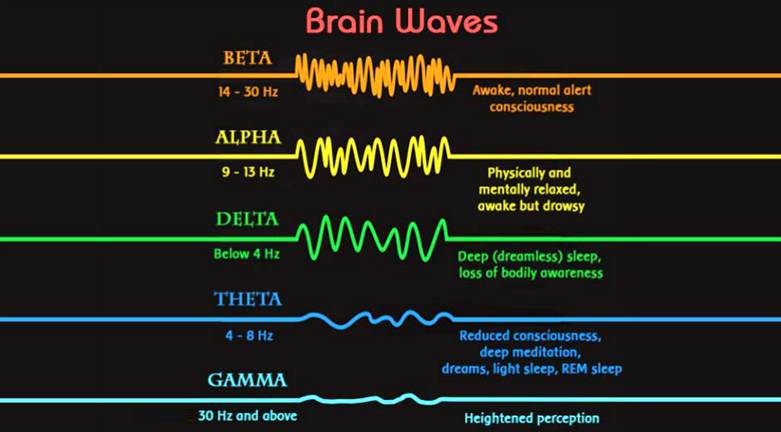
Brain waves are electrical impulses that flow through the brain, creating patterns of activity. They are measured in cycles per second, or hertz (Hz). There are four main types of brain waves: alpha, beta, delta, and theta.
Each type of brain wave is associated with a different state of consciousness. Beta waves, for example, are associated with wakefulness and alertness, while delta waves are associated with deep sleep.
Here’s a breakdown of the different types of brain waves and their associated frequencies:
Beta Waves (12-30 Hz)
– These brain waves are associated with alertness and wakefulness. They are most commonly observed in the frontal lobe of the brain.
Alpha Waves (8-12 Hz)
– These brain waves are associated with relaxation and calmness. They are most commonly observed in the occipital lobe of the brain.
Theta Waves (4-8 Hz)
– These brain waves are associated with meditation, creativity, and dreaming. They are most commonly observed in the temporal lobe of the brain.
Delta Waves (0.5-4 Hz)
– These brain waves are associated with deep sleep and unconsciousness. They are most commonly observed in the parietal and frontal lobes of the brain.
Gamma Waves 30-90Hz
Generation of gamma oscillations
Neural oscillations are rhythmic fluctuations generated by the activity of local neuron populations or neuron assemblies across brain areas and can be detected by local field potential (LFP), electrocorticography (ECoG), electroencephalography (EEG), and magnetoencephalography (MEG) at frequencies including delta (1-4 Hz), theta (4–8 Hz), alpha (8–12 Hz), beta (15–30 Hz), gamma (30–90 Hz) and high gamma(>50 Hz; Mathalon and Sohal, 2015; Cole and Voytek, 2017). They govern the timing of neuronal spikes at the microscale, and at the macroscale, they coordinate the dispersed cortical communication to enable temporal and spatial brain connectivity (Zhang et al., 2018). According to Pascal Fries’s hypothesis of “communication through coherence (CTC),” effective synaptic communication is dependent on the coordination between presynaptic and postsynaptic groups (Fries, 2015). Gamma oscillations, characterized as a rapid rhythm, allow excitation in the network to temporarily escape from the following inhibition, so enhancing the effectiveness, precision and selectivity of communication between multiple regions (Tiesinga et al., 2004). Electrophysiological data from macaques showed that virtually induced gamma synchronization between primary visual cortex (V1) and higher visual cortex (V4) facilitated sensory transmission to motor responses and shortened their reaction time, hence supporting the CTC hypothesis (Rohenkohl et al., 2018).
From The role of gamma oscillations in central nervous system diseases: Mechanism and treatment
It is possible to externally adjust the rate of brainwaves through the process of entrainment. According to Gruzelier4, prolonged audio stimuli in repetitive and synchronized manner may induce changes in brain waves patterns and, consequently, may modulate neurophysiological and behavioral responses. More specifically, repetitive external or environmental stimuli may temporarily affect the predominance of specific brain wave frequencies, a phenomenon namely brainwave entrainment (BWE)5–7. Therefore, BWE can be defined as rhythmic synchronization of brainwave oscillation with an external repetitive stimulus.
BWE is a recurrent phenomenon in nature and biologically present in living beings8. The principle of entrainment or harmonization was discovered around 1665, by the Dutch scientist Christian Huygens9. The synchronization obtained through the entrainment principle is the result of the harmonization principle, a physical phenomenon that occurs systematically in nature, and that is dependent on environmental stimuli, for example, visual, auditory, or tactile. These stimuli may be used to elicit synchronized brainwave patterns to match that of different mental states and/or levels of consciousness, as seen with data acquisition techniques, such as the electroencephalography (EEG). In this context, Oster10 stated the possibility to improve, amplify or modulate brain wave patterns to conditioned events in the cerebral cortex3,11. The proposed therapeutic benefits have a wide scope, including the improvement of cerebral blood flow, neuroplasticity stimulation, and neurophysiological compensations between the cerebral hemispheres3.
It is also possible to control brainwave entrainment through harmonics of surrounding electrical fields. Clinical research indicates that somewhere between 25% and 75% of human and animal subjects may exhibit marked psychophysiological sensitivity to extremely low frequency (ELF) magnetic and electric fields.
Brain-wave entrainment can be demonstrated electroencephalographically when subjects are in the vicinity of oscillations in the frequency range of approximately 3–20 Hz at intensities below 100 nT (nanoteslas). (1 T = 104 G.)
ELF fields of 6.67 Hz, 6.26 Hz and lower tend to produce symptoms of confusion, anxiety, depression, tension, fear, mild nausea and headaches, cholinergia, arthritis-like aches, insomnia, extended reaction times, hemispheric EEC desynchronization, and many other vegetative disturbances. H and B field (magnetic vector) oscillations of 7.8, 8.0, and 9.0 Hz produce anxiety-relieving and stress-reducing effects that mimic some meditative states. It has been speculated that frequencies in this range may be the universally permeating
“clock frequencies” or carriers on which “mind” or “consciousness” states can be impressed and in which they may interact with other life-forms in the nebulous realms of ESP, psychotronics, distant healing, radiesthesia, and related paranormal but anecdotal phenomena.
Frequency of US Power grid
Short answer: The range is usually held within ±0.5%, so its from 59.7Hz to 60.3Hz for a 60Hz grid.
Long answer: Frequency is regulated tightly because it’s how the overall load in the grid is controlled. If there’s a runaway to lower frequencies, that usually means there is a short-circuit near a major power station or hub. So that will drop out soon. Then there usually is a runaway to higher frequencies because of the dropped load. So things escalate very quickly if the grid has many gigawatts power stations. And you don’t want that.
In weak grids on the contrary, the frequency may swing much more. Eastern European countries typically allowed 47Hz to 53Hz. That’s acceptable if there’s only a few power stations and a few big consumers. The same for emergency generators and isolated grids on islands.
What limits the frequency downwards is power conversion in transformers and AC motors. The lower the frequency is, the lower the primary voltage needs to be not to overexcite the iron parts by the magnetic fields. So a substantial frequency drop has to be accompanied by a voltage drop too, and that’s what is done in weak grids to allow lower frequencies.
Gamma waves above 50 are generated within very small regions of the brain associated with concentration of sensory awareness on external objects typically in visual centers, though strangely in olfactory centers for hedgehogs. Lower Gamma in the 20-40hz range may have a positive effect on concentration in alzheimer’s patients, but at what detriment to the neurologically necessary relaxation periods of lower brainwave frequencies. And specifically their interference in inducing states of meditation associated with lower frequencies like alpha and delta waves. The field of 60hz surrounds us with many people these days trying to protect themselves from EMF but how large is the em field and how far does it travel? Power lines differ in radiation emissions.
For street pole power lines with 33 kV, the strongest ones produce around 0.5 milligauss at a distance of 25 meters.
The lines with high voltage transmission lines of 400 kV create less than 0.5 milligauss at a 200-meter range.
The real estate industry would have you believe in these safety numbers What Is A Safe Distance to Live from Power Lines?
One of the most conflicting issues is measuring the safe distance from powerlines. It is still a highly controversial issue and depends on various facts. Another thing is the EMF effects depend on the distance of your house. So that after finding all the conflicting researches here is the safe distance guide-(About electromagnetic fields, 2020)(DC EMI EXPLAINED, 2020)
For 133 kV Power lines you have to maintain 100 feet distance.
For 230 kV Power lines you have to maintain 150 feet distance.
For 345 kV Power lines you have to maintain 250 feet distance.
For 550 kV Power lines you have to maintain 350 f feet distance.
After 500 feet it’s unable to measure the EMF effect with power lines. That is the EMF power lines safe distance. However, it’s still a question that will you feel risk-free to live in such an area?
But the entirety of the structures you are spending most of your time in are cycling the same HZ at 130 and 240 volts, so what is the safety distance from the wiring in your own home? This research is discouraged for obvious reasons lest we all go back to burning whale oil lamps at night. But despite all the technological miracle we’ve been living for the last 100 years with indoor wiring, it cannot help but have produced a change in our attention spans and externalized the focus of our attention to primarily visual stimuli.
Briefing Document: EMF Effects and Brain Activity
I. Electromagnetic Fields (EMF) and Measurement Considerations
Source: InspectAPedia article on EMF measurement distance.
Main Theme: This source focuses on practical considerations for measuring EMFs, particularly the importance of distance from the source.
II. 60 Hz Magnetic Fields and Brain Activation
Source: “Effects of a 60 Hz Magnetic Field Exposure Up to 3000 μT on Human Brain Activation as Measured by Functional Magnetic Resonance Imaging – PMC” (Legros et al., 2015).
Main Themes:fMRI Detects MF-Induced Changes: The study demonstrates the feasibility of using fMRI to detect subtle changes in brain activation patterns after exposure to 60 Hz magnetic fields.
“These results illustrate the potential of using fMRI to identify MF-induced changes in functional brain activation, suggesting that a one-hour 60 Hz, 3000 μT MF exposure can modulate activity in specific brain regions after the end of the exposure period (i.e., residual effects).”
Specific Brain Region Modulation: Exposure to a 60 Hz, 3000 μT magnetic field for one hour can modulate activity in specific brain regions.
No Impact on Task Performance: Despite changes in brain activation, the study found no significant impact on the performance of finger-tapping or mental rotation tasks.
“It should be noted that, despite the modulation in neuroprocessing presented in this paper, the 60 Hz MF exposure did not impact speed or accuracy of the tasks, and therefore did not have any physical behavioural impact.”
Cortical Excitability: The study suggests that MF exposure may modulate cortical excitability, possibly via changes in synaptic plasticity.
“We discuss the possibility that MF exposure at 60 Hz, 3000 μT may be capable of modulating cortical excitability via a modulation of synaptic plasticity processes.”
Methodology:Participants performed finger-tapping and mental rotation tasks before and after a one-hour exposure to a 60 Hz, 3000 μT MF. Control groups were used.
fMRI was used to measure brain activation patterns, focusing on Blood Oxygen Level Dependant (BOLD) signals.
The magnetic field was generated using the MRI’s Z-gradient coil.
Confounds:The study acknowledges that MRI scanners use various electromagnetic fields, which could potentially confound results. However, the consistent use of imaging sequences in both control and experimental groups helps to isolate the effects of the 60 Hz MF.
The researchers took steps to measure and account for electric fields induced by the 60 Hz MF exposure in comparison to those induced by the fMRI BOLD sequence.
Key Findings:Significant differences were found in task-dependent brain areas after MF exposure.
Subjects could not consciously detect the presence of the 60 Hz MF.
The study demonstrates that fMRI is a valuable tool for imaging the effects of ELF MF on human neurophysiology.
It’s important to restate that despite modulation in neuroprocessing as measured by fMRI there was no impact on speed or accuracy of the cognitive tasks.
Figures Referenced:Fig 6. Pre-exposure finger tapping averaged activation map of the contralateral motor cortex regions (top row) and the ipsilateral cerebellum (bottom row) for 20 participants for the full study at 3000 μT.
Fig 11. Activation in the right occipital cortex during the mental rotation task. Top) Pre-exposure (N = 21); Middle) Post- minus pre- exposure in the control group (N = 11); Bottom) Post- minus pre- exposure in the 60 Hz MF exposure group (N = 10).
Fig 12. Measured rate of change (dB/dt) during 60Hz MF exposure and BOLD sequences.
Fig 13. Power spectrum of magnetic field induction during 60 Hz and BOLD sequences.
III. Brain Waves and Electrical Activity
Source: “Pasted Text”
Main Themes:Types of Brain Waves: Introduction to alpha, beta, delta, theta, and gamma brain waves, with their associated frequencies and states of consciousness.
Electrical Grid Stimulus: Mentions the potential impact of the electrical grid (60 Hz) on the nervous system.
Paranormal Phenomena: Alludes to speculative connections between ELF fields, consciousness, and paranormal phenomena.
Power Grid Range: States that the US power grid operates within a range of 59.7 Hz to 60.3 Hz.
IV. Gamma Rhythms and Brain Health
Source: “The gamma rhythm as a guardian of brain health – PMC” (Ichim et al., 2024).
Main Themes:Gamma Oscillations: Review of gamma oscillations (30-150 Hz) and their possible roles in perception, cognition, and behavior. Acknowledges that a definitive answer regarding their causal implication in perception, cognition, and behavior still lies ahead.
“Gamma oscillations in brain activity (30–150 Hz) have been studied for over 80 years. Although in the past three decades significant progress has been made to try to understand their functional role, a definitive answer regarding their causal implication in perception, cognition, and behavior still lies ahead of us.”
Gamma Entrainment using Sensory Stimulation (GENUS): Exploration of GENUS as a therapeutic approach for neuropsychiatric diseases.
GAMER Hypothesis: Proposal that endogenous gamma oscillations are essential for maintaining healthy circuit function, particularly in vasomotor control and neurometabolic processes. This is proposed as an extension of GENUS.
“Going beyond the functional and therapeutic role of gamma, we propose a third pillar of exploration, where gamma, generated endogenously by cortical circuits, is essential for maintenance of healthy circuit function.”
“According to this hypothesis, which we call GAMER (GAmma MEdiated ciRcuit maintenance), gamma oscillations act as a ‘servicing’ rhythm that enables efficient translation of neural activity into vascular responses that are essential for optimal neurometabolic processes.”
Types of Gamma Oscillations: Discusses evoked, induced, and spontaneous gamma oscillations, emphasizing the importance of endogenous gamma.
“In the context of this review, we will call every type of gamma oscillation that is not entrained as ‘endogenous’.”
Methodological Considerations: Highlights the challenges in detecting and characterizing gamma bursts and the need for advanced time-frequency analysis techniques.
“To correctly assess the expression of gamma in a certain analysis window, it is critical to avoid relying on the PSD and to use TFRs. However, the latter are also posing significant challenges.”
Interneurons and Vasoactive Regulation: Focuses on the role of interneurons (PV, VIP, SST, NOS) in generating and propagating gamma oscillations and their vasoactive properties, impacting blood flow and tissue oxygenation.
Criticisms and Caveats: Addresses criticisms regarding the functional role of gamma oscillations, such as their low and inconsistent power and dependence on stimulus features.
“Skeptics on the functional role of gamma mainly focus on the hypothesis of binding by synchrony (Singer, 1999), CTC (Fries, 2005), or PC (Fries et al., 2007) and anchor their arguments in three major directions (Ray and Maunsell, 2015): low and inconsistent power, dependence on low-level stimulus features, and phase disruption due to conduction delays and broad-band contamination.”
FAQ on Electromagnetic Fields (EMF) and Brain Activity
What are extremely low-frequency (ELF) magnetic fields (MF) and why is research focused on 60 Hz frequencies?
ELF magnetic fields are time-varying magnetic fields with frequencies below 300 Hz. Power-line frequencies, specifically 60 Hz in North America, are of particular interest because of their widespread presence in the environment due to electrical grids and appliances. Research investigates whether these fields affect the human nervous system, cognitive processes, and motor functions.
Can exposure to 60 Hz magnetic fields affect human brain activity, and if so, how is this being studied?
Yes, research suggests that exposure to 60 Hz magnetic fields can modulate human brain activity. Studies use functional Magnetic Resonance Imaging (fMRI) to observe changes in brain activation patterns during motor and cognitive tasks before and after MF exposure. fMRI measures brain activity by detecting changes associated with blood flow (Blood Oxygen Level Dependent or BOLD).
What are the key findings regarding the impact of 60 Hz MF exposure on brain function revealed by fMRI studies?
fMRI studies have demonstrated that exposure to 60 Hz magnetic fields can lead to significant changes in task-induced functional brain activation. These changes have been observed during tasks such as finger tapping (motor) and mental rotation (cognitive). The research suggests that 60 Hz MF exposure can modulate activity in specific brain regions even after the exposure period ends, indicating a residual effect.
What is “Gamma Entrainment Using Sensory Stimuli (GENUS)” and how does it relate to brain health?
GENUS refers to the use of sensory stimuli (e.g., light, sound) to entrain, or synchronize, brain activity to the gamma frequency range (typically 30-150 Hz). Emerging research suggests that GENUS may have a therapeutic role, potentially improving cognitive function and offering neuroprotection, particularly in conditions like Alzheimer’s disease. However, the reproducibility and mechanisms underlying these effects are still under investigation.
What is the GAMER hypothesis and how does it differ from GENUS?
GAMER (GAmma MEdiated ciRcuit maintenance) proposes that endogenous gamma oscillations, generated naturally within brain circuits, are essential for maintaining healthy circuit function. Unlike GENUS, which relies on external sensory stimulation to entrain gamma, GAMER focuses on the role of internally generated gamma in processes like vasomotor control (regulation of blood vessel activity) and neurometabolic homeostasis. It suggests that disruptions in endogenous gamma may contribute to neurodegeneration and circuit dysfunction.
How do different types of interneurons contribute to gamma oscillations and brain health, according to the GAMER hypothesis?
The GAMER hypothesis emphasizes the role of specific interneuron types, including those expressing parvalbumin (PV), vasointestinal peptide (VIP), somatostatin (SST), and nitric oxide synthase (NOS), in generating and propagating gamma oscillations. These interneurons also possess vasoactive properties, meaning they can influence blood flow and oxygenation in the brain. Their coordinated activity during gamma oscillations is believed to be crucial for regulating blood flow and maintaining optimal neurometabolic processes. VIP+ interneurons promote vasodilation, SST+ interneurons promote vasoconstriction, and NOS+ interneurons may feature both, providing the basis for coordinated effects on blood flow.
What are the different types of brainwaves and how do they relate to states of consciousness?
Brainwaves are electrical impulses in the brain measured in cycles per second (Hertz, Hz). The main types are:
Beta (12-30 Hz): Alertness and wakefulness, common in the frontal lobe.
Alpha (8-12 Hz): Relaxation and calmness, observed in the occipital lobe.
Delta (0.5-4 Hz): Deep sleep and unconsciousness, parietal and frontal lobes.
Gamma (30-90Hz): controls connectivity between different brain regions, which is crucial for perception, movement, memory, and emotion.
What challenges exist in studying gamma oscillations, and what techniques are being developed to address them?
Gamma oscillations often occur as brief bursts localized in time and frequency, making them difficult to detect and characterize using traditional analysis techniques like Fourier transforms. Time-frequency representations (TFRs), such as spectrograms and scalograms, are more effective at revealing gamma bursts. Advanced techniques like matching pursuit (MP) and superlets are being developed to improve the detection and localization of gamma bursts in complex neural signals. It is very important to avoid relying on the PSD, power spectral density, and use TFRs.
Electromagnetic Fields & Brain Activity: A Study Guide
I. Key Concepts & Review
This section provides a framework for understanding the core concepts discussed in the provided texts.
A. Electromagnetic Fields (EMF)
Definition: Understand what constitutes an electromagnetic field, its components (electric and magnetic fields), and how they are measured.
Sources: Identify common sources of EMF in the environment, including power lines, electrical appliances, and medical equipment like MRI machines.
Frequency: Understand the concept of frequency in the context of EMF (Hertz – Hz) and the distinction between extremely low frequency (ELF) and other frequency ranges.
Intensity/Magnitude: Understand how the strength or magnitude of an EMF is quantified (e.g., microteslas – μT).
B. Brain Waves & Neural Oscillations
Types: Know the main types of brain waves (alpha, beta, delta, theta, gamma) and their associated frequency ranges and states of consciousness.
Gamma Oscillations: Focus on gamma oscillations (30-150 Hz), their proposed roles in cognitive processes, and the mechanisms behind their generation.
Neural Synchrony: Grasp the concept of neural synchrony and its importance in brain function, particularly in the context of gamma oscillations.
Evoked, Induced and Spontaneous oscillations: Understand the differences between these types of oscillations and how each is generated.
Time-Frequency Representations (TFRs): Understanding the importance of TFRs over Power Spectral Density (PSD) when analyzing signals.
C. Functional Magnetic Resonance Imaging (fMRI)
Principles: Understand the basic principles of fMRI, including the BOLD (Blood Oxygen Level Dependent) signal and how it reflects brain activity.
Applications: Know how fMRI is used to study brain function and map brain activity during cognitive and motor tasks.
Limitations: Be aware of the limitations of fMRI, such as potential confounds from the MRI’s own electromagnetic fields.
Regions of Interest (ROI): Being able to use the Talairach coordinates for finding relevant activity on a brain scan.
D. Effects of EMF on the Brain
Modulation of Brain Activity: Understand how EMF exposure can potentially modulate brain activity, including cortical excitability and synaptic plasticity.
Cognitive and Motor Function: Know how EMF exposure might affect cognitive functions like mental rotation and motor functions like finger tapping.
Mechanisms: Explore potential mechanisms by which EMF interacts with brain tissue, including modulation of neuronal firing patterns.
Gamma Entrainment using Sensory Stimulation (GENUS): Understand how GENUS applies to a potential therapeutic application.
E. Interneurons
Types and Function: Understand the various types of interneurons (PV+, VIP+, SST+, NOS+) and their roles in brain function, particularly in relation to gamma oscillations and vasoactive regulation.
GAMER Hypothesis: Learn the GAMER (GAmma MEdiated ciRcuit maintenance) hypothesis and the role of interneurons in maintaining healthy brain function.
F. Methodological Considerations
Measurement Techniques: Consider the challenges of accurately measuring EMF and its effects on biological systems.
Control Groups: Understand the importance of control groups in EMF studies to account for placebo effects and other confounding factors.
Statistical Analysis: Be familiar with the statistical methods used to analyze fMRI data and assess the significance of observed effects.
G. Therapeutic Interventions
Deep Brain Stimulation (DBS): Understanding the implications of DBS for treatment.
Transcranial Alternating Current Stimulation (tACS): Understanding the implications of tACS for treatment.
V. Glossary of Key Terms
Electromagnetic Field (EMF): A field of energy consisting of electric and magnetic components.
Frequency: The number of cycles per second of a wave, measured in Hertz (Hz).
Extremely Low Frequency (ELF): EMF with frequencies below 300 Hz.
Microtesla (μT): A unit of measurement for magnetic field strength.
Brain Waves: Electrical impulses in the brain that create patterns of activity, classified into types like alpha, beta, delta, theta, and gamma.
Gamma Oscillations: Rhythmic brain waves with frequencies between 30-150 Hz, associated with cognitive functions.
Neural Synchrony: The coordinated activity of groups of neurons firing together.
Functional Magnetic Resonance Imaging (fMRI): A neuroimaging technique that measures brain activity by detecting changes associated with blood flow.
BOLD Signal: Blood Oxygen Level Dependent signal, a measure used in fMRI to assess brain activity.
Synaptic Plasticity: The ability of synapses to strengthen or weaken over time, underlying learning and memory.
Cortical Excitability: The responsiveness of the cerebral cortex to stimulation.
Finger Tapping Task: A motor task used to assess motor function and map brain activity.
Mental Rotation Task: A cognitive task used to assess spatial reasoning and map brain activity.
Region of Interest (ROI): A specific area of the brain that is analyzed in neuroimaging studies.
Interneurons: Neurons that connect other neurons in the brain and spinal cord.
PV+ (Parvalbumin-positive) Interneurons: A type of interneuron involved in generating gamma oscillations.
VIP+ (Vasoactive Intestinal Peptide-positive) Interneurons: A type of interneuron that inhibits other interneurons and promotes vasodilation.
SST+ (Somatostatin-positive) Interneurons: A type of interneuron that inhibits other neurons and promotes vasoconstriction.
NOS+ (Nitric Oxide Synthase-positive) Interneurons: A type of interneuron that can have both vasodilatory and vasoconstrictive effects.
GAMER Hypothesis: GAmma MEdiated ciRcuit maintenance, a hypothesis proposing that endogenous gamma oscillations maintain healthy brain function.
GENUS: Gamma Entrainment using Sensory Stimulation.
Deep Brain Stimulation (DBS): A therapeutic intervention that involves implanting electrodes in the brain to deliver electrical stimulation.
Transcranial Alternating Current Stimulation (tACS): A non-invasive brain stimulation technique that delivers alternating current to the brain through electrodes on the scalp.
Time-Frequency Representations (TFRs): A visual representation of how the frequency content of a signal changes over time.
Power Spectral Density (PSD): A measure of the power of a signal as a function of frequency.
Evoked Oscillations: Oscillations that occur always at a precise phase relative to the stimulus timing, in each recorded trial.
Induced Oscillations: Oscillations that are generated by internal circuit mechanisms when the stimulus is either aperiodic or has a significantly lower frequency.
Spontaneous Oscillations: Oscillations that are produced in the absence of any external stimulus during ongoing, ‘spontaneous’ brain activity.
You may notice that some of the deeper mystical and magical content of the site has now been moved behind a paywall. I can no longer solely bear the cost of your mystical education myself and am in need of support of the sites and the newly formed Kemetic Church of Ra. The items paywalled, can only be understood by those with a mystical practice anyway or some degree of initiation. For now, the library which contains many more initiated secrets will remain free temporarily while those that recognize there is a time limit for that generosity should not be surprised when that gets paywalled as well. If you’d like to keep resources like these available you must contribute and I can no longer tolerate the entire burden of the free rider problem myself. If this content is worth something to you, you can sign up here.
Briefing Document: Ceremonial Magic and Thelemic Magick
I. Overview
This document analyzes two distinct but related sources on magic: excerpts from Arthur E. Waite’s “Book of Ceremonial Magic” and selected sections from Aleister Crowley’s “Magick in Theory and Practice.” Waite’s work presents a traditional, heavily Christianized system of ceremonial magic, focused on invoking divine power and controlling spirits. Crowley’s work, part of his broader Thelemic system, offers a more individualized and self-focused approach to magick, centered around discovering and enacting one’s True Will. The juxtaposition of these two provides insight into the historical evolution of occult thought and practice.
II. Arthur E. Waite – “Book of Ceremonial Magic”:
A. Core Themes:
Divine Invocation & Protection: Waite’s extracts reveal a strong reliance on Christian prayer and invocation for protection, guidance, and power. The operator calls upon God, Jesus Christ, the Holy Spirit, the Virgin Mary, angels, and saints.
Quote: “O great God, by Whom all things have been set free, deliver me also from all evil… May the blessing of God the Father Almighty, of the Son and of the Holy Ghost, be always with me , Amen.” (p. 47)
Hierarchical Cosmology: The texts reflect a structured universe with distinct levels: God, angels, saints, humans, and spirits (both good and evil). These beings are often invoked as intermediaries or guardians.
Quote: “May the blessing of the Holy Angels, Archangels, Virtues, Powers, Thrones, Dominations, Cherubim and Seraphim, be with me for ever , Amen.” (p. 48)
Control of Spirits: A significant portion of Waite’s extracts addresses methods for controlling spirits. This includes the use of rituals, talismans, conjurations, and divine names. Spirits are characterized as both helpful and malevolent.
Quote: “May it Please Thee, therefore, most Precious Jesus, by the Power of this same (Name of) Jesus, to drive away the demon from me…” (p. 52)
Quote: “…we hereby depute unto them all power to perform exorcisms of the possessed, so that the name of Jesus Christ may be magnified, and the devil and his angels be driven to confusion” (p. 91)
Emphasis on Purity and Ritual: Precise instructions are given for creating talismans, preparing instruments (like knives and pens), and performing rituals. Purity and proper timing (planetary hours) are essential.
Quote: “Take care not to perfect the instrument otherwise than on the day of Venus, and in the hour thereof…” (p. 156)
Quote: “…on the day and in the hour of Mars, the Moon waxing… a piece of virgin parchment must be prepared…” (p. 237)
Specific Talismans and Their Powers: The text provides a detailed catalog of talismans with specific uses, from attracting love to achieving invisibility, reading thoughts, or opening locks, Each talisman is associated with unique symbols, materials, and evoking words.
Quote: “II. Gives the love and complaisance of the entire female sex… The evoking words are NADES, SURADIS, MANINER…” (p. 121)
Quote: “IX. Transports the possessor to any part of the world, and that without danger. The potent words are RADITUS, POLASTRIEN, TERPANDU, OSTRATA, PERICATUR, ERMAS.” (p. 123)
Exorcism and Binding: The power of God and divine names is invoked to control, punish, and bind rebellious or disobedient spirits, employing threats of eternal damnation.
Quote: “I do hereby curse and deprive thee of all thine office, power and place; I bind thee in the depth of the Bottomless Pit, there to remain unto the Day of judgment…” (p. 233)
Days of the week and planetary hours: Specific days and planetary hours are prescribed for certain rituals and operations, revealing an understanding of astrological correspondences.
Quote: “It will be seen from this table that there is a recurring rule of the planets in unbroken succession through the whole week…” (p. 152)
B. Key Ideas and Facts:
Importance of Jesus’ name: The name of Jesus is considered a powerful tool for healing, protection, and commanding spirits.
Quote: “at the Name of Jesus let every knee bow, in heaven, on earth and in hell…” (p. 50)
Demons and their Descriptions: The text offers physical descriptions of spirits (particularly those of Mars) and associates them with specific symbols and behaviors.
Quote: “The Spirits of Mars have a tall body and choleric, a filthy countenance, brown, swarthy or red in colour; they have horns like the hart, claws like a griffin and they bellow like wild bulls…” (p. 85)
The use of blood: The text describes the use of blood, such as mole’s blood, for certain rituals, suggesting the importance of vital fluids in magical operations.
Quote: “thou shalt make the first knife and shalt steep it in the blood of the mole…” (p. 156)
Specific Conjurations: Elaborate conjurations, invoking names of God, spirits, and occult forces, are used to command spirits and achieve specific results.
Pacts with Spirits: The text acknowledges the concept of pacts with spirits, with warnings about their dangers.
Quote: “There are two kinds of pacts, says the Grimorium Verum, the tacit and the manifest; but know at the same time that among the several kinds of spirits there are some which bind and some which do not bind, save only in a very light manner.” (p. 254)
III. Aleister Crowley – “Magick in Theory and Practice”:
A. Core Themes:
Thelema and True Will: Crowley’s magick centers on the concept of “Do what thou wilt shall be the whole of the Law,” emphasizing individual autonomy, and the discovery and fulfillment of one’s “True Will.”
Quote: “Do what thou wilt shall be the whole of the Law” (Title page)
Magick as Self-Transformation: Magick is seen as a process of personal growth, development, and transformation through understanding and aligning with one’s true nature.
Quote: “Every active Member of the Order has destroyed all that He is and all that he has on crossing the Abyss; but a star is cast forth in the Heavens to enlighten the Earth, so that he may possess a vehicle wherein he may communicate with mankind.” (p. 240)
The Use of Symbolism and Correspondences: Crowley employs a complex system of symbols, correspondences, and Qabalistic concepts to understand and manipulate reality. A vast range of systems from astrology, mythology, and alchemy are integrated.
Quote: “These symbols are all shewn in the Atu “The Hermit”. They are the powers of the Yod, whose extension is the Vau.” (p. 183)
Self-Deification: The ultimate goal of magick is a kind of self-deification, the unification of the individual will with the cosmic will.
Quote: “I am the All, for all that exists for me is a necessary expression in thought of some tendency of my nature, and all my thoughts are only the letters of my Name.” (p. 290)
Rejection of Traditional Morality: Crowley rejects traditional notions of good and evil, viewing them as subjective and often detrimental to the pursuit of one’s True Will.
Quote: “Good” must be defined in terms of human ideals and instincts” (p. 183)
The Importance of Practice: The text stresses the importance of diligent practice, self-observation, and experimentation in the pursuit of magick.
Quote: “Various remarkable phenomena will very probably occur during these practices. They must be carefully analysed and recorded.” (p. 285)
Hymns and Invocations: The text includes passionate invocations to deities such as Pan, as ways to evoke energy and connection to magical forces.
Quote: “Thrill with lissome lust of the light, O man! My man! Come careering out of the night Of Pan! Io Pan! Io Pan! Io Pan!…” (p. 178)
B. Key Ideas and Facts:
The Significance of 666: The number 666 is associated with the “man” of the current aeon, expressing the power of the individual will.
Quote: “GR:Tau-Epsilon-Iota-Tau-Alpha-Nu = 300+5+10+300+1+50 = 666… — whose number is the number of a man…” (p. 184)
The Abyss and Transformation: Crowley describes the concept of “crossing the Abyss” as a complete destruction of the old self, which leads to the birth of a new, enlightened being.
Quote: “Every active Member of the Order has destroyed all that He is and all that he has on crossing the Abyss…” (p. 240)
Divination as Probability: Divination is viewed as a tool for understanding probabilities based on available facts, not as access to absolute truth.
Quote: “The astronomer himself has to enter a caveat. He can only calculate the probability on the observed facts. Some force might interfere with the anticipated movement.” (p. 185)
The Bornless One: The text includes invocations to the “Bornless One,” a powerful archetypal figure in magickal tradition.
Quote: “Hear Me, and make all Spirits subject unto Me: so that every Spirit of the Firmament and of the Ether…” (p. 241)
Ritual and symbolism: Specific rituals, such as the Star Ruby, are described, which combine gestures, words, and visualization for achieving magical states of consciousness.
Quote: “Facing East, in the centre, draw deep deep deep thy breath closing thy mouth with thy right forefinger…” (p. 289)
The importance of self-knowledge: Crowley’s emphasis on self-analysis is evident, with exercises focusing on physical and mental endurance to be recorded, as they are keys to further self-understanding.
Quote: “Ascertain how much alcohol you can take, and what forms of drunkenness assail you…Let all these things be carefully and conscientiously recorded; for according to your powers will it be demanded of you.” (p. 285)
Personal experimentation: Students are advised to adapt and create practices that fit their individual natures.
Quote: “Let the Zelator attach no credit to any statements that may have been made throughout the course of this instruction…” (p. 295)
Mortification and Self-Denial: Mortifications of the flesh are seen as potentially useful if they serve to control the practitioner and further the pursuit of their Will, but self-punishment without a purpose is discouraged.
Quote: “But concerning voluntary privations and tortures, without use save as against the devotee, they are generally not natural to healthy natures, and wrong.” (p. 295)
IV. Comparison and Contrast:
Authority: Waite’s source relies on the authority of God and traditional religious structures. Crowley’s work emphasizes personal authority derived from one’s True Will.
Goal: Waite seeks divine favor and control over external forces. Crowley aims for self-transformation, and union with one’s divine nature.
Method: Waite utilizes Christian prayers, precise rituals, and talismans. Crowley employs symbolism, visualization, self-experimentation, and a focus on the will.
Cosmology: Waite presents a more traditional, Judeo-Christian view with a clear hierarchy of angels, demons and saints. Crowley presents a more fluid and personalized view with incorporation of Egyptian, Greek and Indian pantheons.
View of spirits: Waite views spirits as potentially dangerous forces to be controlled through ritual, names and divine power. Crowley views spirits as different expressions of one’s own nature.
V. Conclusion:
These two sources present radically different approaches to magic. Waite’s extracts illustrate a traditional system of ceremonial magic rooted in religious authority and seeking external control. Crowley, on the other hand, offers a more modern, individualistic system focused on self-discovery and the expression of one’s True Will. Examining these differences provides valuable context for understanding the evolution of occult thought and practice.
F.A.Q.
1. What is the significance of planetary hours in the context of this magical practice?
Planetary hours, derived from a recurring sequence of planets throughout the week, are specific times within a day that are ruled by particular planets. These hours are considered significant for magical operations because it is believed that each planet exerts a unique influence. For instance, the day and hour of Venus are suitable for preparing tools, while the day and hour of Mars are used in other types of ritual work, such as making a talisman or conjuring spirits. Understanding and working with planetary hours is thought to enhance the efficacy of magical practices by aligning actions with the appropriate celestial energies.
2. What are some examples of talismans described in these sources and what purposes do they serve?
The texts detail numerous talismans made from specific colored satins, embroidered with particular characters, and activated by spoken words or physical gestures. For example, one talisman embroidered on black satin with silver grants the love of women when used with specific words, while a gold-colored satin talisman compels truth and confessions. Others are designed to provide the ability to travel to any location, open locks, influence people’s thoughts, protect against evil, or grant virtue. Each talisman is unique, reflecting a specific intention and requiring its own specific instructions for its creation and use.
3. How is the name “Jesus” utilized in this system of magic?
The name “Jesus” is used extensively for protection, healing, and invoking divine power in this system. It’s treated as a sacred name of great potency, capable of driving away demons, performing miracles, and saving those who call upon it. The texts suggest that the name of Jesus holds power over spiritual beings and that it is central to warding off evil influences, securing divine blessing, and calling on supernatural assistance. There are many prayers and conjurations that make use of this name and others associated with Christianity.
4. What is the purpose of conjurations in these texts, and how are they structured?
Conjurations are central to the rituals, serving as a means of communication, commands, and binding between the magician and various spiritual entities. They generally start with the invocation of divine names and authorities like God, Jesus, and Angels and then proceed to address specific spirits and call for specific actions, such as the revelation of secrets, granting a favor, or causing harm to enemies. They are often structured with clear commands, threats of excommunication, descriptions of desired outcomes and are delivered in a way that seeks to establish the magician’s authority.
5. What is the relationship between the magician and the spirits in this tradition, and how is this relationship managed?
The magician seeks to establish a command-based relationship with spirits. This involves compelling them to obey the magician’s will through a combination of invoking sacred names, making pacts, creating talismans, using conjurations, and performing ritual actions that are intended to bind and control. The relationship is often framed as a matter of power, with the magician seeking to assert dominance over the spirits and leverage their abilities for his own purposes, whether that is mundane or spiritual. Failure to comply with the magician’s instructions can result in threats and curses.
6. How is the concept of “Will” presented in the second source, and how does it relate to ethical behavior?
The concept of “Will” in the second source is presented as an intrinsic, individual drive towards self-preservation and fulfillment. The notion that a man has a right to fulfill himself to the utmost implies that all actions should ultimately support the individual’s true Will. The text distinguishes between true and false Wills, suggesting that unethical actions like murder or self-harm are caused by a false will, misaligned with the true nature of the individual. Ethical behavior is ultimately tied to acting in accordance with one’s deepest and authentic desires, properly understood.
7. How does the second source describe the role of the initiate in terms of understanding their own nature?
The second source emphasizes self-analysis and understanding as essential for magical practice. The initiate is urged to assess their strengths and weaknesses, including physical endurance, thought control, and emotional responses. This analysis is critical for the initiate’s understanding of their place in the universe and for self-mastery, recognizing that everything within and around them serves as a reflection of themselves. Understanding one’s limits, both in terms of their weaknesses and their strength, is part of an initiatory journey of becoming an Adept.
8. What is the significance of the Qabalah and its correspondences in this magical practice?
The Qabalah, with its intricate system of correspondences, provides a framework for understanding the interconnectedness of the universe, encompassing numbers, letters, planets, elements, colors, deities, and more. These correspondences are essential for magical practice. They dictate when, where, and how rituals are performed and what sorts of words, objects, and images should be utilized. The Qabalah is a tool used to organize and manipulate universal energies and forms and helps the magician tap into a deeper reality by aligning themselves with its principles. These correspondences guide magical practice by linking together seemingly disparate aspects of existence, creating a basis for magical operations.
Ceremonial Magic Study Guide
Quiz
In the Tuesday prayer, what blessings are invoked in addition to those of God? The prayer asks for the blessings of the Holy Angels, Archangels, Virtues, Powers, Thrones, Dominations, Cherubim and Seraphim, as well as the Patriarchs and prophets, apostles, martyrs, confessors, virgins, and all the saints of God. This is in addition to the blessing of the bread and wine that was consecrated by Christ.
What are some physical characteristics associated with the spirits of Mars? The spirits of Mars are said to have a tall body and choleric nature, a filthy countenance that is brown, swarthy or red, horns like a hart, claws like a griffin, and a bellow like a wild bull. They are associated with the motion of burning fire and the sign of thunder and lightning.
According to the text, what is the purpose of the talismans? The talismans described in the text, in conjunction with rings and specific words, are meant to grant various powers to the bearer, including securing the love of women, compelling men to reveal secrets, teleporting across the world, opening any lock, and knowing the thoughts of others. Each talisman is said to have a specific use, and associated words, metals, colors and hand placement.
What are “planetary hours” according to the text? Planetary hours are specific times during the day and night that are ruled by particular planets. They follow a recurring sequence throughout the week, with each planet ruling the first and eighth hours of the day and the third and tenth hours of the night on the day associated with it.
What is the purpose of exorcising and blessing salt, and in what ritual is it used? The salt is exorcised to remove any illusions and is blessed to serve to make the virgin chart. This process is part of a larger ritual of preparing materials for magical work, and it is followed by placing the salted skin in sunlight.
What is SARGATANAS said to have power over? SARGATANAS is said to have the power to make any person invisible, transport them anywhere, open all locks, reveal what is happening in private homes, and teach all the arts of the shepherds. He also commands several brigades of spirits, with others as his inferiors.
What happens if an invoked spirit is disobedient? If a spirit is disobedient and does not appear or respond, the conjurer is instructed to curse the spirit, deprive them of their office, and bind them in the Bottomless Pit. They are cursed by the Company of Heaven, the Sun, the Moon, the Stars, and the Light of the Hosts of Heaven.
According to the text, what is required for creating a piece of virgin parchment, and who must weave the thread? To create virgin parchment, a piece must be prepared on the day and in the hour of Mars, with the Moon waxing, and at the first hour of the day. The thread used to bind the finger must be woven by a virgin girl. The operator then pierces the finger to form a symbol with the blood.
What is the “Blasting Rod,” and how should it be used? The Blasting Rod is mentioned in the text as a powerful instrument, to be held by the conjurer, that should be used while the Kabbalistic circle is described and the word “Rofocale” is pronounced in order to call spirits and is only to be used when the conjurer has been purified. The text stresses that spirits will appear when the Rod is used correctly.
What are the two types of pacts mentioned, and what should one be wary of? The two kinds of pacts are tacit and manifest. One should be wary of spirits that require something personally belonging to you when you agree to a pact, as these can become guileful enemies and that they can extract a high price to be paid.
Answer Key
The prayer asks for the blessings of the Holy Angels, Archangels, Virtues, Powers, Thrones, Dominations, Cherubim and Seraphim, as well as the Patriarchs and prophets, apostles, martyrs, confessors, virgins, and all the saints of God. This is in addition to the blessing of the bread and wine that was consecrated by Christ.
The spirits of Mars are said to have a tall body and choleric nature, a filthy countenance that is brown, swarthy or red, horns like a hart, claws like a griffin, and a bellow like a wild bull. They are associated with the motion of burning fire and the sign of thunder and lightning.
The talismans described in the text, in conjunction with rings and specific words, are meant to grant various powers to the bearer, including securing the love of women, compelling men to reveal secrets, teleporting across the world, opening any lock, and knowing the thoughts of others. Each talisman is said to have a specific use, and associated words, metals, colors and hand placement.
Planetary hours are specific times during the day and night that are ruled by particular planets. They follow a recurring sequence throughout the week, with each planet ruling the first and eighth hours of the day and the third and tenth hours of the night on the day associated with it.
The salt is exorcised to remove any illusions and is blessed to serve to make the virgin chart. This process is part of a larger ritual of preparing materials for magical work, and it is followed by placing the salted skin in sunlight.
SARGATANAS is said to have the power to make any person invisible, transport them anywhere, open all locks, reveal what is happening in private homes, and teach all the arts of the shepherds. He also commands several brigades of spirits, with others as his inferiors.
If a spirit is disobedient and does not appear or respond, the conjurer is instructed to curse the spirit, deprive them of their office, and bind them in the Bottomless Pit. They are cursed by the Company of Heaven, the Sun, the Moon, the Stars, and the Light of the Hosts of Heaven.
To create virgin parchment, a piece must be prepared on the day and in the hour of Mars, with the Moon waxing, and at the first hour of the day. The thread used to bind the finger must be woven by a virgin girl. The operator then pierces the finger to form a symbol with the blood.
The Blasting Rod is mentioned in the text as a powerful instrument, to be held by the conjurer, that should be used while the Kabbalistic circle is described and the word “Rofocale” is pronounced in order to call spirits and is only to be used when the conjurer has been purified. The text stresses that spirits will appear when the Rod is used correctly.
The two kinds of pacts are tacit and manifest. One should be wary of spirits that require something personally belonging to you when you agree to a pact, as these can become guileful enemies and that they can extract a high price to be paid.
Essay Questions
Compare and contrast the use of Christian and non-Christian symbolism and entities in the rituals presented in “Arthur E Waite – Book Of Ceremonial Magic,” noting the purpose of each.
Analyze the role of language and specific words or phrases within the magical practices outlined in the source material, and how they are believed to achieve their effects.
Discuss the ethical and practical considerations presented in the texts concerning the interaction with spirits and the pursuit of magical power.
Explore the different forms of self-discipline and preparation outlined in “liber4 part3 magic in theory and practice” and how these practices relate to the attainment of magical ability.
Analyze the concept of Will, as presented in “liber4 part3 magic in theory and practice,” and discuss its significance in occult practice and the attainment of personal goals.
Glossary of Key Terms
Adept: A person who has achieved a high level of skill and knowledge in a particular area, often used in the context of occult or magical traditions.
AUMGN: A word used to symbolize the whole course of spiritual life. A is formless hero; U is the six-fold solar sound of physical life; M is the silence of death; and GN is the nasal sound of generation and knowledge.
Assiah: In Kabbalah, the lowest of the four worlds, the material world.
Atu: A term used in the Qabalah and associated with specific cards in the Tarot.
Clavicle: A term referring to a key or text that unlocks secrets, often used in the context of magic.
Conjugation: The act of binding or compelling a spirit through invocation or prayer; a formal summoning of spirits.
Exorcism: A ritual process intended to remove or expel evil spirits or negative influences.
Goëtic: Refers to a form of magic that involves summoning and controlling spirits, often associated with darker or more manipulative practices.
Grimoire: A textbook of magic, typically containing instructions for rituals, spells, and other magical practices.
Hand of Glory: A magical object made from the hand of a hanged man, believed to have the power to open locks.
Hoor-paar-Kraat: The term refers to Horus in his silence and is a concept central to Crowley’s Thelema, symbolizing the hidden and inner self.
Ipsissimus: The highest grade in certain occult orders; a state of complete freedom from limitation.
Kabbalah: A system of Jewish mysticism that interprets the scriptures and creation through symbols and numbers.
Lamen: A magical symbol or emblem worn as a talisman, often associated with ceremonial magic.
Liber: Latin for “book,” often used in the titles of occult texts, as in Liber 777
Lucifuge Rofocale: A demonic entity in occult lore, often associated with pacts and the acquisition of wealth.
Maat: A concept meaning Truth and is the title given to the Master of the Temple in one of the texts.
Necromancer: One who practices necromancy; that is, the magic art of conjuring up the spirits of the dead for purposes of divination or to use their powers.
Pantacle: A talisman with a specific magical purpose, typically a disc or flat object bearing symbols or sigils.
Pentagram: A five-pointed star, used in various magical traditions and practices.
Planetary Hours: Specific time periods during the day and night associated with particular planets, thought to be conducive to certain magical practices.
Qabalah (also spelled Kabbalah): A system of Jewish mysticism that interprets the scriptures and creation through symbols and numbers.
Sephiroth: The ten emanations or attributes through which the divine manifests in the Qabbalah.
Sigil: A symbol created for a specific magical purpose; often used in talismans.
Talisman: An object believed to have magical powers, often used for protection or to bring about a specific result.
Tetragrammaton: The Hebrew name of God, represented by the letters YHWH, considered highly sacred in various magical traditions.
Thelema: A philosophy and spiritual system developed by Aleister Crowley, centered around the principle “Do what thou wilt.”
Yetzirah: In Kabbalah, the world of formation, one of the four main levels of creation.
Zelator: A specific grade in certain occult systems, typically that of a student or an initiate.
One of the major problems I have with the Western Mystery Tradition is its ignorance of “Low Magic” techniques and disdain for practices like witchcraft and Hoodoo. This week we’ll be diving into both High and Low magic to round out your arsenal.
We use cookies on our website to give you the most relevant experience by remembering your preferences and repeat visits. By clicking “Accept”, you consent to the use of ALL the cookies.
This website uses cookies to improve your experience while you navigate through the website. Out of these cookies, the cookies that are categorized as necessary are stored on your browser as they are essential for the working of basic functionalities of the website. We also use third-party cookies that help us analyze and understand how you use this website. These cookies will be stored in your browser only with your consent. You also have the option to opt-out of these cookies. But opting out of some of these cookies may have an effect on your browsing experience.
Necessary cookies are absolutely essential for the website to function properly. This category only includes cookies that ensures basic functionalities and security features of the website. These cookies do not store any personal information.
Any cookies that may not be particularly necessary for the website to function and is used specifically to collect user personal data via analytics, ads, other embedded contents are termed as non-necessary cookies. It is mandatory to procure user consent prior to running these cookies on your website.