

You may notice that some of the deeper mystical and magical content of the site has now been moved behind a paywall. I can no longer solely bear the cost of your mystical education myself and am in need of support of the sites and the newly formed Kemetic Church of Ra. The items paywalled, can only be understood by those with a mystical practice anyway or some degree of initiation. For now, the library which contains many more initiated secrets will remain free temporarily while those that recognize there is a time limit for that generosity should not be surprised when that gets paywalled as well. If you’d like to keep resources like these available you must contribute and I can no longer tolerate the entire burden of the free rider problem myself. If this content is worth something to you, you can sign up here.
Category: philosophy
-

The Clear Problems with Faith in the Bible

Key Ideas & Facts:**
– **The Fictionality and Construction of Time in Abrahamic Religions:** The first source argues that Abrahamic religions rely on constructed narratives and a religious concept of time, shaped by the power of writing. Time is not simply a linear progression of events but a construct tied to the relationship between God and humanity. The conquest of time, or the claim to antiquity, is central to these religions. The veracity of the Bible depends entirely on the historicity of certain figures like Moses and Jesus who never in fact existed.
– *”Time, for the Abrahamic religions, is a religious construct.”*
– *”The Abrahamic religions are the child and grandchild of writing and the singular properties of the written word, its capacity to create an alternative reality.”*
– **Moses as a Composite Figure and Literary Construct:** The first source questions the historical accuracy of the Moses narrative, viewing it as a literary construction influenced by earlier Mesopotamian and Egyptian stories. It suggests Moses is a composite figure, comparable to Gilgamesh or King Arthur, existing in a liminal space between myth and reality. Attempts to historically situate Moses within specific timeframes (e.g., the Hyksos period or Akhenaten’s monotheism) are seen as problematic.
– *”It was during this early period of competition between cultures for pre-eminence in terms of Time or antiquity that Moses was linked to Thutmose—although there seems no profound reason for this decision except the arbitrariness of ancient scholarship.”*
– *”Appropriate is to view him as occupying a different reality, undefined by history and yet defined by it. He occupies metaphor and symbol, leading to other possible truths. In this, he can be justifiably compared with Gilgamesh.”*
– **The Exodus as Cultural Memory and Reconfigured History:** The Exodus narrative is explored as a “mnemohistory” (cultural memory) shaped by Egyptian oppression of Canaanite populations in the Late Bronze Age. The narrative provided a mythomoteur to turn a mixed freed population into a cohesive community.
– *”Ronald Hendel holds that Egyptian oppression of Canaanite states may have constructed a mnemohistory… which he describes as a dialectic between historical memory and ethnic self-fashioning.”*
– *”Throughout this process, history was reconfigured into ethnic triumph. The myth of the Israelites being an outside group compensates for their recent emergence as a group or confederacy.”*
– **Challenges to Biblical Literalism:** The first source challenges the literal interpretation of the Bible, particularly regarding the conquest of Canaan and the nature of early Israelite society. Archaeological evidence suggests a more complex and diverse population in the hill country than the Bible portrays.
– *”Biblical stories, which can more logically be seen as fabrications from the post-exilic period, trace the reasons for their having been written—and possibly why such often violent stories should still be accepted as evidence.”*
– **Dating of Biblical Texts and Multiple Authorship:** The first source cites scholars (Gmirkin) suggesting the Pentateuch was composed by Jewish and Egyptian scholars in Alexandria, and states that the Dead Sea Scrolls are the first extant copy, which contains copies or fragments of the Tanakh. The second source, Bart Ehrman, states a consensus among historical scholars *”that in fact the Pentateuch is not one author writing at one time, let alone Moses,”* and mentions the documentary hypothesis (JEDP theory).
– **The Historical Existence of Jesus: A Reassessment:** While many historians argue for the historical existence of Jesus, the evidence is far from conclusive. The first historical mention of Jesus that can be definitively proven comes from sources written approximately 200 years after his supposed lifetime. Additionally, Pontius Pilate’s court records, which have survived, contain no mention of Jesus or his trial, raising significant questions about the historicity of the events described in the New Testament.
– *”The earliest non-Christian references to Jesus, such as those by Tacitus and Josephus, were written decades after his supposed death and are often considered unreliable due to potential Christian interpolations.”*
– *”The absence of any mention of Jesus in Pontius Pilate’s court records, which detail other trials and executions, casts doubt on the historical accuracy of the New Testament accounts.”*
– **Limitations of Archaeological Evidence:** The third source acknowledges the limited archaeological evidence for many historical figures, including Jesus and Pontius Pilate, until recent times. The discovery of the Pilate Stone is cited as an example of how archaeological evidence can unexpectedly corroborate historical accounts, but such evidence for Jesus remains elusive.
– *”The reality is that we don’t have archaeological records for virtually anyone who lived in Jesus’s time and place.”*
– **New Testament as Historical Source:** The third source argues that the New Testament, while a religious text, can be used as a historical source when evaluated using standard historical methods. However, the lack of contemporary evidence and the potential for later embellishments must be taken into account.
– *”Despite the prejudices and theological preconceptions of the evangelists, they record many incidents that mere inventors would have concealed: the competition of the Apostles for high places in the Kingdom, their flight after Jesus’s arrest, Peter’s denial, the failure of Christ to work miracles in Galilee, the references of some auditors to his possible insanity, his early uncertainty as to his mission, his confessions of ignorance as to the Future, his moments of bitterness, his despairing cry on the cross, and of course his death on the cross itself as a common criminal—something that was a bit of a major scandal for early disciples after the fact.”*
– **Independent Historical Sources:** The third source emphasizes the importance of independent historical sources, such as Tacitus and Josephus, in confirming the existence of Jesus. However, these sources were written long after Jesus’s supposed lifetime and may reflect early Christian beliefs rather than historical facts.
– *”Tacitus, born a couple of decades after Jesus’s death, gives a direct reference to Jesus in his Annals (115 AD, Chapter 44 of Book 15), but his account is based on second-hand information and may have been influenced by Christian sources.”*
– *”Josephus, in his Antiquities of the Jews, references Jesus twice, but these passages are widely debated, with many scholars believing they were later interpolated by Christian scribes.”*
– **Ehrman’s Skepticism and the Nature of Historical Inquiry:** Dr. Ehrman, in the second source, approaches the texts skeptically, acknowledging cultural memory and the importance of applying historical methods to understand what probably happened. He advises historians always approach their sources critically.
– *”I think that’s the key—you take it with a grain of salt. You don’t immediately discount it, but you approach it critically. Historians always approach their sources critically and somewhat skeptically because if you didn’t, you’d just read every newspaper and say, ‘Oh yeah, that’s what happened.’ But you realize that when you listen to Fox News and MSNBC reporting the same event, you can’t just say they’re both right. You treat each one skeptically to try and figure out what really did happen. That’s what you do with these sources.”*
**III. Implications & Considerations:**
– The sources raise important questions about the nature of historical evidence and the challenges of reconstructing the past, especially when dealing with religious texts and figures.
– The reliance on written narratives in shaping religious beliefs highlights the power of literature and storytelling in creating and maintaining collective identities.
– The debate over the historicity of Moses and Jesus underscores the tension between faith and reason and the different ways in which individuals and communities engage with religious traditions.
**IV. Conclusion:**
While the historical accuracy of the Moses narrative remains highly debated, the sources suggest that the Exodus story served as a crucial foundation myth for the Israelites, shaped by cultural memory and political agendas. In contrast, the historical existence of Jesus is far less certain, with the earliest reliable references appearing centuries after his supposed lifetime and no mention of him in contemporary records such as Pontius Pilate’s court documents. The sources highlight the complex interplay of history, myth, and faith in shaping religious narratives and the enduring influence of these narratives on human societies.
—
**Frequently Asked Questions about Moses and Jesus Based on the Provided Texts**
**1. Is there any evidence to suggest the Exodus story and Moses are historical, or are they primarily fictional narratives?**
The evidence is mixed and contested. Some scholars view the Exodus story as a post-exilic fabrication designed to create a shared ethnic identity for Israel and Judah. The narrative may have roots in cultural exchanges and stories from the 2nd and 1st millennia BCE, including Mesopotamian, Canaanite, Hurrian, Hittite, and Egyptian influences. The figure of Moses himself may be inspired by figures like Sargon the Great, with the story serving as a counter-narrative to Egyptian dominance, potentially rooted in memories of Canaanite subjugation during the Late Bronze Age. Other scholars point to potential links between Moses and the ejection of the Hyksos from Egypt.
Bart Ehrman says it is unknown whether Moses was a historical person but that *”there are historical problems with virtually all of the stories found in Exodus through Deuteronomy.”*
**2. How do the Abrahamic religions use the concept of time differently from earlier civilizations like the Greeks?**
Ancient civilizations like the Greeks viewed time in terms of moral equilibrium and a golden past. Returning to these values meant the past was the future. The Abrahamic religions, however, see time as focused on specific episodes and linked to a recognized and recorded event, such as the Hebrew takeover of the hill country, linking time to history. Time is consumed by the relationship between God and human beings, with a focus on the ultimate fulfillment of God’s will, after which time will become irrelevant.
**3. What role did writing play in the development of the Abrahamic religions?**
Writing had a powerful role in the Abrahamic religions, creating narratives, solidifying religious identities, and facilitating the spread of religious ideas. It allowed for the construction of alternative realities and the reimagining of the past. The Abrahamic religions are described as the *”child and grandchild of writing,”* as it allowed for the creation of authoritative texts and the development of complex religious ideologies.
**4. Is there any evidence that the Exodus story was influenced by other ancient Near Eastern myths and legends?**
Yes. Parallels exist between the Exodus narrative and other ancient Near Eastern stories, such as the birth narrative of Sargon. The Song of the Sea in Exodus 15 has connections to Canaanite mythology, the Ba’al myth, and even Mesopotamian myths like Marduk’s battle with Tiamat. The Joseph story bears similarities to Egyptian tales and wisdom literature. These connections suggest a shared cultural context and the potential borrowing or adaptation of existing narratives.
**5. How did the worship of YHWH evolve, and what role did it play in the formation of Hebrew identity?**
The worship of YHWH likely emerged gradually, possibly starting as a royal god within a loosely formed state in the hill country. The monotheistic YHWH state is considered to be a post-exile development. The adoption of YHWH worship played a crucial role in solidifying a distinct Hebrew identity, especially during periods of conflict and cultural interaction with neighboring groups.
**6. Is there scholarly consensus about the authorship and dating of the Pentateuch (the first five books of the Bible)?**
No. Most scholars agree that the Pentateuch was not written by Moses alone, but rather is a compilation of multiple sources written at different times. The traditional documentary hypothesis (JEDP) proposes four main sources written by different authors at different times that were spliced together. More recent scholarship has complicated this theory, but the basic idea of multiple sources remains widely accepted.
**7. What non-Biblical evidence exists to support the existence of Jesus?**
The earliest non-Christian references to Jesus, such as those by Tacitus and Josephus, were written decades after his supposed death and are often considered unreliable due to potential Christian interpolations. Additionally, Pontius Pilate’s court records, which have survived, contain no mention of Jesus or his trial, raising significant questions about the historicity of the events described in the New Testament.
**8. Are there other factors that lead scholars to believe Jesus was a real person?**
While many scholars argue for the historical existence of Jesus, the evidence is far from conclusive. The earliest Christian writings never questioned Jesus’s existence, but this may reflect the beliefs of early Christian communities rather than historical fact. The absence of contemporary records and the lack of mention in Pilate’s court documents cast doubt on the traditional narrative.
-

YOGAPUNX discussion on “High Magick”
Briefing Document: Ceremonial Magic and Thelemic Magick
I. Overview
This document analyzes two distinct but related sources on magic: excerpts from Arthur E. Waite’s “Book of Ceremonial Magic” and selected sections from Aleister Crowley’s “Magick in Theory and Practice.” Waite’s work presents a traditional, heavily Christianized system of ceremonial magic, focused on invoking divine power and controlling spirits. Crowley’s work, part of his broader Thelemic system, offers a more individualized and self-focused approach to magick, centered around discovering and enacting one’s True Will. The juxtaposition of these two provides insight into the historical evolution of occult thought and practice.
II. Arthur E. Waite – “Book of Ceremonial Magic”:
A. Core Themes:
- Divine Invocation & Protection: Waite’s extracts reveal a strong reliance on Christian prayer and invocation for protection, guidance, and power. The operator calls upon God, Jesus Christ, the Holy Spirit, the Virgin Mary, angels, and saints.
- Quote: “O great God, by Whom all things have been set free, deliver me also from all evil… May the blessing of God the Father Almighty, of the Son and of the Holy Ghost, be always with me , Amen.” (p. 47)
- Hierarchical Cosmology: The texts reflect a structured universe with distinct levels: God, angels, saints, humans, and spirits (both good and evil). These beings are often invoked as intermediaries or guardians.
- Quote: “May the blessing of the Holy Angels, Archangels, Virtues, Powers, Thrones, Dominations, Cherubim and Seraphim, be with me for ever , Amen.” (p. 48)
- Control of Spirits: A significant portion of Waite’s extracts addresses methods for controlling spirits. This includes the use of rituals, talismans, conjurations, and divine names. Spirits are characterized as both helpful and malevolent.
- Quote: “May it Please Thee, therefore, most Precious Jesus, by the Power of this same (Name of) Jesus, to drive away the demon from me…” (p. 52)
- Quote: “…we hereby depute unto them all power to perform exorcisms of the possessed, so that the name of Jesus Christ may be magnified, and the devil and his angels be driven to confusion” (p. 91)
- Emphasis on Purity and Ritual: Precise instructions are given for creating talismans, preparing instruments (like knives and pens), and performing rituals. Purity and proper timing (planetary hours) are essential.
- Quote: “Take care not to perfect the instrument otherwise than on the day of Venus, and in the hour thereof…” (p. 156)
- Quote: “…on the day and in the hour of Mars, the Moon waxing… a piece of virgin parchment must be prepared…” (p. 237)
- Specific Talismans and Their Powers: The text provides a detailed catalog of talismans with specific uses, from attracting love to achieving invisibility, reading thoughts, or opening locks, Each talisman is associated with unique symbols, materials, and evoking words.
- Quote: “II. Gives the love and complaisance of the entire female sex… The evoking words are NADES, SURADIS, MANINER…” (p. 121)
- Quote: “IX. Transports the possessor to any part of the world, and that without danger. The potent words are RADITUS, POLASTRIEN, TERPANDU, OSTRATA, PERICATUR, ERMAS.” (p. 123)
- Exorcism and Binding: The power of God and divine names is invoked to control, punish, and bind rebellious or disobedient spirits, employing threats of eternal damnation.
- Quote: “I do hereby curse and deprive thee of all thine office, power and place; I bind thee in the depth of the Bottomless Pit, there to remain unto the Day of judgment…” (p. 233)
- Days of the week and planetary hours: Specific days and planetary hours are prescribed for certain rituals and operations, revealing an understanding of astrological correspondences.
- Quote: “It will be seen from this table that there is a recurring rule of the planets in unbroken succession through the whole week…” (p. 152)
B. Key Ideas and Facts:
- Importance of Jesus’ name: The name of Jesus is considered a powerful tool for healing, protection, and commanding spirits.
- Quote: “at the Name of Jesus let every knee bow, in heaven, on earth and in hell…” (p. 50)
- Demons and their Descriptions: The text offers physical descriptions of spirits (particularly those of Mars) and associates them with specific symbols and behaviors.
- Quote: “The Spirits of Mars have a tall body and choleric, a filthy countenance, brown, swarthy or red in colour; they have horns like the hart, claws like a griffin and they bellow like wild bulls…” (p. 85)
- The use of blood: The text describes the use of blood, such as mole’s blood, for certain rituals, suggesting the importance of vital fluids in magical operations.
- Quote: “thou shalt make the first knife and shalt steep it in the blood of the mole…” (p. 156)
- Specific Conjurations: Elaborate conjurations, invoking names of God, spirits, and occult forces, are used to command spirits and achieve specific results.
- Quote: “LUCIFER , OUYAR , CHAMERON , ALISEON , MANDOUSIN , PREMY , ORIET , NAYDRUS , ESMONY , EPARINESONT , ESTIOT , DUMOSSON , DANOCHAR , CASMIEL , HAYRAS , FABELLERONTHON , SODIRNO , PEATHAM , Come , LUCIFER . AMEN.” (p. 239)
- Pacts with Spirits: The text acknowledges the concept of pacts with spirits, with warnings about their dangers.
- Quote: “There are two kinds of pacts, says the Grimorium Verum, the tacit and the manifest; but know at the same time that among the several kinds of spirits there are some which bind and some which do not bind, save only in a very light manner.” (p. 254)
III. Aleister Crowley – “Magick in Theory and Practice”:
A. Core Themes:
- Thelema and True Will: Crowley’s magick centers on the concept of “Do what thou wilt shall be the whole of the Law,” emphasizing individual autonomy, and the discovery and fulfillment of one’s “True Will.”
- Quote: “Do what thou wilt shall be the whole of the Law” (Title page)
- Magick as Self-Transformation: Magick is seen as a process of personal growth, development, and transformation through understanding and aligning with one’s true nature.
- Quote: “Every active Member of the Order has destroyed all that He is and all that he has on crossing the Abyss; but a star is cast forth in the Heavens to enlighten the Earth, so that he may possess a vehicle wherein he may communicate with mankind.” (p. 240)
- The Use of Symbolism and Correspondences: Crowley employs a complex system of symbols, correspondences, and Qabalistic concepts to understand and manipulate reality. A vast range of systems from astrology, mythology, and alchemy are integrated.
- Quote: “These symbols are all shewn in the Atu “The Hermit”. They are the powers of the Yod, whose extension is the Vau.” (p. 183)
- Self-Deification: The ultimate goal of magick is a kind of self-deification, the unification of the individual will with the cosmic will.
- Quote: “I am the All, for all that exists for me is a necessary expression in thought of some tendency of my nature, and all my thoughts are only the letters of my Name.” (p. 290)
- Rejection of Traditional Morality: Crowley rejects traditional notions of good and evil, viewing them as subjective and often detrimental to the pursuit of one’s True Will.
- Quote: “Good” must be defined in terms of human ideals and instincts” (p. 183)
- The Importance of Practice: The text stresses the importance of diligent practice, self-observation, and experimentation in the pursuit of magick.
- Quote: “Various remarkable phenomena will very probably occur during these practices. They must be carefully analysed and recorded.” (p. 285)
- Hymns and Invocations: The text includes passionate invocations to deities such as Pan, as ways to evoke energy and connection to magical forces.
- Quote: “Thrill with lissome lust of the light, O man! My man! Come careering out of the night Of Pan! Io Pan! Io Pan! Io Pan!…” (p. 178)
B. Key Ideas and Facts:
- The Significance of 666: The number 666 is associated with the “man” of the current aeon, expressing the power of the individual will.
- Quote: “GR:Tau-Epsilon-Iota-Tau-Alpha-Nu = 300+5+10+300+1+50 = 666… — whose number is the number of a man…” (p. 184)
- The Abyss and Transformation: Crowley describes the concept of “crossing the Abyss” as a complete destruction of the old self, which leads to the birth of a new, enlightened being.
- Quote: “Every active Member of the Order has destroyed all that He is and all that he has on crossing the Abyss…” (p. 240)
- Divination as Probability: Divination is viewed as a tool for understanding probabilities based on available facts, not as access to absolute truth.
- Quote: “The astronomer himself has to enter a caveat. He can only calculate the probability on the observed facts. Some force might interfere with the anticipated movement.” (p. 185)
- The Bornless One: The text includes invocations to the “Bornless One,” a powerful archetypal figure in magickal tradition.
- Quote: “Hear Me, and make all Spirits subject unto Me: so that every Spirit of the Firmament and of the Ether…” (p. 241)
- Ritual and symbolism: Specific rituals, such as the Star Ruby, are described, which combine gestures, words, and visualization for achieving magical states of consciousness.
- Quote: “Facing East, in the centre, draw deep deep deep thy breath closing thy mouth with thy right forefinger…” (p. 289)
- The importance of self-knowledge: Crowley’s emphasis on self-analysis is evident, with exercises focusing on physical and mental endurance to be recorded, as they are keys to further self-understanding.
- Quote: “Ascertain how much alcohol you can take, and what forms of drunkenness assail you…Let all these things be carefully and conscientiously recorded; for according to your powers will it be demanded of you.” (p. 285)
- Personal experimentation: Students are advised to adapt and create practices that fit their individual natures.
- Quote: “Let the Zelator attach no credit to any statements that may have been made throughout the course of this instruction…” (p. 295)
- Mortification and Self-Denial: Mortifications of the flesh are seen as potentially useful if they serve to control the practitioner and further the pursuit of their Will, but self-punishment without a purpose is discouraged.
- Quote: “But concerning voluntary privations and tortures, without use save as against the devotee, they are generally not natural to healthy natures, and wrong.” (p. 295)
IV. Comparison and Contrast:
- Authority: Waite’s source relies on the authority of God and traditional religious structures. Crowley’s work emphasizes personal authority derived from one’s True Will.
- Goal: Waite seeks divine favor and control over external forces. Crowley aims for self-transformation, and union with one’s divine nature.
- Method: Waite utilizes Christian prayers, precise rituals, and talismans. Crowley employs symbolism, visualization, self-experimentation, and a focus on the will.
- Cosmology: Waite presents a more traditional, Judeo-Christian view with a clear hierarchy of angels, demons and saints. Crowley presents a more fluid and personalized view with incorporation of Egyptian, Greek and Indian pantheons.
- View of spirits: Waite views spirits as potentially dangerous forces to be controlled through ritual, names and divine power. Crowley views spirits as different expressions of one’s own nature.
V. Conclusion:
These two sources present radically different approaches to magic. Waite’s extracts illustrate a traditional system of ceremonial magic rooted in religious authority and seeking external control. Crowley, on the other hand, offers a more modern, individualistic system focused on self-discovery and the expression of one’s True Will. Examining these differences provides valuable context for understanding the evolution of occult thought and practice.
F.A.Q.
1. What is the significance of planetary hours in the context of this magical practice?
Planetary hours, derived from a recurring sequence of planets throughout the week, are specific times within a day that are ruled by particular planets. These hours are considered significant for magical operations because it is believed that each planet exerts a unique influence. For instance, the day and hour of Venus are suitable for preparing tools, while the day and hour of Mars are used in other types of ritual work, such as making a talisman or conjuring spirits. Understanding and working with planetary hours is thought to enhance the efficacy of magical practices by aligning actions with the appropriate celestial energies.
2. What are some examples of talismans described in these sources and what purposes do they serve?
The texts detail numerous talismans made from specific colored satins, embroidered with particular characters, and activated by spoken words or physical gestures. For example, one talisman embroidered on black satin with silver grants the love of women when used with specific words, while a gold-colored satin talisman compels truth and confessions. Others are designed to provide the ability to travel to any location, open locks, influence people’s thoughts, protect against evil, or grant virtue. Each talisman is unique, reflecting a specific intention and requiring its own specific instructions for its creation and use.
3. How is the name “Jesus” utilized in this system of magic?
The name “Jesus” is used extensively for protection, healing, and invoking divine power in this system. It’s treated as a sacred name of great potency, capable of driving away demons, performing miracles, and saving those who call upon it. The texts suggest that the name of Jesus holds power over spiritual beings and that it is central to warding off evil influences, securing divine blessing, and calling on supernatural assistance. There are many prayers and conjurations that make use of this name and others associated with Christianity.
4. What is the purpose of conjurations in these texts, and how are they structured?
Conjurations are central to the rituals, serving as a means of communication, commands, and binding between the magician and various spiritual entities. They generally start with the invocation of divine names and authorities like God, Jesus, and Angels and then proceed to address specific spirits and call for specific actions, such as the revelation of secrets, granting a favor, or causing harm to enemies. They are often structured with clear commands, threats of excommunication, descriptions of desired outcomes and are delivered in a way that seeks to establish the magician’s authority.
5. What is the relationship between the magician and the spirits in this tradition, and how is this relationship managed?
The magician seeks to establish a command-based relationship with spirits. This involves compelling them to obey the magician’s will through a combination of invoking sacred names, making pacts, creating talismans, using conjurations, and performing ritual actions that are intended to bind and control. The relationship is often framed as a matter of power, with the magician seeking to assert dominance over the spirits and leverage their abilities for his own purposes, whether that is mundane or spiritual. Failure to comply with the magician’s instructions can result in threats and curses.
6. How is the concept of “Will” presented in the second source, and how does it relate to ethical behavior?
The concept of “Will” in the second source is presented as an intrinsic, individual drive towards self-preservation and fulfillment. The notion that a man has a right to fulfill himself to the utmost implies that all actions should ultimately support the individual’s true Will. The text distinguishes between true and false Wills, suggesting that unethical actions like murder or self-harm are caused by a false will, misaligned with the true nature of the individual. Ethical behavior is ultimately tied to acting in accordance with one’s deepest and authentic desires, properly understood.
7. How does the second source describe the role of the initiate in terms of understanding their own nature?
The second source emphasizes self-analysis and understanding as essential for magical practice. The initiate is urged to assess their strengths and weaknesses, including physical endurance, thought control, and emotional responses. This analysis is critical for the initiate’s understanding of their place in the universe and for self-mastery, recognizing that everything within and around them serves as a reflection of themselves. Understanding one’s limits, both in terms of their weaknesses and their strength, is part of an initiatory journey of becoming an Adept.
8. What is the significance of the Qabalah and its correspondences in this magical practice?
The Qabalah, with its intricate system of correspondences, provides a framework for understanding the interconnectedness of the universe, encompassing numbers, letters, planets, elements, colors, deities, and more. These correspondences are essential for magical practice. They dictate when, where, and how rituals are performed and what sorts of words, objects, and images should be utilized. The Qabalah is a tool used to organize and manipulate universal energies and forms and helps the magician tap into a deeper reality by aligning themselves with its principles. These correspondences guide magical practice by linking together seemingly disparate aspects of existence, creating a basis for magical operations.
Ceremonial Magic Study Guide
Quiz
- In the Tuesday prayer, what blessings are invoked in addition to those of God? The prayer asks for the blessings of the Holy Angels, Archangels, Virtues, Powers, Thrones, Dominations, Cherubim and Seraphim, as well as the Patriarchs and prophets, apostles, martyrs, confessors, virgins, and all the saints of God. This is in addition to the blessing of the bread and wine that was consecrated by Christ.
- What are some physical characteristics associated with the spirits of Mars? The spirits of Mars are said to have a tall body and choleric nature, a filthy countenance that is brown, swarthy or red, horns like a hart, claws like a griffin, and a bellow like a wild bull. They are associated with the motion of burning fire and the sign of thunder and lightning.
- According to the text, what is the purpose of the talismans? The talismans described in the text, in conjunction with rings and specific words, are meant to grant various powers to the bearer, including securing the love of women, compelling men to reveal secrets, teleporting across the world, opening any lock, and knowing the thoughts of others. Each talisman is said to have a specific use, and associated words, metals, colors and hand placement.
- What are “planetary hours” according to the text? Planetary hours are specific times during the day and night that are ruled by particular planets. They follow a recurring sequence throughout the week, with each planet ruling the first and eighth hours of the day and the third and tenth hours of the night on the day associated with it.
- What is the purpose of exorcising and blessing salt, and in what ritual is it used? The salt is exorcised to remove any illusions and is blessed to serve to make the virgin chart. This process is part of a larger ritual of preparing materials for magical work, and it is followed by placing the salted skin in sunlight.
- What is SARGATANAS said to have power over? SARGATANAS is said to have the power to make any person invisible, transport them anywhere, open all locks, reveal what is happening in private homes, and teach all the arts of the shepherds. He also commands several brigades of spirits, with others as his inferiors.
- What happens if an invoked spirit is disobedient? If a spirit is disobedient and does not appear or respond, the conjurer is instructed to curse the spirit, deprive them of their office, and bind them in the Bottomless Pit. They are cursed by the Company of Heaven, the Sun, the Moon, the Stars, and the Light of the Hosts of Heaven.
- According to the text, what is required for creating a piece of virgin parchment, and who must weave the thread? To create virgin parchment, a piece must be prepared on the day and in the hour of Mars, with the Moon waxing, and at the first hour of the day. The thread used to bind the finger must be woven by a virgin girl. The operator then pierces the finger to form a symbol with the blood.
- What is the “Blasting Rod,” and how should it be used? The Blasting Rod is mentioned in the text as a powerful instrument, to be held by the conjurer, that should be used while the Kabbalistic circle is described and the word “Rofocale” is pronounced in order to call spirits and is only to be used when the conjurer has been purified. The text stresses that spirits will appear when the Rod is used correctly.
- What are the two types of pacts mentioned, and what should one be wary of? The two kinds of pacts are tacit and manifest. One should be wary of spirits that require something personally belonging to you when you agree to a pact, as these can become guileful enemies and that they can extract a high price to be paid.
Answer Key
- The prayer asks for the blessings of the Holy Angels, Archangels, Virtues, Powers, Thrones, Dominations, Cherubim and Seraphim, as well as the Patriarchs and prophets, apostles, martyrs, confessors, virgins, and all the saints of God. This is in addition to the blessing of the bread and wine that was consecrated by Christ.
- The spirits of Mars are said to have a tall body and choleric nature, a filthy countenance that is brown, swarthy or red, horns like a hart, claws like a griffin, and a bellow like a wild bull. They are associated with the motion of burning fire and the sign of thunder and lightning.
- The talismans described in the text, in conjunction with rings and specific words, are meant to grant various powers to the bearer, including securing the love of women, compelling men to reveal secrets, teleporting across the world, opening any lock, and knowing the thoughts of others. Each talisman is said to have a specific use, and associated words, metals, colors and hand placement.
- Planetary hours are specific times during the day and night that are ruled by particular planets. They follow a recurring sequence throughout the week, with each planet ruling the first and eighth hours of the day and the third and tenth hours of the night on the day associated with it.
- The salt is exorcised to remove any illusions and is blessed to serve to make the virgin chart. This process is part of a larger ritual of preparing materials for magical work, and it is followed by placing the salted skin in sunlight.
- SARGATANAS is said to have the power to make any person invisible, transport them anywhere, open all locks, reveal what is happening in private homes, and teach all the arts of the shepherds. He also commands several brigades of spirits, with others as his inferiors.
- If a spirit is disobedient and does not appear or respond, the conjurer is instructed to curse the spirit, deprive them of their office, and bind them in the Bottomless Pit. They are cursed by the Company of Heaven, the Sun, the Moon, the Stars, and the Light of the Hosts of Heaven.
- To create virgin parchment, a piece must be prepared on the day and in the hour of Mars, with the Moon waxing, and at the first hour of the day. The thread used to bind the finger must be woven by a virgin girl. The operator then pierces the finger to form a symbol with the blood.
- The Blasting Rod is mentioned in the text as a powerful instrument, to be held by the conjurer, that should be used while the Kabbalistic circle is described and the word “Rofocale” is pronounced in order to call spirits and is only to be used when the conjurer has been purified. The text stresses that spirits will appear when the Rod is used correctly.
- The two kinds of pacts are tacit and manifest. One should be wary of spirits that require something personally belonging to you when you agree to a pact, as these can become guileful enemies and that they can extract a high price to be paid.
Essay Questions
- Compare and contrast the use of Christian and non-Christian symbolism and entities in the rituals presented in “Arthur E Waite – Book Of Ceremonial Magic,” noting the purpose of each.
- Analyze the role of language and specific words or phrases within the magical practices outlined in the source material, and how they are believed to achieve their effects.
- Discuss the ethical and practical considerations presented in the texts concerning the interaction with spirits and the pursuit of magical power.
- Explore the different forms of self-discipline and preparation outlined in “liber4 part3 magic in theory and practice” and how these practices relate to the attainment of magical ability.
- Analyze the concept of Will, as presented in “liber4 part3 magic in theory and practice,” and discuss its significance in occult practice and the attainment of personal goals.
Glossary of Key Terms
- Adept: A person who has achieved a high level of skill and knowledge in a particular area, often used in the context of occult or magical traditions.
- AUMGN: A word used to symbolize the whole course of spiritual life. A is formless hero; U is the six-fold solar sound of physical life; M is the silence of death; and GN is the nasal sound of generation and knowledge.
- Assiah: In Kabbalah, the lowest of the four worlds, the material world.
- Atu: A term used in the Qabalah and associated with specific cards in the Tarot.
- Clavicle: A term referring to a key or text that unlocks secrets, often used in the context of magic.
- Conjugation: The act of binding or compelling a spirit through invocation or prayer; a formal summoning of spirits.
- Exorcism: A ritual process intended to remove or expel evil spirits or negative influences.
- Goëtic: Refers to a form of magic that involves summoning and controlling spirits, often associated with darker or more manipulative practices.
- Grimoire: A textbook of magic, typically containing instructions for rituals, spells, and other magical practices.
- Hand of Glory: A magical object made from the hand of a hanged man, believed to have the power to open locks.
- Hoor-paar-Kraat: The term refers to Horus in his silence and is a concept central to Crowley’s Thelema, symbolizing the hidden and inner self.
- Ipsissimus: The highest grade in certain occult orders; a state of complete freedom from limitation.
- Kabbalah: A system of Jewish mysticism that interprets the scriptures and creation through symbols and numbers.
- Lamen: A magical symbol or emblem worn as a talisman, often associated with ceremonial magic.
- Liber: Latin for “book,” often used in the titles of occult texts, as in Liber 777
- Lucifuge Rofocale: A demonic entity in occult lore, often associated with pacts and the acquisition of wealth.
- Maat: A concept meaning Truth and is the title given to the Master of the Temple in one of the texts.
- Necromancer: One who practices necromancy; that is, the magic art of conjuring up the spirits of the dead for purposes of divination or to use their powers.
- Pantacle: A talisman with a specific magical purpose, typically a disc or flat object bearing symbols or sigils.
- Pentagram: A five-pointed star, used in various magical traditions and practices.
- Planetary Hours: Specific time periods during the day and night associated with particular planets, thought to be conducive to certain magical practices.
- Qabalah (also spelled Kabbalah): A system of Jewish mysticism that interprets the scriptures and creation through symbols and numbers.
- Sephiroth: The ten emanations or attributes through which the divine manifests in the Qabbalah.
- Sigil: A symbol created for a specific magical purpose; often used in talismans.
- Talisman: An object believed to have magical powers, often used for protection or to bring about a specific result.
- Tetragrammaton: The Hebrew name of God, represented by the letters YHWH, considered highly sacred in various magical traditions.
- Thelema: A philosophy and spiritual system developed by Aleister Crowley, centered around the principle “Do what thou wilt.”
- Yetzirah: In Kabbalah, the world of formation, one of the four main levels of creation.
- Zelator: A specific grade in certain occult systems, typically that of a student or an initiate.
-
Low Magic. Crystals, Hoodoo, Herbs, and Altars
One of the major problems I have with the Western Mystery Tradition is its ignorance of “Low Magic” techniques and disdain for practices like witchcraft and Hoodoo. This week we’ll be diving into both High and Low magic to round out your arsenal.
-

Alchemy briefing doc from the Mystic’s Manual
Briefing Document: Alchemy and Mystical Transformation
I. Core Alchemical Concepts & Processes
- The Great Work (Magnum Opus): Alchemy is not solely about transmuting base metals into gold, but also about the spiritual transformation of the alchemist themselves. This transformation is often referred to as the “Great Work” which is the ultimate goal. As stated in the document, the alchemist’s goal is a medicine universal, both for prolonging life and curing all diseases.
- “He who hath once, by the blessing of God, perfectly attained this Art…he may by this Art make precious stones and gems, such as cannot be paralleled in Nature for goodness and greatness. Thirdly and lastly, he hath a Medicine Universal, both for prolonging life and curing of all diseases” (Alchemy-Rediscovered-And-Restored)
- Transmutation: Metals are seen as being in a state of progression towards gold, the perfect metal, and the alchemist seeks to accelerate this process.
- “all other metals are on the way towards eventually becoming gold; thus the alchemist merely does by art what nature does slowly through the years.” (Alchemy-Rediscovered-And-Restored)
- The Philosophers’ Stone: The ultimate goal of the Great Work and the agent of transmutation and healing.
- “Know that this matter I call the stone, but it is also named the feminine of magnesia, or the hen, or the white spittle, or the volatile milk, the incombustible oil… which I have nevertheless signified to the wise by one only epithet, viz., the Philosophers’ Stone.” (Alchemy-Rediscovered-And-Restored)
- Key Operations: There are seven major operations in the alchemical process: Calcination, Dissolution, Separation, Conjunction, Fermentation, Distillation, and Coagulation (Dictionary of Alchemy). These are processes in both the material and spiritual realms, with the spiritual often taking primacy.
- The Three Principles: Alchemists saw the elements as manifestations of three underlying principles: Salt, Sulphur, and Mercury. These principles also have symbolic meanings in spiritual development.
- “”The disposition sought after by the philosophers, O Son, is but one in our egg, but this in the hen’s egg is much less to be found…Know, therefore, that in the hen’s egg is the greatest help with respect to the proximity and relationship of the matter in nature for in it there is a spirituality and conjunction of elements, and an earth which is golden in its tincture.” (Alchemy-Rediscovered-And-Restored)
- “There were two which were superficial… and the third essential to Sol and Luna only, not to the Stone; for nature would produce these two out of it by artificial decoction… [These distinctions depend on ignorance, after throwing off which the individual is one with the highest.” (Hidden Symbolism of Alchemy and the Occult Arts)
- Planetary Correspondences: Each of the seven traditional metals is associated with a planet: Gold (Sun), Silver (Moon), Mercury (Mercury), Tin (Jupiter), Iron (Mars), Copper (Venus), and Lead (Saturn). These associations are symbolic and indicate different energies and qualities.
- “Thus Gold is termed the Sun, Silver ” Moon, Mercury ” Mercury, Tin ” Jupiter, Iron ” Mars, Copper ” Venus, Lead ” Saturn.” (Alchemy-Rediscovered-And-Restored)
- The Prima Materia: The starting material for the Great Work, often described as formless and containing all possibilities, but it is a mystery as to what this actual substance may be. It is also sometimes referred to as urine.
- “The prima materia is also called urine.” (Hidden Symbolism of Alchemy and the Occult Arts)
- Incest: Often found in alchemical texts, particularly during the stage of conjunction. This symbolizes the union of opposites, of the internal world, and the external world in order to create something new.
- “…and regulate your work well, and marry consanguineous matter with masses acting consanguineously….” [Incest.] (Hidden Symbolism of Alchemy and the Occult Arts)
II. Symbolism and Interpretation
- Symbolic Language: Alchemists employed a highly symbolic language to conceal their secrets and to convey deeper spiritual meanings.
- “It is a peculiarity of the alchemistic authors to use interchangeably” (Hidden Symbolism of Alchemy and the Occult Arts)
- Dream and Myth Interpretation: Dreams and myths are seen as valuable sources of symbolic insight into the unconscious and the inner processes of transformation.
- “The earth trembles at their attempts to free themselves. Thus the titanic forces of the soul strive powerfully upward. And as they may not live in the light of consciousness they rave in darkness. They take the main part in the procreation of dreams, produce in some cases hysterical symptoms, compulsion ideas and acts, anxiety neuroses, etc. The examination of these psychic disturbances is not without importance for our later researches.” (Hidden Symbolism of Alchemy and the Occult Arts)
- Psychological Interpretations: Alchemical processes and symbols can be understood as metaphors for psychological processes, particularly those related to individuation and the integration of the shadow self. The unconscious is a place of hidden potential that can drive human behavior if left unattended.
- “The innermost lies in ourselves and is only fashioned and exercised upon persons of the external world.” (Hidden Symbolism of Alchemy and the Occult Arts)
- “We must sublimate our impulses.” (Hidden Symbolism of Alchemy and the Occult Arts)
- Rebirth: The concept of the death and rebirth is a key idea in alchemy. This represents the transformation of the alchemist as they go through the Great Work. This often includes the imagery of being inside a monstrous being, and then breaking out of it.
- “In cases where the uterus is represented by the body cavity of a monster the rebirth occurs most frequently by a spitting forth. Also the breaking forth by means of tearing apart the uterus occurs, and in every case it has the significance of a“powerfully [316] tearing of oneself away,” the burning of bridges behind one, the final victory over the mother.” (Hidden Symbolism of Alchemy and the Occult Arts)
- Opposites: The union of opposites (e.g., Sun and Moon, male and female) is a central theme, reflecting the alchemical goal of integration.
- “the masculine is truly the heaven of the feminine, and the feminine is the earth of the masculine.” (Alchemy-Rediscovered-And-Restored)
III. Spiritual and Mystical Dimensions
- The Divine Within: Alchemy emphasizes the importance of self-knowledge and the discovery of the divine spark within. It is from within that an individual is able to realize the Great Work.
- “Therefore let the high inquirers and searchers into the deep mysteries of nature learn first to know what they have in themselves, and by the divine power within them let them first heal themselves and transmute their own souls, … if that which thou seekest thou findest not within thee, thou wilt never find it without thee.” (Hidden Symbolism of Alchemy and the Occult Arts)
- Introversion: The process of introversion, turning inward, is essential for spiritual transformation, allowing one to access the inner world. Introversion is not only seen as a personal experience, but one that is vital for understanding larger concepts.
- “The term“ introversion” comes from C. G. Jung. It means sinking into one’s own soul; the withdrawal of interest from the outer world; the seeking for joys that can be afforded by the inner world. The psychology of the neuroses has led to the concept of introversion, a province, therefore, which principally treats of morbid forms and functions of introversion.” (Hidden Symbolism of Alchemy and the Occult Arts)
- Union with the Divine (Unio Mystica): The alchemical process culminates in a mystical union with the divine, transcending duality and achieving a state of wholeness. The goal of transformation is union with God.
- “So that the spirit clearly bore witness and gave me to understand that nothing could make me worthy of this marriage with the Lamb [unio mystica] except an absolute death, since he wedded only the maidenly spirit, to be one flesh with him, [H in H, F against F, etc.] and by so doing changed it into his own pure manhood. [Humanity.]” (Hidden Symbolism of Alchemy and the Occult Arts)
- The Importance of Silence and Secrecy: Alchemists often emphasize the importance of keeping their secrets from the unworthy, emphasizing that the pursuit is not one that is for those whose goal is wealth.
- “Above all thou must enter a bond of silence and vow to reveal it to no one outside of your fellow learners, who are called together near and with you, to work at this very art. (Hidden Symbolism of Alchemy and the Occult Arts)
IV. Key Figures
- Hermes Trismegistus: A legendary figure associated with esoteric wisdom and the author of the Emerald Tablet. He is a central figure to many alchemical texts, as they are meant to reflect a part of his wisdom.
- “And because of this they have called me Hermes Tristmegistus since I have the three parts of the wisdom and Philsosphy of the whole universe.” (Emerald Tablets of Hermes)
- Basilius Valentinus: A Benedictine monk and influential alchemist, considered a father of modern chemistry. He emphasized the spiritual component of alchemy and left behind a collection of writing on his practices.
- “Whatever his identity, Basil Valentine was undoubtedly a great chemist, and the originator of many chemical preparations of the first importance.” (Alchemy-Rediscovered-And-Restored)
- Paracelsus: A physician and alchemist who emphasized the importance of observation and the interconnectedness of microcosm and macrocosm. He also focused on the application of alchemy to healing.
- “Paracelsus’s great legacy in the history of medicine was the promotion of the direct study of nature to observe and learn in contrast to the old approach of only consulting traditional texts of authorities.” (Dictionary of Alchemy)
- C.G. Jung: A Swiss psychiatrist who explored the psychological symbolism of alchemy, seeing it as a map of the individuation process.
- “Jung’s work on alchemical symbolism has significantly influenced modern understanding of its psychological depth and its relevance to the process of personal growth and transformation.” (Dictionary of Alchemy)
V. The Emerald Tablet
- Core Principles: The tablet’s famous maxim, “As above, so below,” emphasizes the correspondence between the macrocosm and the microcosm. This establishes that the universe and a person have a related understanding of life. The tablet also states that all things come from the One.
- “And since all things exist in and eminate from the ONE Who is the ultimate Cause, so all things are born after their kind from this ONE.” (Emerald Tablets of Hermes)
- The Process: The Emerald Tablet outlines a process of separation, purification, and reunification, which serves both on a material level and a spiritual one. The tablet speaks to the importance of separating the earth from fire, and the need to have a connection between the above and below, thus creating a unity.
- “Seperate thou ye earth from ye fire, ye subtile from the gross sweetly wth great indoustry.” (Emerald Tablets of Hermes)
- “It ascends from ye earth to ye heaven again it desends to ye earth and receives ye force of things superior inferior.” (Emerald Tablets of Hermes)
VI. Key Themes and Observations
- Inner Transformation: The primary focus of alchemy is on inner transformation and spiritual growth, rather than solely on material gain.
- Dual Nature of Reality: The alchemical process highlights the dual nature of reality, with an emphasis on balancing and integrating opposites.
- The Power of Symbolism: Symbols are seen as keys to unlocking deeper levels of understanding and facilitating transformation.
- The Interconnectedness of All Things: The idea that everything is connected, from the cosmos to the human being, and that a change in one area has impact in another, is important. This is most explicitly stated in the Emerald Tablet.
- The Power of Introspection: The process of looking into oneself is vital for personal transformation, allowing one to have a better understanding of their place in the world, and their goals.
Conclusion:
These sources paint a rich picture of alchemy, not just as a precursor to modern chemistry, but as a profound spiritual discipline focused on the transformation of the individual and the realization of the divine within. It is about the journey into the inner self as much as it is about the external world and the materials used in practices. The core alchemical processes and concepts are highly symbolic, intended to unlock the depths of the unconscious mind and bring about spiritual evolution.
Alchemy – A Journey of Transformation
Key Themes:
- Spiritual Transformation as Core Goal: The most significant theme is that alchemy’s primary aim is not literal transmutation of base metals into gold, but the spiritual transformation of the self. As the text states, “In the alchemical allegory the lead represents our ordinary, undeveloped consciousness which can be transformed into gold, the fully realized and enlightened Soul”. The material processes are a metaphor for inner change.
- Microcosm and Macrocosm: The concept of “As above, so below” is fundamental. Alchemists believed that operations on the microcosm (the human being) could affect the macrocosm (the universe), reflecting a deeply interconnected view of reality. The Arcanum Experiment embodies this, seeking to “explain both microcosmic and macrocosmic events”.
- The Great Work (Magnum Opus): The alchemical journey is referred to as the “Great Work” or “Magnum Opus,” a process of working with the Prima Materia to achieve enlightenment symbolized by the Philosopher’s Stone. This process is broken down into four main phases:
- Nigredo (Blackening): The initial stage, often associated with chaos, confronting the shadow self, and the “destruction of the Ego” as part of the Calcination process. It is a necessary period of self-reflection where we acknowledge the impurities of our being.
- Albedo (Whitening): Following Nigredo, this is the stage of purification and washing away the impurities of the Mind and Ego. It involves a separation into opposites that will later be integrated. “To experience the stage known as Albe-do, one must first have been fully immersed in Nigredo, having looked deep within themselves.”
- Citrinitas (Yellowing): The transmutation of silver into gold, marked by clarity and a unity of aspects. “This may be a euphoric experience for the alchemist, as new energies and knowledge not previously experi-enced come into play.”
- Rubedo (Reddening): The final stage, where spirit enters the soul and solidifies in one’s life. The ultimate goal, resulting in the formation of the “diamond body”.
- The Seven Operations: Beyond the four phases, the process is further detailed as seven operations, each representing a specific stage of spiritual development:
- Calcination: Destruction of the Ego and attachment.
- Dissolution: Breaking down the artificial structures of the psyche to access the unconscious. “Now dissolution is not death, but dissolution of a com-pound; it is dissolved not so that it may be destroyed, but that it may become renewed.”
- Separation: Rediscovering the true essence and discarding rejected parts of oneself.
- Conjunction: Recombination of saved elements and empowerment of true self.
- Fermentation: Decay and resurrection to a new level of being.
- Distillation: Purification of the unborn Self, raising the life force to the brain.
- Coagulation: Incarnating the Ultima Materia of the soul (the Philosopher’s Stone). “Psychologically, Coagulation is first experienced as a new con-fidence that is beyond all things, or a Second Body of light, a per-manent vehicle of consciousness that embodies the highest aspi-rations and evolution of mind.”
- Duality and Unity: Alchemy recognizes the dual nature of the world (e.g., Sun/Moon, Sulphur/Mercury) as opposing forces seeking balance and union. The Hermaphrodite symbolizes this union and the concept of “oneness, completeness and freedom from the world’s duality”. The alchemist aims to reconcile these polarities within themselves.
- The Three Primes (Tria Prima): Everything is composed of three essential principles:
- Sulphur:
- Mercury: The fluid connection between the high and low, the feminine principle.
- Salt: The base matter, the body, the reconciliation of the two.
- The Four Elements: Earth, Water, Air, and Fire correspond to the physical states of matter and aspects of human consciousness (body, emotions, intellect, will/life force). They are essential building blocks, with Fire being tied to the spirit.
Important Figures and Concepts:
- Thoth: The Egyptian god considered the first alchemist and credited with numerous advancements in science, religion, mathematics, and more.
- Hermes Trismegistus: Author of the Emerald Tablet, a fundamental text of alchemy.
- Paracelsus: A key figure in bringing alchemy into the age of medical chemistry and who saw the harmony of microcosm and macrocosm as vital to health.
- Isaac Newton: While known for physics and mathematics, he was also a passionate alchemist who wrote extensively on the subject.
- Carl Jung: He helped revive interest in alchemy through his exploration of its imagery in relation to the human psyche. He identified parallels between the four stages of the Great Work with archetypes of the unconscious.
- Philosopher’s Stone: The goal of the Great Work, a symbol of an enlightened soul and a permanent vessel of gold, representing perfection on any level.
- Prima Materia: The formless, base matter from which all things are formed, considered the chaos from which creation arises.
Symbolism:
- Metals: Each of the seven metals (Gold, Silver, Copper, Iron, Tin, Mercury, Lead) correspond to planets, phases of alchemical work and have symbolic importance. Lead, for instance, represents the unawakened mind, while gold represents enlightenment.
- Planets: Each planet is associated with metals, body parts, and influences. For example, Mars with Iron and violent energy, Venus with copper and love.
- Ankh: Ancient Egyptian hieroglyph of life; symbolism of spirit over material.
- Ouroboros: The serpent eating its own tail, signifying eternity and the cyclical nature of the universe.
Conclusion:
These excerpts provide a foundation for understanding the complex and multifaceted nature of alchemy. It is not simply a historical pursuit, but a framework for understanding the self and the interconnectedness of existence. The alchemical journey is portrayed as a quest for inner transformation and the integration of all aspects of the self, a journey toward achieving the perfection symbolized by the Philosopher’s Stone. The emphasis is on spiritual growth through the symbolic transformation of matter.
Top of Form
FAQ on Alchemy
- What is the core purpose of alchemy, and how does it go beyond literal chemistry? While alchemy does involve chemistry, its primary focus is spiritual transformation. The widely known concept of turning lead into gold is a metaphor for the transmutation of one’s ordinary, undeveloped consciousness (represented by lead) into a fully realized and enlightened soul (represented by gold). It is ultimately about the transmutation of energies and therefore the transmutation of self. Alchemy operates on the principle that processes in the microcosm (the individual) mirror those in the macrocosm (the universe).
- Who are some key figures associated with alchemy, and what were their contributions? Several key figures shaped the tradition of alchemy. Thoth, an ancient Egyptian god, is often considered the first alchemist and is credited with various sciences and arts. Paracelsus was a pioneer in medical chemistry and saw a strong correlation between the microcosm and macrocosm. Isaac Newton, though known for his contributions to physics and mathematics, was also a passionate alchemist. Carl Jung’s work on archetypes helped revive interest in alchemy, showing its relevance to psychology.
- What are the ‘Four Elements’ and their significance in alchemy? The four elements—Earth, Water, Air, and Fire—are fundamental in alchemy. Earth represents the body and material plane; Water symbolizes emotions and their fluidity; Air embodies the intellect; and Fire represents will and the life force or Chi/Qi. These elements correspond to our current scientific understanding of solids, liquids, gasses, and plasma. They also align with the four phases of the Great Work.
- What is the ‘Great Work’ or Magnum Opus, and what are its main phases? The Magnum Opus, or Great Work, is the alchemical journey of transforming the prima materia (the formless base of all matter) to achieve enlightenment or find the Philosopher’s Stone. It is an experience that occurs on psychological, chemical, societal, and planetary levels. This process has four main phases: Nigredo (blackening), a chaotic stage of introspection; Albedo (whitening), a purification stage; Citrinitas (yellowing), the stage of clarity and integration; and Rubedo (reddening), the final stage of spiritual solidification.
- What is the symbolic significance of the Hermaphrodite in alchemy? The hermaphrodite, or androgyne, represents the union of opposites, such as the masculine and feminine principles (Sun and Moon, Sulfur and Mercury). It symbolizes completeness, oneness, and freedom from the world’s duality. This imagery signifies a reconciliation of inner polarities within the alchemist’s psyche.
- What are the seven operations of alchemical transformation, and how do they contribute to the overall process? The seven operations are Calcination (destruction of ego), Dissolution (breaking down psychic structures), Separation (rediscovering one’s essence by discarding that which is not necessary), Conjunction (recombining and empowering a new state), Fermentation (death and resurrection of old self into a new level), Distillation (purification of the unborn self), and Coagulation (incarnating the ultimate matter of the soul). Each operation is important in the transformation and represents an aspect of purifying the psyche, body, and spirit.
- What are the Tria Prima, and what roles do they play in alchemy? The Tria Prima are the three fundamental principles: Sulfur, Mercury, and Salt. Sulfur represents the omnipresent spirit of life; Mercury embodies the fluid connection between the high and low realms; and Salt is the base matter or body. All things contain these three, corresponding to the law of the triangle which holds that when two forces come together, the third is born.
- What is the Philosopher’s Stone, and is it a literal stone? The Philosopher’s Stone is not a literal stone, but rather the end goal of the Alchemist’s Great Work, representing an enlightened soul, or a perfected consciousness. It is a permanent vessel of gold. It can also be seen as a key to understand alchemical imagery and describe our relationship between the physical and spiritual realms. It is a symbol that one can be viewed as a divine being working in the material realm.
Bottom of Form
Alchemy Study Guide
Quiz
Instructions: Answer the following questions in 2-3 sentences each.
- Who is considered the first alchemist, and what were they credited with?
- What is the alchemical meaning of the concept of turning lead into gold?
- Describe the alchemical operation of Calcination, and what does it signify in the transformation of the self?
- What are the four elements in alchemical thought, and what do they represent in human experience?
- What is the Elixir, and how does it relate to the Philosopher’s Stone?
- Explain the concept of duality in alchemy, providing an example of this concept.
- What is the significance of the Hermaphrodite in alchemy?
- Describe the alchemical operation of Distillation, and how does it purify the self?
- What is the Prima Materia, and how does it relate to creation?
- What are the Tria Prima, and how do they interact in the alchemical process?
Quiz Answer Key
- Thoth, the ancient Egyptian god of writing and knowledge, is considered the first alchemist and is credited with authoring mathematics, religion, medicine, and other fields.
- In alchemy, the concept of turning lead into gold is not literal; rather, it represents the transformation of ordinary, undeveloped consciousness (lead) into a fully realized and enlightened soul (gold).
- Calcination, the first of the seven major operations, involves the destruction of the Ego and material attachments, a humbling process that occurs as one overcomes life’s trials and purifies the self.
- The four elements are earth, water, air, and fire. They represent, respectively, matter/body, emotions, intellect, and will/life-force within human experience.
- The Elixir is a liquid version of the Philosopher’s Stone, which has the ability to perfect any substance. When applied to the human body it is said to cure disease and restore youth.
- Duality is a central concept in alchemy represented by opposing forces like Sun and Moon or male and female. It represents the necessity for these opposites to seek balance and harmony.
- The Hermaphrodite, or androgyne, symbolizes the union of masculine and feminine, spirit and matter, and represents wholeness and freedom from the world’s duality.
- Distillation involves the boiling and condensation of fermented solutions, and psychologically it represents the purification of the self and the raising of psychic forces to their highest potential.
- Prima Materia is the primitive, formless base of all matter, similar to chaos, and is the essential substance that when impressed with “form”, creates the four elements.
- The Tria Prima are Sulfur, representing spirit; Mercury, representing the connection between the high and low; and Salt, representing the base matter or body. These are the forces of creation, and all things which exist contain these three principles.
Essay Questions
Instructions: Answer the following questions in a well-organized essay format.
- Discuss the relationship between alchemical processes and personal psychological transformation, using specific alchemical operations to illustrate your points.
- Explain how the concept of “As Above, So Below” is reflected in alchemical thought and practice, drawing connections between the microcosm and macrocosm.
- Explore the symbolic significance of the metals in alchemy, detailing their planetary associations and their roles in the alchemical process.
- Analyze the four phases of the Magnum Opus (Nigredo, Albedo, Citrinitas, and Rubedo) and explain how they contribute to the overall alchemical transformation.
- Compare and contrast alchemical and modern scientific perspectives on the nature of matter and its transformation, focusing on the historical context and philosophical implications.
Glossary of Key Terms
Alchemical and Occult Studies Review
Quiz
- According to Silberer, what role do repressed desires play in the creation of dreams and psychological disturbances?
- How does Silberer interpret the act of “grinding” in the context of alchemical symbolism and folklore?
- Explain the symbolic meaning of the emasculation of Uranus by Kronos in relation to the idea of separated primal parents.
- According to Valentinus (as quoted in the second source), what are some of the powers associated with the Philosopher’s Stone?
- How are metals associated with planetary influences in alchemical traditions?
- Explain the concept of the “Spirit of Mercury” as described by Basilius Valentinus.
- In the context of the Emerald Tablets, what is the significance of the statement “As above, so below”?
- What does Hermes mean by the phrase “the wind carried it in its belly,” according to different alchemical commentators?
- Briefly describe the relationship between the Sun and Moon as described in the Emerald Tablets.
- According to the Dictionary of Alchemy, what does lead symbolize in the alchemical tradition?
Quiz Answer Key
- Silberer suggests that repressed desires act like the Titans in Tartarus; they are not dead but strive powerfully upward from the depths of the soul and, because they cannot live in the light of consciousness, “rave in darkness” by influencing the creation of dreams, hysterical symptoms, compulsions, and anxiety neuroses.
- Silberer explains that the mill, in symbolic language, signifies the female organ, and the act of grinding represents coitus, using examples from folklore and the writings of Petronius and Theocritus. He suggests that in this symbolic sense, every man is a miller and every woman a mill, implying that marriage is a form of “milling.”
- The emasculation of Uranus by Kronos represents the separation of primal parents, an archetype seen in myths. According to Silberer, castration is often depicted in myths as the tearing out of a limb or dismemberment, which also connects to the motive of the sleeping primal father.
- According to Valentinus, the Philosopher’s Stone grants the adept the ability to transmute base metals into gold and silver, create precious stones, and provide a universal medicine for prolonging life and curing all diseases. It also bestows a state of contentment, and frees one from worldly desires.
- In alchemical traditions, metals are seen as the physical manifestation of planetary energies. Each metal is associated with a particular planet, for example, gold with the sun, silver with the moon, and lead with Saturn, inheriting qualities and characteristics associated with these celestial bodies.
- According to Valentinus, the Spirit of Mercury is the basis of all tangible things, a spiritual essence that can be captured and made corporeal. When this is done, it becomes a pure, clear water that has the power to resolve metals, renew the age of man, and offer longevity, and is the “Master-Key” to the art of alchemy.
- The phrase “As above, so below” in the Emerald Tablets signifies the interconnectedness between the celestial and terrestrial realms. This principle suggests that the macrocosm (the universe) mirrors the microcosm (the individual), meaning that the same patterns and principles manifest across different levels of existence and can be understood through the lens of correspondence.
- According to various alchemical commentators, Hermes’s phrase “the wind carried it in its belly” is interpreted symbolically. Albertus Magnus considers it the levitation or thinning of the material. Some connect the wind to the spirit, some to the vapor, and some to a mix of the volatile and solid in alchemical work. Each suggests a different phase of change in the alchemical process.
- In the Emerald Tablets, the Sun is referred to as the father and the Moon as the mother, which represents the interplay of masculine and feminine principles in creation. The Sun is associated with active force and the Moon with receptive nurturing, indicating a duality that must be combined and resolved to achieve alchemical change.
- In alchemical tradition, lead symbolizes the ordinary, unawakened Mind. It is considered the first and oldest of the seven metals and is associated with the alchemical operation of calcination, suggesting that transformation and purification are needed to awaken and refine the mind and spirit.
Essay Questions
- Analyze the recurring motif of the separation of primal parents in Silberer’s text, and discuss how it relates to both psychological and alchemical themes.
- Compare and contrast the symbolic roles of the Sun and Moon in both the Emerald Tablets and in Silberer’s analysis of alchemical traditions.
- Discuss the significance of the concept of “introversion” in Silberer’s work, and its connection to the process of alchemical transformation.
- Based on all the source materials provided, explore the interconnectedness between the physical, mental, and spiritual realms as described by alchemists and occultists.
- How does Basilius Valentinus’s descriptions of the Philosopher’s Stone and its powers align with and differ from those described in Hidden Symbolism of Alchemy by Silberer and the Emerald Tablets of Hermes?
Glossary of Key Terms
- Albedo: The third phase of the Magnum Opus, characterized by a whitening or purification process.
- Alchemy: A philosophical and protoscientific tradition focused on the transmutation of base metals into gold, the discovery of the elixir of life, and the attainment of spiritual enlightenment through the transformation of the self.
- Anagogic: Relating to or characterized by a spiritual or mystical interpretation of a text or symbol.
- Ankh: An ancient Egyptian hieroglyph representing “life” or “living,” symbolizing the spirit over the material.
- Arcanum Experiment: Early alchemists’ attempt to combine chemicals to demonstrate archetypal forces and evolution of the universe.
- Calcination: The first operation in alchemy, involving the reduction of a substance to ashes or powder through fire, symbolizing purification and the breaking down of old forms.
- Chakras: Seven major centers of spiritual energy in the human body.
- Citrinitas: The second of four phases in the Magnum Opus, characterized by a yellowing or xanthosis.
- Coagulation: The final operation of alchemical transformation, where the Philosopher’s Stone is attained.
- Conjunction: A key operation in alchemy, representing the union of opposites, often depicted as a marriage or the combining of male and female energies to create a new, unified substance.
- Distillation: The sixth operation of alchemical transformation, the purification of the self.
- Dissolution: The second operation of alchemical transformation, involving breaking down structures of the psyche.
- Duality: The concept of opposing forces in balance and harmony, such as male/female, light/dark, active/passive.
- Elements (Four): Earth, water, air, and fire; fundamental substances associated with matter, emotion, intellect, and will, respectively.
- Elixir: A liquid form of the Philosopher’s Stone with the power to perfect substances and cure diseases.
- Emerald Tablets: A series of ancient texts attributed to Hermes Trismegistus that outlines the principles of alchemy and contains the famous dictum “As above, so below.”
- Fermentation: An operation in alchemy which is symbolic of decay and change, or death and rebirth of the spirit in its vessel. The fifth operation of alchemical transformation, involves decay and resurrection to a new level of being.
- Fire: One of the four elements, representing the masculine, will, life-force.
- Gnosis: Mystical knowledge experienced rather than theoretical knowledge.
- Gold: The most perfect of metals, representing the perfection of matter, including mind, spirit, and soul.
- Great Work (Magnum Opus): The alchemical journey to create the Philosopher’s Stone and achieve spiritual transformation.
- Hermaphrodite: Symbolizing oneness and the union of opposites, the child born when the masculine and feminine unite.
- Hermes Trismegistus: A legendary figure associated with wisdom, writing, and alchemy in both Hellenistic and Egyptian traditions.
- Hieros Gamos: The sacred marriage, a mystical union of opposites often used to symbolize the union of the soul with the divine, or of dualities to create one.
- Introversion: A psychological term used by C.G. Jung and adopted by Silberer to describe the turning of the libido or psychic energy inward, towards the self, which is vital for the process of spiritual development and alchemical transformation.
- Iron: One of the seven metals of alchemy, associated with separation and the planet Mars.
- Jung, Carl: Swiss psychiatrist who revived interest in alchemy as a psychological study.
- Kabbalah: An esoteric method, discipline, and school of thought that originated in Judaism.
- King: In alchemy represents man, solar consciousness, or Sulfur.
- Libido: In psychoanalysis, the instinctual drive or energy, often associated with sexual desire, but which can be sublimated into other creative and spiritual pursuits.
- Lead: The first and oldest of the seven metals, representing unawakened consciousness.
- Maat: Ancient Egyptian goddess, representing spirit, and the unification of matter and spirit.
- Magnum Opus: See Great Work.
- Mercury: Both a planet and a metal in alchemy, often symbolic of the mind, communication, transformation, and the active mediating principle between opposites. The Philosopher’s Mercury is seen as the primary substance of the Philosopher’s Stone, and the starting point of the alchemical process.
- Natura Naturans/Natura Naturata: A philosophical distinction used in alchemy; natura naturans refers to the creative principle or activity of nature, while natura naturata refers to the created or passive aspect of nature.
- Nigredo: The first phase of the Magnum Opus, characterized by blackening or chaos.
- Newton, Isaac: Physicist and mathematician who was also a passionate alchemist.
- One, The: The all. The creative force encompassing all that is and is not, and the Prima Materia.
- Ouroboros: The serpent eating its own tail, symbolizing the eternal principle of “All Is One”.
- Paracelsus: An alchemist who pioneered the use of chemicals and minerals to treat ailments.
- Philosopher’s Stone: A mythical substance sought after by alchemists believed to be capable of transmuting base metals into gold and granting immortality, and is often interpreted as a symbol of spiritual and personal transformation.
- Prima Materia: The first matter or primary substance of creation from which all things are believed to be made, and the starting point of alchemical work.
- Queen: In alchemy, symbolizes woman and Mercury.
- Quintessence: The fifth element, or the refined, purest essence of a substance, often associated with vital energy or spirit, particularly in reference to the etheric forces in the air that are available through conscious breathing.
- Rubedo: The final stage of alchemical work, symbolizing the attainment of enlightenment and spiritual wholeness, often associated with the color red and the achievement of the Philosopher’s Stone.
- Salt: In alchemical symbolism, salt is associated with the body or the material substance and serves to bind the other elements of mercury and sulfur.
- Saturn: The planet associated with lead in alchemy, it symbolizes restriction, melancholy, the unconscious mind, and the process of death and decay that precedes rebirth.
- Separation: The third operation of alchemical transformation, involving the rediscovery of one’s essence.
- Seven Major Operations: Calcination, Dissolution, Separation, Conjunction, Fermentation, Distillation, Coagulation.
- Seven Metals: Gold, Silver, Copper, Iron, Tin, Mercury, and Lead, each associated with a planet and alchemical process.
- Silver: One of the seven metals of alchemy associated with the moon.
- Spirit: The essence of all life, binds creation together, strives toward perfection.
- Sublimation: A term that describes the redirection of instinctual desires or energies into socially acceptable or spiritually uplifting actions. In alchemy, the process of refining and purifying substances.
- Sulfur: A symbolic term in alchemy which signifies the active, fiery, masculine principle or the soul. The omnipresent spirit of life, the masculine principle.
- Thoth: Ancient Egyptian god of writing and knowledge, considered the first alchemist.
- Titans: In mythology, a race of powerful deities who were overcome by the Olympian gods; in Silberer’s text, they represent repressed desires within the unconscious that seek to break through to conscious awareness.
- Tria Prima: The Three Primes: Sulfur, Mercury, and Salt.

- Tree of Life: A central symbol of Kabbalah, expressing the universal force that spreads out in manifestation.
- Unio Mystica: A mystical concept referring to the union of the soul with the divine or the ultimate reality, often described in mystical experiences and alchemical literature.
- Venus: The planet that influences herbalism, magick, arts, music, and love.
- Water: One of the four elements, representing emotions.
- Zodiac: The stars which must find expression on earth and in mankind according to the Doctrine of Correspondences.
-
The Psychonaut’s Field Manual
I seem to be having a lot of trouble adding this one to the library so here is a link and a briefing doc.
The source material, “The Psychonaut Field Manual,” is described as a practical guide to inducing altered states of consciousness (ASC) [1]. The manual evolved from a Reddit forum of consciousness explorers, who eventually called themselves psychonauts, and is heavily influenced by Robert Anton Wilson as well as chaos magick writers like Peter Carroll [1]. It is noted that Reddit itself may be an NSA psyop, which suggests that the source material may require a larger grain of salt in terms of trustworthiness [1]. The manual is not geared for armchair occultists [1].
Some of the key concepts and themes within the manual include:
- The nature of belief and its role in shaping reality: The manual emphasizes that belief is a powerful tool [2]. It suggests that faith can move mountains and that the imposition of the will is what matters [2].
- The importance of self-exploration: The manual is designed to help individuals explore their own consciousness and achieve “illumination” [1]. It encourages readers to follow the steps provided, advance or fall into laziness [1].
- The role of magic and ritual: The manual explores a variety of magical and ritualistic practices designed to alter consciousness and interact with the world in different ways [2-4]. The manual suggests that “magic is the hacking of one’s own mind” [1].
- The concept of “gnosis”: The manual introduces the idea of “gnosis”, which appears to be an important state of consciousness that is critical for achieving higher levels of understanding [3]. It suggests that gnosis is achieved through specific practices like meditation [3].
- The multi-layered model of consciousness: The manual introduces a model of consciousness that includes the subconscious, superconscious, and self-conscious [5, 6]. These are often referred to as the reptile brain, the higher self, and software respectively [5].
- The existence of local and non-local spirits: The manual explores the existence of spirits that emanate from both local and non-local sources [7]. It describes “local spirits” as being tied to the brain and experiences, while “non-local” spirits come from an outside source [8-10].
- The dangers of occult practices: The manual warns against a number of possible risks associated with practices it presents [1, 11]. These include psychological damage such as irreversible hallucinations and even outright madness [1].
The manual is presented as a “field guide,” meaning it is intended to be used in practice, and not simply as a source of information. The manual’s practical approach is noted, and the warning given about not being for armchair occultists [1]. The manual is presented as a guide with levels that may be progressed through [1].
The manual presents several techniques for altering consciousness, with some emphasized as more powerful than others. These techniques are presented across various levels of the manual, suggesting a progression in their complexity and potency. Here’s a breakdown of some of the most powerful techniques:
- Gnosis: The manual highlights gnosis as a critical state of consciousness for achieving higher levels of understanding [1]. Gnosis appears to be a state where the mind is focused on a single point [1]. The manual details several methods for achieving gnosis:
- Meditation is presented as an essential practice for achieving gnosis [1]. It involves calming the body and mind, focusing on a point of light, and silencing internal “noise” [1].
- Breath control is a key element of meditation and gnosis. The manual suggests focusing on the breath [2].
- Visualization exercises, such as imagining a blue circle, are also used to enter a state of gnosis [2].
- Alternate paths to gnosis are also provided as options including:
- Number crunching, which involves using mathematical rabbit holes [3].
- Rocking, which involves using rhythmic movement, like drumming, and singing [3].
- Mantras, which involve the repetitive use of a sound or phrase [3].
- Sex magic, which is noted as being dangerous [3].
- Ceremonial/ritual work [3].
- Flagellation, which is described as using pain to achieve gnosis [3].
- Sigil Magic: The manual includes a series of techniques for creating and using sigils [4]. Sigil magic involves:
- Creating a name for different parts of your consciousness (super, self, and sub conscious) [4].
- Translating these names into symbolic language [4].
- Transforming these symbols into a physical action that includes movement and sound to create a physical vibration [4].
- Using these sigils to create programs for your mind that are fueled by energy [5].
- Evocation and Invocation: These practices are presented as methods for interacting with spirits and other entities [6]:
- Evocation is defined as the art of creating secondary selves/consciousness [6].
- Invocation involves temporarily grafting an additional ego onto your own existing consciousness [6].
- These practices are described as dangerous and not to be abused [6].
- Working with Local and Non-Local Spirits: The manual differentiates between spirits that come from within (local) and outside (non-local) oneself [7]:
- Local spirits are tied to the brain and can be programmed to serve as guides, companions or even demons [8, 9].
- Non-local spirits come from outside sources and are described as potentially more dangerous [9, 10].
- The manual outlines processes for contacting, working with, and banishing spirits [11, 12].
- Astral Projection: The manual includes several techniques for astral projection, which involves separating your consciousness from your physical body [13, 14]. The “Classical Method” for astral projection includes:
- Entering a state of gnosis [14].
- Imagining your awareness expanding [14].
- Pushing your awareness outside of your body [14].
- Switching places with your awareness [14].
- Another method is the “Paralysis Method” that involves using sleep paralysis to achieve astral projection [15].
- Creating Egregores: The manual describes egregore as a spirit created through the collective unconscious [9]. Egregores are noted to be quite powerful and can become too powerful for a single individual to control [9].
The manual emphasizes that belief is a critical factor in the success of these techniques [8, 16]. It also warns of the potential dangers and risks associated with these practices, including irreversible hallucinations and psychological damage [17]. It’s important to note that the manual presents these techniques as a way to explore one’s own consciousness and the nature of reality, and not simply as a method for achieving magical powers or special abilities [16].
Briefing Document: The Psychonaut Field Manual
Introduction:
“The Psychonaut Field Manual” by Bluefluke is a comprehensive (and at times irreverent) guide to the practice of “magic” as a form of self-directed mental exploration and personal transformation. It blends elements of Western Esotericism, chaos magic, and psychology into a system of practices aimed at hacking the user’s own mind. The book advocates for a DIY approach to spirituality, where individuals should experiment and develop their own understanding rather than blindly following established dogma.
Key Themes and Concepts:
- Belief as a Tool: The manual emphasizes that belief isn’t about objective truth, but about its effectiveness as a tool for achieving desired outcomes. As the text states, “Any damned fool can operate any of the following tech provided they believe that they can. BELIEF IS NOT ONLY THE FIRST TOOL YOU’LL MASTER ON YOUR JOURNEY BUT ALSO THE MOST POWERFUL.” This concept is central to many of the described practices.
- Gnosis and Altered States: Gnosis is presented as a critical state for accessing psychic abilities and performing effective magical work. Gnosis is achieved through techniques that quiet the mind, such as focused meditation, and allowing for a singular focus of attention.
- The Multi-Part Mind: The manual divides the mind into the conscious, subconscious, and superconscious. The user is advised to understand the functionality of each in order to manipulate them through ritual and visualization. The subconscious is described as “the oldest O.S.”, the superconscious as “the artist, the moralist and the idea man” and the self-conscious is the “soul” – a programmed entity that can be re-written. The goal is to make these aspects work in harmony.
- Servitors and Egregores: The manual explores the creation and use of servitors (self-programmed psychic constructs) and egregores (shared thought-forms), emphasizing their power and potential danger. It’s described that “Egregores are local spirits shared non-locally by way of the collective unconscious”. Both entities can gain a semblance of sentience.
- Astral Plane and Projection: The text discusses the concept of the astral plane as a real place that can be explored. It offers techniques for achieving astral projection, including methods that exploit the phenomena of sleep paralysis, which is described as a “gateway to an astral wonderland”.
- Spirits (Local and Non-Local): The manual makes a distinction between local spirits (emerging from the individual’s own psyche) and non-local spirits (arising from external sources) emphasizing the need to understand and differentiate them to avoid spiritual manipulation or psychosis.
- Self-Programming: The book advocates for a conscious approach to programming one’s beliefs, desires, and will through techniques like sigil magic. A sigil is described as a “programmable thought form”.
- Experimentation and Personalization: The user is continuously encouraged to adapt techniques to their own needs and preferences and not be afraid to go off the prescribed path and experiment. The text states, “Don’t take my word for it; try it yourself and come to your own conclusions.”
- The Dangers of Spiritual Exploration: The manual is frank about the potential dangers of this work, including psychological instability, hallucinations, and potentially harmful interactions with the “spiritual” entities encountered. A “warning” is given that, “Magic is the hacking of one’s own mind. Irreversible hallucinations, damage to the nervous system, outright madness, and even bricking yourself are all very real dangers here”. There are specific cautions against the misuse of spirits and for failing to program your egregores.
Key Practices and Techniques:
- Meditation: Described as essential for accessing gnosis and quieting the mind.
- Visualization: Used to create sigils, servitors, and alter one’s perception.
- Sigil Magic: A method of encoding desires and intentions into abstract symbols and then activating them through gnosis.
- Circle of Protection: A ritual practice that establishes a safe psychic space.
- Goetic Stars: Geometric tools that allow the user to connect to different levels of their own subconscious
- Invocation and Evocation: Techniques for calling on and interacting with spirits, with a caution about confusing the two and taking on other people’s personalities.
- Scrying: Using reflective surfaces to access psychic information.
- Astral Projection: Methods for separating consciousness from the physical body to explore the astral plane.
- Creating Altars: Creating a physical place to ritual practice and focus intention.
- Dream Work: Techniques for using dreams as a source of information or for interacting with spiritual entities.
- Journaling: Is advocated as a way to keep track of the effects of the rituals and identify areas for improvement, in the text it states that “every delicate gear demands observation.”
Levels of Practice:
The book is structured into levels of progressive complexity, starting with basic meditation and visualization techniques and advancing to working with spirits and astral projection. The stages are as follows: Initiate, Decker, Eudaemon, Astralnut, and Hierophant.
Illustrative Quotes:
- “Ladies and gentlemen, I have seen the illuminati… and it is us.” – Richard Metzger. This quote is an expression of the book’s ethos that the individual is the locus of change.
- “It doesn’t matter what you believe, I just believe.” – A succinct expression of the books stance that belief in the efficacy of a system is more important than the system itself.
- “The core trick is to reset mystical systems and rewrite the programming languages, maps and definitions of consciousness differ from one tradition to the next, this premise is fairly universal.” – Demonstrating that any spiritual path is valid so long as it is taken consciously.
- “Possession is not subtle and thus most often occurs during sleep after a botched evocation to avoid detection. Even so, you’ll likely wake from the event. You’ll physically feel them enter you.” – A frank admission of how dangerous spiritwork can be.
- “Your tools would never work for me, clearly, you are a fool!” – A caution that personal practice must be tailored to the individual and cannot be taken on blindly from others.
Conclusion:
“The Psychonaut Field Manual” presents a challenging and potentially rewarding path for individuals interested in exploring the depths of their own minds. It’s not for the faint of heart, as it emphasizes personal responsibility and acknowledges the risks involved. The manual’s strength lies in its practical approach, breaking down complex concepts into actionable techniques while always prioritizing individual experience and experimentation. It is a call to active, intentional engagement with one’s own consciousness.
The Psychonaut Field Manual FAQ
What is the main goal of using this manual, and what approach does it take?
The main goal is to explore the depths of consciousness and manipulate your own reality through focused practice. This manual takes a very hands-on, experimental approach, emphasizing belief and action over rote memorization or adherence to any specific dogma. It encourages you to develop your own personal understanding of occult practices by testing its many techniques and building an internal “magic” that works for you.
What is “Gnosis” and how is it achieved according to the manual?
Gnosis is a state of focused awareness, described as a “stairway to awesome,” achieved by shutting down auxiliary thoughts to focus the mind on a single point of action. The manual provides a sequence of exercises involving calming the body, focusing on a light source, silencing internal thoughts, and concentrating on the breath to achieve this state. Gnosis is the prerequisite for most exercises in the manual.
What are the three levels of consciousness described, and how do they interact?
The manual describes three operating systems of consciousness: The Subconscious (also called the reptile brain), the Superconscious (also known as the higher self) and the Selfconscious. The Subconscious, is the oldest part of you, related to survival instincts. The Superconscious is more abstract and higher-minded. The Selfconscious acts as an interface between these two, programming, filtering, and interpreting them. The manual aims to place the Subconscious and Superconscious into a state of “semi-hypnotic submission” to allow the Selfconscious to control their functions.
What is the purpose of sigils and how are they created and used?
Sigils are personalized symbols used to encode your intentions and desires into physical forms. Sigils are created by extracting key words representing your desire, converting them into a simple geometric or symbolic form, and then “activating” them through visualization while in a state of gnosis, and often accompanied by the creation of a physical vibration. They are then programmed to carry out your will.
How does the manual address the idea of spirits, both local and non-local?
The manual describes local spirits as programs or patterns of consciousness formed within your own brain, related to personality traits. In contrast, it refers to non-local spirits as entities from “outside the system” – including entities created by others or not connected to our reality. It teaches
how to communicate with and program local spirits. It also offers guidance on interacting cautiously with non-local entities.
What are Egregores and how are they created, and what is their danger?
Egregores are collective spirits created by shared beliefs and consciousness among a group of people, a “shared secondary selfconscious”. They are created through collective focus and can gain substantial power, often greater than an individual could manifest alone. Egregores can become extremely powerful, even to the point of dominating or enslaving their creators, hence why they should be treated with care and programmed properly.
What is Astral Projection and what methods does the manual offer for it?
Astral Projection, is the separation of consciousness from the physical body and into a non-physical realm referred to as “astral plane”. The manual describes multiple methods for achieving it, including the “Classical Method” involving focusing on expanding your awareness until it’s outside your body, and the “Paralysis Method,” which involves maintaining conscious awareness while falling asleep to leverage natural bodily transitions.
What is the overall attitude of the manual towards traditional occult systems and beliefs?
The manual suggests not being limited by traditional occult systems, though it does incorporate some of them. It encourages using what works for you, making modifications and improvements for your own understanding, and building a personal system of belief and practice. The overall sentiment is that “belief is not only a tool but a programming language” and it should be wielded freely.
The Psychonaut Field Manual Study Guide
Short Answer Quiz
- According to the manual, what is the first tool a psychonaut must master? Why is this so important?
- What is the main purpose of meditation in the context of this manual, and how long should beginners practice each day?
- What are the three steps outlined for opening the Third Eye, and how is success in this practice measured?
- Briefly explain how the tarot is used as a servitor-design tool in Level 4.
- What are the three main operating systems of consciousness detailed in Level 5, and how are they described?
- What is the process for creating a personal servitor detailed in Level 6?
- What is the primary function of a circle of protection, and how is it created?
- Briefly explain the difference between local and non-local spirits according to the text.
- What are the steps for invoking a subject according to the manual?
- What are the two methods outlined for achieving Astral Projection, and what is emphasized about their nature?
Answer Key
- The first tool is faith in one’s own will. This is crucial because the manual asserts that “faith moves mountains and shit,” and the psychonaut must believe that their actions have power.
- The manual states that meditation should not be used to find inner peace, but to shut down auxiliary thought in order to focus the brain’s processing power on a single point of action, called “gnosis.” Beginners should meditate for at least 10 minutes daily.
- The three steps are: (1) Calm your body, (2) focus on a light source, and (3) kill the noise, specifically intrusive thoughts. Success is measured by the ability to maintain focus and clarity of intention, and an experience of pressure or tingling in the forehead.
- The tarot cards, chosen through a set process, are used to select symbols and meaning that are integrated to create a sigil, which will in turn help the psychonaut to create a servitor.
- The three systems are: (1) Above (forebrain/superconscious) described as the “artist”, (2) Below (hindbrain/subconscious) described as the “reptile brain,” and (3) Will (software/self-conscious) described as the “soul,”
- First, create a name for the servitor from the conscious, superconscious, and subconscious. Second, translate this name into a symbolic language. Third, transform this symbolic language into a physical sigil.
- The primary function of a circle of protection is to provide defense. It is created by drawing or printing a circle, placing candles in key points, drawing sigils inside the circle, and then entering a state of gnosis to fill it with white light.
- Local spirits are described as programmed from your brain, while non-local spirits are from an outside source. Local spirits are based on the perceived needs of your early environment, while non-local are described as entities separate from self.
- The steps are: (1) Stare into an image of the subject, enter gnosis, and keep your eyes glued to the image, (2) say “I invoke you into myself” or appropriate words, and (3) imagine the subject’s essence growing and expanding inside you until it takes you over.
- The two methods are the Classical Method and the Paralysis Method. It is emphasized that there are many methods, and you should experiment to find the one that works for you.
Essay Questions
- The manual places great emphasis on the role of belief in the psychonautic journey. Discuss how the author conceptualizes belief, its purpose, and potential pitfalls. Use examples from various levels to demonstrate your understanding.
- Compare and contrast the concepts of local and non-local spirits as presented in the manual. How are they defined, how are they interacted with, and what are the unique dangers associated with each?
- The concept of gnosis is central to the manual’s proposed practices. Explain how gnosis is achieved, what its significance is in the overall process of the manual, and how it connects to other related concepts such as the third eye.
- Throughout the manual, the author warns against the misuse or misinterpretation of various practices, including those surrounding spirits, servitors, and astral projection. In detail, outline the potential dangers of these practices and offer advice on how to avoid them, based on the text.
- How does this manual relate to the broader idea of esoteric practices, and what does it uniquely offer to the psychonautic tradition that other systems might not? Consider the role of technology, self-exploration, and the author’s philosophy when crafting your response.
Glossary
- Gnosis: A state of focused awareness, described as having all auxiliary thought shut down to concentrate on a singular point of action.
- Servitor: An artificially created autonomous entity used to carry out tasks.
- Sigil: A symbolic representation of an intention or entity, created by translating a word or phrase into a geometric symbol.
- Third Eye: The metaphorical or psychic organ associated with perception beyond the five senses, often described as located in the center of the forehead.
- Local Spirits: Spirits that are created within one’s own mind and tied to one’s personal programming.
- Non-Local Spirits: Spirits that come from an outside source, often having a more distinct and potentially less predictable personality.
- Astral Plane: A non-physical plane of existence, accessible through altered states of consciousness, where one’s astral body can travel.
- Egregores: Local spirits shared non-locally by way of the collective unconscious.
- Idols: A physical object in which a local spirit is bound.
- Megregores: Egregores that have a high degree of sentience.
- Subconscious: The oldest operating system, often referred to as the reptile brain.
- Superconscious: The higher self, described as the “artist”, the moralist, and the idea man.
- Selfconscious: Software, often referred to as the soul, or the current state of mind programmed by the subconscious and superconscious.
- Circle of Protection: A ritualistic circle, empowered with belief and intention, to provide a boundary against negative forces and energies.
- Possession: A state in which an outside force or energy takes over the body, causing a variety of physical and psychological effects.
- Fear Eaters: Non-local astral entities that feed off of emotional energy, particularly fear.
- Aura: A shimmering, often colored, radiation emanating from a person or entity that may correlate to their emotional state.
- Goetic Star: A tool used to organize sigils and bind spirits.
- Communion: A state of receiving communication from your Godform or other entity.
- Godform: A sentient personification of an aspect of the brain or correlating nerve cluster, to whom attention is paid.
-
Robert Anton Wilson and Higher Consciousness in the 21st Century

Mostly on concepts from Cosmic Trigger but hopefully in this Century that RAW will be recognized as one of the most important philosophers of the late 20th Century.
-

YOGAPUNX podcast on Tantra

Come on yogis, shmanas, and pervs. You know you want to know a lot more about Tantra
-
The Mystic’s Manual
I’ve been meaning to produce this book for a while and AI finally got good enough to be a decent assistant. Come by and get a paper copy or a kindle version. It will help you make sense of our free library. Amazon Link
-
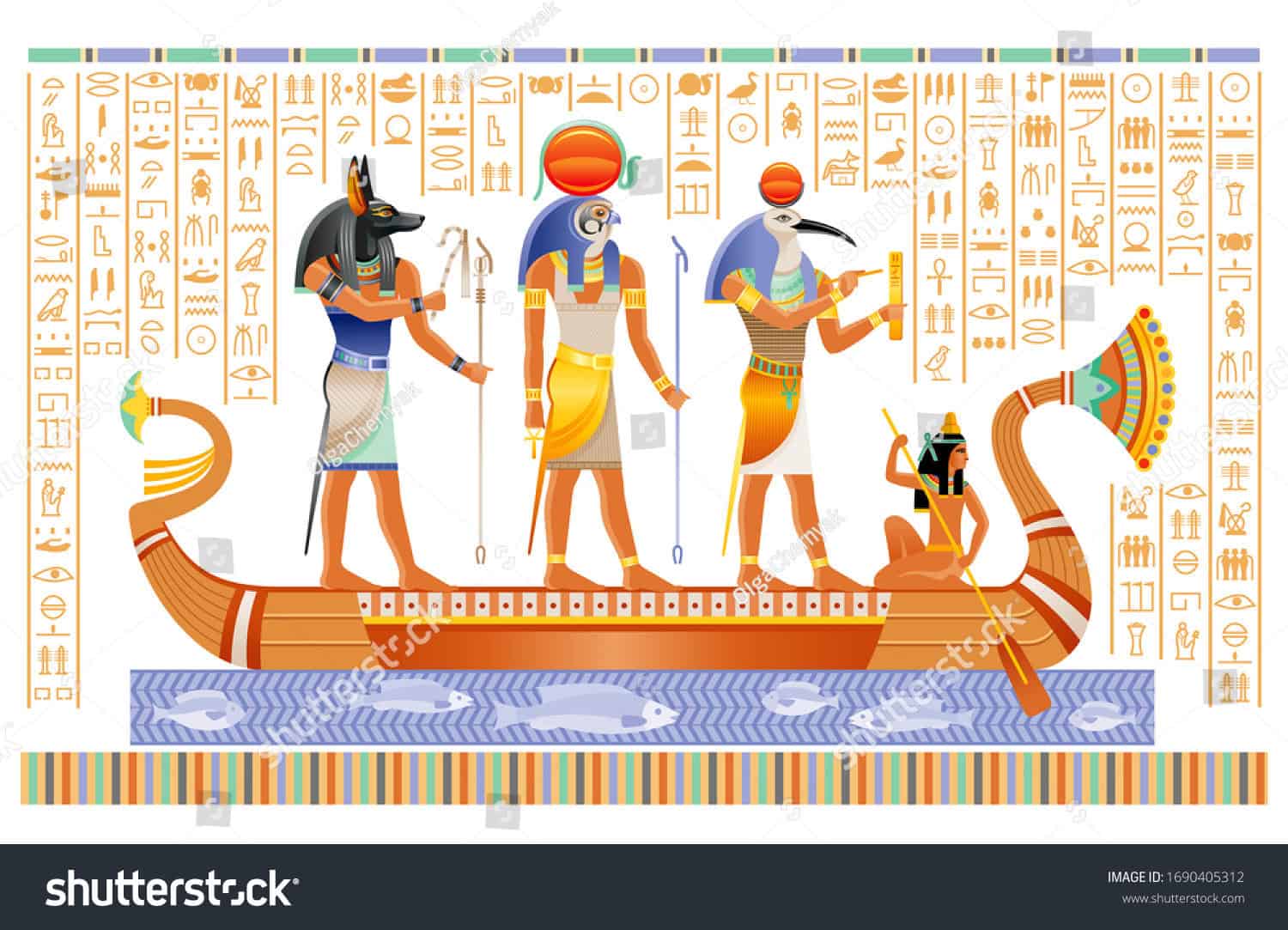
This is how you begin to worship the sun
I only did this poorly for a couple months, 3rd attempt.,and was able to see The Sun Father behind the Sun Child SOL


