

Over at kemetic.guru we’ve added another tool for your deep research habits. It’s an all in one code/encode/calculate Gematria tool capable of turning plaintext into cipher text as well as a tool for keyed Vigenère Cipher. For instance if you come across something like the Royal Arch Cipher in your reading, this will help you decode it. (Installable Cipher fonts also available in our Library for site members.) Or you want to write something for the initiated, well this tool’s got you covered, and it is privacy oriented, we do not log the actual text at any point. Sorry currently not working in mobile browsers as far as I know. For now you’ll have to fire up a laptop or desktop to use it. A helpful hint, if your browser isn’t rendering a couple of the Cipher Alphabets, install the open source Symbola fonts, that will add all the Unicode characters your computer is missing. May be useful for other projects.
Category: occultism
-
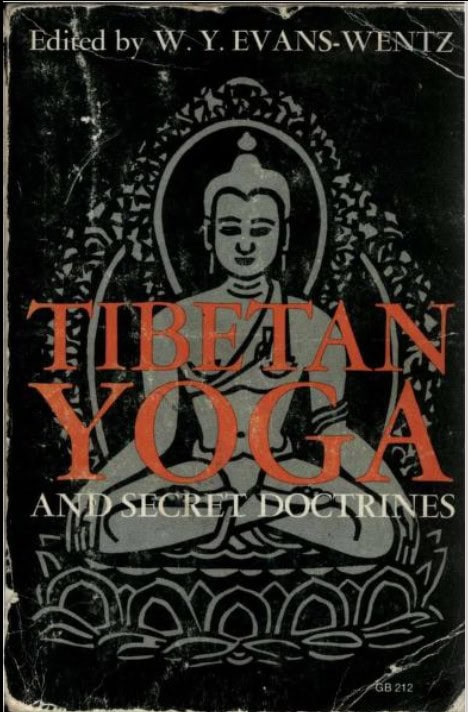
A C-Level Low Effort Post on Tibetan Yoga and Secret Doctrines By Evans-Wentz
As I spent most of this early morning working on the library available in the links above and am currently reading this title, I thought I’d let AI take a crack at a book report to at least give you a little something to tide you over. This is a summary of the book using the new auto blog post report feature of Google Notebook LM. Whereas Cliff’s Notes back in the day were about a B grade on their own, I find comprehension levels of this particular LM to be a non-passing C in our own curriculum, but as only about 3 in 10 Americans read books regularly, and 70% read at a 6th grade level, I think this may actually be useful. AI book report is as follows
5 Mind-Bending Secrets from an Ancient Tibetan Yoga Text
For many in the West, yoga is a familiar sanctuary—a way to build physical strength, increase flexibility, and find a moment of mental calm in a chaotic world. We roll out our mats to de-stress and reconnect with our bodies. But what if this modern interpretation is merely the antechamber to a vast and radical temple of knowledge? What if the true purpose of yoga was never about perfecting the body, but about systematically dismantling our perception of reality itself?
Ancient Tibetan texts reveal that authentic yoga is a profound and uncompromising “science of the mind” that wages a direct assault on our most fundamental beliefs about consciousness, the self, and the limits of human potential. W. Y. Evans-Wentz’s landmark volume, Tibetan Yoga and Secret Doctrines, offers a rare portal into these advanced teachings, translated from authentic manuscripts and oral traditions. It presents a framework so alien to Western thought that it forces us to question the very ground we stand on.
Distilled from this esoteric collection, here are five of the most counter-intuitive and mind-bending secrets that reveal a far deeper, and more dangerous, kind of yoga.
1. You Can Generate Your Own Central Heating
The first doctrine, the Yoga of Psychic-Heat, or Tummo, presents a yogic science for gaining such complete mastery over the body’s internal processes that external temperature becomes irrelevant. This isn’t merely a mental trick; it’s a precise technique for concentrating the body’s vital energy, or prana (Tibetan: Rlung), to transmute generative fluids into a subtle, fiery essence that can be circulated through the psychic nerve channels.
The practical results of this mastery are astonishing. The text describes adepts living in the high, snowy solitudes of the Himalayas clad only in a single cotton cloth, completely immune to the arctic-like temperatures. A standard test of proficiency involved a yogi sitting naked in the snow and drying a series of wet sheets on their body using only their self-generated heat. This doctrine transforms the body from a fragile vessel that must be protected from the elements into a self-regulating furnace. It is the ultimate expression of an internal locus of control, a form of bio-hacking so advanced that it renders the external world secondary to the power of a disciplined mind.
Were the Heat Yoga to be taught universally in all schools and so become a world-wide practice, there would be no need for central-heating in the dwellings of men, not even in Alaska and Siberia, or throughout arctic and antarctic regions.
2. Your Consciousness Isn’t Stapled to Your Body
Western thought tends to view consciousness as intrinsically and permanently tied to a single physical body. These Tibetan doctrines propose a radically different model. The first art is known as Consciousness-Transference (Pho-wa), a yogic skill that allows a practitioner to consciously direct the departure of their consciousness-principle from the body at the moment of death.
Even more startling is the secret doctrine of Trongjug, the yogic ability to enter and resuscitate the body of a person who has just died. A yogic tale is recounted to illustrate this: Marpa, a great teacher, had a son named Doday-Bum who suffered a sudden, fatal injury. In a demonstration of yogic mastery under duress, Doday-Bum recognized there was “no human body immediately available” for him to inhabit. He was thus compelled to make conscious, transitional use of the body of a pigeon that had just died. As the pigeon, he flew to a cremation ground in India where the corpse of a young Brahmin boy lay on a funeral pyre. The pigeon landed on the body and dropped dead as the boy revived. This boy grew up to become the famous saint Tiphoo. This teaching radically redefines the self, suggesting consciousness is not a fixed property but a mobile, transferable principle that can be consciously directed by a trained mind.
3. Waking Life is Just as Illusory as a Dream
The Doctrine of the Dream-State begins with a familiar concept: learning to recognize that one is dreaming while the dream is happening (lucid dreaming). The next step, however, is to learn to control and transmute the content of the dream at will. But the ultimate purpose of this practice is not to master a fantasy world, but to expose a far deeper truth about the nature of reality itself.
The text argues that both the dream-state and the waking-state are fundamentally unreal. Both are entirely dependent on sensory perceptions processed by the mind, and the mind itself makes no real distinction between cognitions that are generated internally (a dream) and those that are processed from external stimuli (waking life). If one can learn to manipulate the fabric of the dream world, one begins to grasp the equally illusory and malleable nature of the waking world. This realization is a step toward the text’s ultimate conclusion: that the entire fabric of reality, the universe itself, is nothing less than the “Dream of the One Mind.”
Only when one awakes from sleep is the illusory character of a dream realized; only when the dreamer of the Dream of Ignorance awakes, in the unconditioned, sleepless, dreamless, True State, can the illusory character of the Sangsara be comprehended.
4. The Ultimate Act of Enlightenment Is Feeding Your Body to Demons
Perhaps the most dramatic and visceral practice detailed in the volume is the Chöd Rite, or the Yoga of Subduing the Lower Self. This mystic ritual is designed to utterly annihilate the ego, which is seen as the root of all suffering.
At the heart of the rite, the yogin visualizes their own intellect as a Wrathful Goddess who stands apart from their physical form. This goddess takes a curved knife and severs the head from the yogin’s physical corpse, which is envisioned as a “fat, luscious-looking” offering. She then dismembers the body and places the flesh, blood, and bones into a “vast cauldron made from the skull.” This gruesome offering is then served as a sacrificial feast to all manner of spirits, demons, and karmic debtors. The purpose of this shocking visualization is to destroy the “erroneous belief in a personal self.” The text calls the body “the dregs of egoism”—the very thing that creates the illusory distinction between the suffering of worldly existence (Sangsara) and liberation (Nirvana). It is the ultimate act of renunciation, a frighteningly concrete method for achieving the state of non-ego.
5. Your Greatest Obstacles Are Actually Your Greatest Allies
A final, deeply philosophical insight runs directly counter to the common human impulse to seek pleasure and avoid pain. The precepts in the first book of the text present a list of “Ten Things Not To Be Avoided,” framing life’s most difficult experiences not as setbacks, but as essential catalysts for spiritual growth. The teaching here is far more radical than simply finding a silver lining; it suggests a full-bodied immersion into the very things we fear most.
Instead of being obstacles on the path, these challenges are reframed as indispensable guides. This perspective doesn’t just reframe suffering; it demands that we engage with our passions and misfortunes so completely that we “taste life to the full and thereby reach disillusionment.” It is only by exhausting the power these experiences hold over us that we can be truly free from them. They are not punishments to be endured, but gurus to be embraced on the path to liberation.
- Obscuring passions, being the means of reminding one of Divine Wisdom [which giveth deliverance from them], are not to be avoided [if rightly used to enable one to taste life to the full and thereby reach disillusionment].
- Illness and tribulations, being teachers of piety, are not to be avoided.
- Enemies and misfortune, being the means of inclining one to a religious career, are not to be avoided.
Conclusion: A Deeper Kind of Yoga
These doctrines paint a picture of “yoga” that transcends physical postures and breathing exercises. They reveal an intricate and demanding science aimed not at perfecting the body, but at systematically dismantling, understanding, and ultimately mastering the mind. For these ancient yogins, consciousness was the ultimate frontier, and the human body was the laboratory for exploring its deepest nature.
These ancient doctrines challenge our most basic assumptions about the self and reality. If the mind truly holds this much power, what else might we be capable of?
-
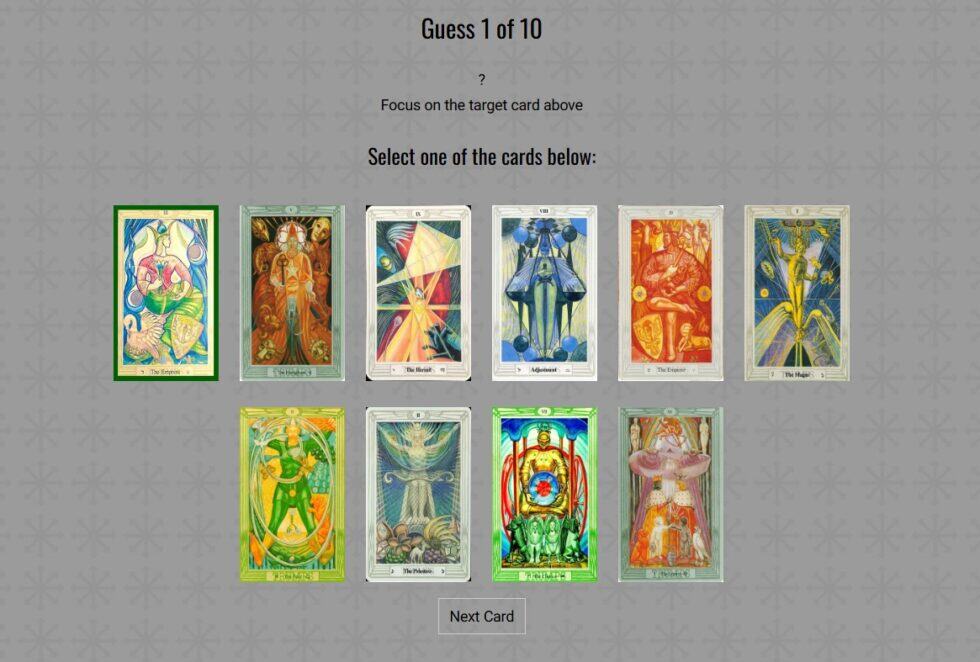
New Free Psi Test right here at Senseworldcafe
If you take a look up at the top menu we’ve added another feature to the site! A free psi ability test that will either show precognitive ability or ability to influence a random number generator. Personally, whenever I’ve tried legitimate tests like this in the past I’ve scored a negative psi ability consistently , scoring well below chance. We are gathering data and hoping that at some point we can do a write-up so we are asking for a mandatory anonymous nickname and optionally birthdate and gender. We are also gathering loose geolocation data, which will not be shared or sold. We are only interested in a study of whether this ability exists, can be proven, and has variations in populations.
In an experimental design I though of years ago, I decided to use Tarot cards rather than Zener cards or random images to see if the richer symbolism, inherent numbers, or any personal connection to an Archetypal symbol might influence outcomes. You are free to take the test as much as you’d like, maybe tracking your own improvement, or noting successful conditions. There are a couple cosmetic bugs still to be worked out, but it’s fully functional right now, so We thought we’d go live. Enjoy! Any questions or comments can be shared via the contact form on the homepage or on the subreddit.
-

New feature for paying subscribers
In addition to the secret library, personal instruction from snswrld, Yogapunx and occult content, yet another new feature was rolled out today for paying subscribers. A calculator for the Chaldean planetary hours based on a lunar calendar. If you have any question about the ruler of the day or hour to time your activity this calendar removes any doubt as to the Planetary ruler of the day and hour. Buy a YOGAPUNX subscription or higher and check it out. And as a reminder, we also have a free membership level for access to parts of the open source library.

-

A YOGAPUNX Podcast on Grimoires
After losing some of the recent posts to a site crash and emergency restore. I thought we’d come back strong with one of our AI discussions of materials from the library. Poor Google Notebook LM could only make sense of a few of them and some of the pronunciations are odd, but it’s a brief taste of the history of the nonfiction(?) magical writing available to yogapunx subscribers. Remember, members get access to the classified library as well as options for personal instruction in Magick, Meditiation, and sundry topics from snswrld. You can find the membership signup tab above.
-

Once upon a Satanic Panic
In the current research deep dive I’m in that was stimulated by the ongoing child sex scandals and fed well upon the Flesh Simulator YouTube channel I came across this Gem. Now, leaning libertarian and chaotic neutral I can’t get on either side of the bifurcated argument my research rabbit hole is leading me down. But this nonsense from the right is why records have warning labels and innocent children were sentenced to prison for murder just for liking heavy metal. On the other hand the same media and business executives that were promoting all the hardcore imaging were in fact grooming talent and going so far as to abduct children for porn and snuff films. There aren’t going to be any easy answers on this but when a cop/pastor is your main guide you’re getting the ignoramus take.
-

Operation Star Gate, care to read along?
Ok, so these are purportedly the key documents declassified in the early 2000s about CIA, DIA, DOD, etc experiments in psychic spying. These were presented to Congress as straight fact, and barely reported outside of fringe media. I have deliberately tried to avoid Viet-nam era Men Who Stare at Goats material, or the Army’s projects with the Monroe institute on the Gateway experience. The doc at the top was a little harder to track down, but the others are all over the internet, and given my recent operation starseed revelations, I decided to start here to find the FBI and Hollywood links to the programs. The last doc is also interesting because it comes from the NSAs public archive and so should have some kind of alternate take on the subject advancing their agenda. Regardless. This is what the internet spits out in a quick declassified parapsychology search, so let’s have a fun little peruse on their take on it.
FAQ on Project Sun Streak and Remote Viewing
- What is Project Sun Streak and what is its purpose?
- Project Sun Streak was the name given to the Department of Defense/Defense Intelligence Agency (DoD/DIA) psychoenergetic collection effort. Its primary purpose was to undertake operational intelligence applications using aspects of psychoenergetics, specifically remote viewing. This involved using individuals to mentally perceive information blocked from ordinary perception by distance, shielding, or time, to gather intelligence.
- What is psychoenergetics and how does remote viewing fit into it?
- Psychoenergetics is broadly defined as the study of the interaction between mind and matter. It is subdivided into two categories: the mental effect on the physical world (psychokinesis) and purely mental information collection. Remote viewing, which focuses on acquiring and describing information by mental means that are blocked from ordinary perception, is a subset of the latter category, making it a method of psychoenergetic information collection.
- How did the U.S. military become involved in psychoenergetics and remote viewing?
- The Department of Defense (DoD) began examining the potential uses of psychoenergetics in the early 1970s. Initial experiments using remote viewing as an intelligence-gathering tool were conducted by physicists Hal Puthoff and Russel Targ at Stanford Research Institute (SRI). The experiments, sponsored by the CIA, proved successful and led to further exploration of remote viewing as an intelligence collection method.
- What were some of the early projects and programs related to remote viewing within the U.S. military?
- Several projects and programs were established to explore and implement remote viewing. Notable early efforts include:
- Gondola Wish: An Army INSCOM program initiated in 1977 to integrate Soviet and Eastern Bloc psychoenergetic intelligence into all-source operational support.
- Grill Flame: An Army ACSI project starting in 1978 that aimed to use remote viewing as a primary intelligence collection method.
- Center Lane: A special access program formed after the curtailment of Grill Flame in 1982, funded by Security and Investigative Activities (S&IA) monies and directed by the CG, INSCOM. It involved the use of resources to support and maintain remote viewing efforts.
- What were the key findings of the Gale Committee and the Perry Memorandum, and how did they impact the remote viewing program?
- The Gale Committee, an independent investigative body formed in 1979, recommended continuing operational activities to determine the value of remote viewing for intelligence collection, following the psychoenergetic threat from foreign sources, and establishing a central DoD authority. The Ferry Memorandum, issued in 1980, terminated Research & Development (R&D) funding for psychoenergetics activities but did not object to continuing intelligence application efforts. These events led to a focus on intelligence applications of remote viewing rather than basic research and development.
- How is remote viewing conducted within Project Sun Streak, and what are the roles of the participants?
- The remote viewing process within Project Sun Streak involves a structured approach with distinct roles. First, a tasking is received and a collection plan is made, listing essential elements of information (EEI) and intelligence indicators. Target time windows are also identified. A remote viewing technique (ERV or CRV) is then selected based on the target, and appropriate remote viewers are chosen based on past performance.
- Interviewer/Monitor: A project manager who guides the session, directs the focus of the remote viewer, and elicits information about the target.
- Remote Viewer: Responsible for reporting impressions, concepts, ideas, sensations, feelings, and notions related to the target, without analysis.
- Requesting Agency: After the project has been completed, the requesting agency will provide feedback about the success of the effort.
- What are the purported benefits and limitations of remote viewing as an intelligence collection method?
- According to the briefing materials, remote viewing offers several potential benefits:
- Passive Nature: It is claimed to be undetectable when used, making it a passive intelligence collection method.
- Inexpensive: The primary cost is the personnel involved, with little expensive hardware required.
- No Known Defense: Time, distance, target size, or degree of difficulty are said to have no apparent effect on collection.
- However, the briefing also acknowledges limitations, such as the need for a satisfactory database for effective exploitation in areas like human source assessments and personality profiles.
- What techniques were used to train remote viewers and how did they evolve over time?
- The training of professional intelligence personnel to become remote viewers was an integral part of Project Sun Streak. Initial training involved integrating SRI-contracted training technology into an in-house program. This training drew from academic institutions, scientific laboratories, and research establishments worldwide. Methods that were proven to assist remote viewing over the years include: lectures, literature reviews, observation of others, practical exercises and practical training.
- Over time, two primary techniques emerged:
- Extended Remote Viewing (ERV): Emphasized physical relaxation and enhanced internal attention.
- Coordinate Remote Viewing (CRV): A structured system that subdivides psychic impressions into discrete skill levels, progresses through six stages and begins with geographic coordinates.
-

A Deep Dive on Rudolf Steiner. YOGAPUNX Podcast
Briefing Document: Esoteric Science, Spiritual Development, and the Path to Freedom

I. Overview
This document synthesizes key concepts from Rudolf Steiner’s works (primarily “An Outline of Esoteric Science” and “Theosophy: An Introduction to the Spiritual Processes”), and a paper that explores the Yoga practices found in the work of Steiner (“The Dark Abyss of Freedom: Yoga in Works of Rudolf Steiner”), focusing on spiritual development, the nature of the human being, the cosmos, and the path to achieving inner freedom. A core theme revolves around the development of the individual’s “I” or higher self through self-knowledge, moral purification, and understanding the interconnectedness of all things. This path often involves esoteric practices and a shift in perception, moving beyond the limitations of ordinary sensory experience.
II. The Nature of the Human Being
- Fourfold Constitution: Steiner describes the human being as composed of four parts: the physical body, the ether body (or body of formative forces), the astral body (or soul body), and the “I” (or ego).
- The “I” is unique to humans and is the source of self-awareness and the capacity to transcend purely instinctual or externally driven actions. “We can produce wishes and desires that are not adequately accounted for by causes either within or outside of our bodies. We must acknowledge that everything falling into this domain has a special source. In spiritual scientific terms, this source can be seen in the human ‘I,’ which can therefore be called the fourth part of our human makeup.” (An Outline of Esoteric Science)
- The physical body is governed by the physical laws of the mineral kingdom, but in humans, it is imbued with mineral substance. (An Outline of Esoteric Science)
- The ether body holds the substances of the physical body together. (Theosophy)
- The Soul: The soul is the mediator between the “I” and the body, and is the seat of thinking, feeling, and willing. It is not a static entity but undergoes constant change and development.
- Aura: Steiner describes the aura as a manifestation of the individual’s spiritual development and inner state. Different colors and patterns in the aura reflect various aspects of the person’s character, emotions, and spiritual progress. “Thus what individuals have made of themselves in the course of their incarnations comes to expression in their auras.” (Theosophy)
III. The Spiritual World and its Relationship to the Physical World
- Three Worlds: Steiner posits the existence of three interconnected worlds: the physical world, the soul world, and the spirit world.
- Correspondences: The physical world is a reflection of the spiritual world. Objects and phenomena in the physical world have corresponding archetypes or prototypes in the spiritual world. “This thought image is a reflection of the archetype of the entire mineral sense-perceptible world, and can be found as a whole in the spiritual world.” (Theosophy)
- Spiritual Perception: To access the spiritual world, one must develop spiritual perception through practices like meditation and contemplation. This involves transcending the limitations of ordinary sensory perception.
- The Country of Spirit Beings: In the spirit world, after death, individuals become aware of their essential being and their relationship to all things. “We become ever more aware that, in our essential being, we belong to the spiritual world. We perceive ourselves as spirits among spirits, as organs of the primal spirits.” (Theosophy)
IV. The Path of Spiritual Development
- Self-Knowledge: A crucial step in spiritual development is gaining self-knowledge through introspection and self-examination. This involves confronting one’s character traits, both positive and negative, without self-deception.
- Moral Purification: The path requires actively working to overcome negative tendencies like egoism, hatred, and greed. “For every single step that you take in seeking knowledge of hidden truths, you must take three steps in perfecting your character toward the good.” (How to Know Higher Worlds)
- Reverence and Devotion: Cultivating a reverent attitude toward the world and a devotion to higher ideals is essential for spiritual growth.
- Control of Thoughts and Feelings: Developing the ability to control one’s thoughts and feelings is a key aspect of spiritual discipline. This involves redirecting attention, cultivating inner peace, and resisting negative impulses.
- Meditation and Contemplation: These practices are used to quiet the mind, focus attention, and develop spiritual insight.
V. Key Concepts from Yoga and Steiner’s Esoteric Science
- Yoga as a Path to Freedom: The paper “The Dark Abyss of Freedom” explores the Yoga practices that are found in the work of Steiner. It highlights Steiner’s debt to Yoga philosophy, in particular Patanjali’s Yoga Sutras, especially regarding meditation and attaining higher levels of consciences.
- Non-Attachment: This Yoga principle is also vital for Steiner’s understanding. “…Patanjali points out, is non-attachment.” (The Dark Abyss of Freedom: Yoga in Works of Rudolf Steiner)
- The Goal of Samadhi: Both Yoga and Steiner’s esoteric science aim to achieve a state of pure consciousness, transcending the limitations of the material world. “All steps of yoga, all its ‘limbs’ (ashtanga) lead to the last of them, to samadhi (samādhi) as a state of pure consciousness and to breaking free from the conditionality of material and psychic existence.” (The Dark Abyss of Freedom: Yoga in Works of Rudolf Steiner)
VI. The Guardian of the Threshold
- Confronting the Past: This is a symbolic figure representing the sum of one’s past actions and their consequences. Encountering the Guardian is a crucial stage in spiritual development. “I am that self-same being, who made a body for itself out of your good and your wicked deeds. My ghostly form is spun, so to speak, from the account book of your life.” (How to Know Higher Worlds)
- Taking Responsibility: The encounter forces the individual to take responsibility for their past and to actively work to purify themselves.
VII. The Trials of Initiation
- Testing and Transformation: The path to higher knowledge involves undergoing trials that test one’s character, will, and capacity for self-control. These trials are designed to transform the individual and prepare them for higher levels of consciousness.
- Developing Intuition and Self-Control: As the student progresses through the trials, they develop their intuition and self-control. “In everyday life, this inner sentiment is usually call ‘intuition’, but Steiner calls it ‘self-control’.” (The Dark Abyss of Freedom: Yoga in Works of Rudolf Steiner)
VIII. Conclusion
The sources present a complex and challenging path to spiritual development, requiring dedication, self-discipline, and a willingness to transform oneself. The ultimate goal is to achieve inner freedom, a deeper understanding of oneself and the cosmos, and to contribute to the evolution of humanity. The integration of Yoga practices, as highlighted in “The Dark Abyss of Freedom,” underscores the practical methods involved in this transformative journey.
FAQ on Esoteric Science, Higher Worlds, and Yoga in Steiner’s Works
1. What is the “I” in Steiner’s esoteric science, and why is it important?
The “I,” according to Steiner, is the fourth part of the human makeup, a unique source of wishes and desires not solely determined by external or internal causes. It is the aspect of our being that experiences permanence amidst the changing flow of inner experiences. Unlike animals, humans possess an “I” that allows them to retain awareness of past experiences and drive their desires and actions, distinguishing human experience from purely instinctual behavior. This “I” is central to self-awareness and our relationship with the outer world, setting us apart from animal existence.
2. How does Steiner describe the spiritual world in relation to the physical world?
Steiner describes the spiritual world as a realm where the qualities of physical objects are experienced in reverse. A solid mass, like a rock, appears as a cavity, while colors are perceived as their complements (e.g., red as greenish). These formations constitute the “land masses” of the spiritual world, mirroring the continents of the physical world. This reflects a fundamental principle that the spiritual world is the archetype of the physical, with each aspect of the physical world having a corresponding spiritual reality.
3. What does Steiner mean by the “physical body,” and how does it relate to our understanding of the human being?
Steiner distinguishes between the “physical body” governed by physical laws and the mineral substance that composes our present-day physical bodies. He explains that our physical bodies are “imbued with mineral substance.” This distinction is crucial when considering the evolution of the human being and the different stages of planetary existence (like Saturn), where the composition and governing laws of the physical body differ significantly from those we observe today.
4. What is the significance of developing reverence, impartiality, and trust in spiritual development?
Reverence is a foundation for esoteric knowledge, akin to the awe felt when entering a sacred space. Impartiality and trust are crucial for openness to new experiences and revising existing opinions, fostering a receptive attitude toward all phenomena. Trust in one’s goals and actions, even in the face of setbacks, is vital for spiritual progress, enabling one to move mountains through unwavering faith.
5. What is the “Guardian of the Threshold,” and what role does it play in spiritual development?
The Guardian of the Threshold represents the accumulated consequences of one’s past deeds, both good and bad, taking on an independent form visible to the spiritual seeker. It serves as a mirror, reflecting one’s faults as distortions in its appearance. Overcoming the Guardian requires wisdom and the ability to correct past wrongs, purifying oneself to the point where evil is no longer possible. Only then can the seeker reunite with the Guardian, benefiting from its blessings in future activity.
6. How does the concept of karma, or destiny, relate to spiritual growth, and how can it be understood?
Karma, or destiny, is the result of past actions and influences future spiritual development. While fate may present challenges or misfortunes, Steiner suggests that these are often exactly what is needed for growth. By recognizing this and integrating past experiences into future intentions, one develops the “spirit self” and prepares to fulfill spiritual purposes in subsequent incarnations.
7. How does Steiner view the relationship between thinking, feeling, and willing, and how does this relate to spiritual development?
Steiner sees thinking, feeling, and willing as soul forces that are unified by the “I.” In ordinary life, these forces interact in specific ways (e.g., thought followed by feeling). However, on the path to higher cognition, the forces of the personality are held together differently, requiring conscious effort to harmonize and direct them toward spiritual goals. Development of these forces are key aspects of esoteric study.
8. How do Steiner’s ideas connect with the practice of yoga, particularly in achieving inner freedom?
Steiner’s esoteric science shares common ground with yoga, emphasizing mental discipline, introspection, and the attainment of inner freedom. Like the limbs of yoga that lead to samadhi, Steiner’s path encourages mental silence, focused meditation, and the ability to transcend the limitations of material and psychic existence. This inner freedom is achieved through self-control, intuition, and the development of the “higher I,” ultimately leading to a state of unity and liberation from desires.
Navigating Esoteric Science and Higher Worlds: A Comprehensive Study Guide
Quiz
Answer each question in 2-3 sentences.
- According to Steiner, what distinguishes human desires from those of animals?
- How does spiritual sight perceive physical objects like rocks?
- What governs a “physical body,” as Steiner uses the term in the context of Saturn’s evolution?
- Describe the sensory experience that Steiner attributes to Saturn’s interior.
- What is the “golden rule of the occult sciences,” and why is it important?
- Explain the concept of “the Guardian of the Threshold” and its significance.
- According to Theosophy, how are abstract thoughts related to clairvoyance?
- How does Steiner define the significance and uniqueness of the word “I”?
- According to Theosophy, what happens to everything that an individual has experienced in the past, and how does that relate to future incarnations?
- Explain Steiner’s concept of the human aura and how it reflects an individual’s development and inner states.
Quiz Answer Key
- Humans can generate wishes and desires not caused by internal or external bodily causes. The human “I” is the source of these desires and is responsible for being aware of pleasure on a previous occasion when our hunger was satisfied, so that our desire for food is driven by past experience, as well as by our current experience of hunger. Animals are driven by recurrent causes (of hunger).
- Spiritual sight perceives the space occupied by a mass of rock as a cavity, surrounded by the force that shapes the stone. The color of the stone is also experienced as its complementary color in the spiritual world (e.g., a red stone appears greenish).
- A physical body is governed by the physical laws observed in the mineral kingdom. A physical body is also imbued with mineral substance, however that does not apply to the planet Saturn.
- Saturn’s interior was experienced as surging sensations of taste (sweet, bitter, sour), which reverberated into celestial space as sound and music.
- “For every single step that you take in seeking knowledge of hidden truths, you must take three steps in perfecting your character toward the good.” This rule ensures that moral development accompanies spiritual insight, preventing misuse of occult knowledge.
- The Guardian of the Threshold is a being formed from one’s past deeds. Upon encountering this being, individuals confront the consequences of their actions and must demonstrate sufficient wisdom to guide their future development. If one cannot correct any past wrongs, then they will be dragged into a dark, corrupted world.
- Abstract thoughts contain a “pearl of clairvoyance,” indicating that clairvoyance begins in something common and everyday. Steiner asserts that clairvoyance occurs from the start and everyday; we simply need to recognize the supersensible nature of our concepts and ideas.
- The word “I” is unique because it can only be used by an individual to refer to themself. It originates from within the soul and is not externally imposed, unlike other names for objects in the world.
- According to Theosophy, an individual’s experiences are absorbed into intentions that must be realized in the future. In this fifth region, a certain capacity to remember earlier lifetimes as well as a prophetic preview of later ones flares up, indicating a connection between past, present, and future incarnations.
- The human aura is a multi-layered energy field that reflects an individual’s degree of spiritual development, thoughts, feelings, and overall state of being. The colors and qualities of the aura change according to one’s inner state and moral choices.
Essay Questions
- Compare and contrast Steiner’s concept of the “I” with traditional psychological or philosophical views of the self. How does Steiner’s spiritual perspective alter our understanding of identity?
- Discuss the relationship between moral development and spiritual insight in Steiner’s teachings. Why is it necessary to cultivate virtue alongside seeking higher knowledge?
- Explore the significance of the “Guardian of the Threshold” in the process of spiritual initiation. What lessons can be learned from this encounter, and how does it impact one’s future actions?
- Analyze Steiner’s description of the spiritual worlds. How do these realms differ from the physical world, and what is their purpose in human evolution?
- Synthesize the concepts of karma, reincarnation, and destiny as presented in the provided sources. How do these ideas shape Steiner’s understanding of human existence and personal responsibility?
Glossary of Key Terms
- Anthroposophy: A spiritual science developed by Rudolf Steiner, emphasizing the development of human consciousness and spiritual understanding.
- Astral Body: Also known as the soul body, it is the vehicle of feelings, desires, and passions.
- Aura: An energy field surrounding a living being, reflecting their thoughts, feelings, and spiritual state.
- Chakras (Lotus Flowers): Energy centers within the etheric body that regulate spiritual and physical well-being.
- Clairvoyance: The ability to perceive events or objects beyond the range of normal sensory perception.
- Ether Body: Also known as the life body or body of formative forces. It is responsible for growth, reproduction, and the maintenance of physical form.
- Esoteric Science: A path of knowledge seeking to understand the deeper spiritual realities underlying the physical world.
- “I” (Ego): The individual self, the conscious center of human experience.
- Karma: The law of cause and effect, where actions create consequences that shape one’s future experiences.
- Physical Body: The material body, composed of physical substances and subject to physical laws.
- Reincarnation: The process of being reborn into a new physical body after death.
- Samadhi: In Yoga, a state of pure consciousness and transcendence of the material and psychic conditions.
- Sentient Soul: The aspect of the soul responsible for processing sensory experiences and emotions.
- Spirit Self: In Theosophy, part of one’s consciousness that exists in the spirit world; previous lives affecting spirit self.
-

Paywalling content to be reserved for YOGAPUNX
You may notice that some of the deeper mystical and magical content of the site has now been moved behind a paywall. I can no longer solely bear the cost of your mystical education myself and am in need of support of the sites and the newly formed Kemetic Church of Ra. The items paywalled, can only be understood by those with a mystical practice anyway or some degree of initiation. For now, the library which contains many more initiated secrets will remain free temporarily while those that recognize there is a time limit for that generosity should not be surprised when that gets paywalled as well. If you’d like to keep resources like these available you must contribute and I can no longer tolerate the entire burden of the free rider problem myself. If this content is worth something to you, you can sign up here.
-

YOGAPUNX discussion on “High Magick”
Briefing Document: Ceremonial Magic and Thelemic Magick
I. Overview
This document analyzes two distinct but related sources on magic: excerpts from Arthur E. Waite’s “Book of Ceremonial Magic” and selected sections from Aleister Crowley’s “Magick in Theory and Practice.” Waite’s work presents a traditional, heavily Christianized system of ceremonial magic, focused on invoking divine power and controlling spirits. Crowley’s work, part of his broader Thelemic system, offers a more individualized and self-focused approach to magick, centered around discovering and enacting one’s True Will. The juxtaposition of these two provides insight into the historical evolution of occult thought and practice.
II. Arthur E. Waite – “Book of Ceremonial Magic”:
A. Core Themes:
- Divine Invocation & Protection: Waite’s extracts reveal a strong reliance on Christian prayer and invocation for protection, guidance, and power. The operator calls upon God, Jesus Christ, the Holy Spirit, the Virgin Mary, angels, and saints.
- Quote: “O great God, by Whom all things have been set free, deliver me also from all evil… May the blessing of God the Father Almighty, of the Son and of the Holy Ghost, be always with me , Amen.” (p. 47)
- Hierarchical Cosmology: The texts reflect a structured universe with distinct levels: God, angels, saints, humans, and spirits (both good and evil). These beings are often invoked as intermediaries or guardians.
- Quote: “May the blessing of the Holy Angels, Archangels, Virtues, Powers, Thrones, Dominations, Cherubim and Seraphim, be with me for ever , Amen.” (p. 48)
- Control of Spirits: A significant portion of Waite’s extracts addresses methods for controlling spirits. This includes the use of rituals, talismans, conjurations, and divine names. Spirits are characterized as both helpful and malevolent.
- Quote: “May it Please Thee, therefore, most Precious Jesus, by the Power of this same (Name of) Jesus, to drive away the demon from me…” (p. 52)
- Quote: “…we hereby depute unto them all power to perform exorcisms of the possessed, so that the name of Jesus Christ may be magnified, and the devil and his angels be driven to confusion” (p. 91)
- Emphasis on Purity and Ritual: Precise instructions are given for creating talismans, preparing instruments (like knives and pens), and performing rituals. Purity and proper timing (planetary hours) are essential.
- Quote: “Take care not to perfect the instrument otherwise than on the day of Venus, and in the hour thereof…” (p. 156)
- Quote: “…on the day and in the hour of Mars, the Moon waxing… a piece of virgin parchment must be prepared…” (p. 237)
- Specific Talismans and Their Powers: The text provides a detailed catalog of talismans with specific uses, from attracting love to achieving invisibility, reading thoughts, or opening locks, Each talisman is associated with unique symbols, materials, and evoking words.
- Quote: “II. Gives the love and complaisance of the entire female sex… The evoking words are NADES, SURADIS, MANINER…” (p. 121)
- Quote: “IX. Transports the possessor to any part of the world, and that without danger. The potent words are RADITUS, POLASTRIEN, TERPANDU, OSTRATA, PERICATUR, ERMAS.” (p. 123)
- Exorcism and Binding: The power of God and divine names is invoked to control, punish, and bind rebellious or disobedient spirits, employing threats of eternal damnation.
- Quote: “I do hereby curse and deprive thee of all thine office, power and place; I bind thee in the depth of the Bottomless Pit, there to remain unto the Day of judgment…” (p. 233)
- Days of the week and planetary hours: Specific days and planetary hours are prescribed for certain rituals and operations, revealing an understanding of astrological correspondences.
- Quote: “It will be seen from this table that there is a recurring rule of the planets in unbroken succession through the whole week…” (p. 152)
B. Key Ideas and Facts:
- Importance of Jesus’ name: The name of Jesus is considered a powerful tool for healing, protection, and commanding spirits.
- Quote: “at the Name of Jesus let every knee bow, in heaven, on earth and in hell…” (p. 50)
- Demons and their Descriptions: The text offers physical descriptions of spirits (particularly those of Mars) and associates them with specific symbols and behaviors.
- Quote: “The Spirits of Mars have a tall body and choleric, a filthy countenance, brown, swarthy or red in colour; they have horns like the hart, claws like a griffin and they bellow like wild bulls…” (p. 85)
- The use of blood: The text describes the use of blood, such as mole’s blood, for certain rituals, suggesting the importance of vital fluids in magical operations.
- Quote: “thou shalt make the first knife and shalt steep it in the blood of the mole…” (p. 156)
- Specific Conjurations: Elaborate conjurations, invoking names of God, spirits, and occult forces, are used to command spirits and achieve specific results.
- Quote: “LUCIFER , OUYAR , CHAMERON , ALISEON , MANDOUSIN , PREMY , ORIET , NAYDRUS , ESMONY , EPARINESONT , ESTIOT , DUMOSSON , DANOCHAR , CASMIEL , HAYRAS , FABELLERONTHON , SODIRNO , PEATHAM , Come , LUCIFER . AMEN.” (p. 239)
- Pacts with Spirits: The text acknowledges the concept of pacts with spirits, with warnings about their dangers.
- Quote: “There are two kinds of pacts, says the Grimorium Verum, the tacit and the manifest; but know at the same time that among the several kinds of spirits there are some which bind and some which do not bind, save only in a very light manner.” (p. 254)
III. Aleister Crowley – “Magick in Theory and Practice”:
A. Core Themes:
- Thelema and True Will: Crowley’s magick centers on the concept of “Do what thou wilt shall be the whole of the Law,” emphasizing individual autonomy, and the discovery and fulfillment of one’s “True Will.”
- Quote: “Do what thou wilt shall be the whole of the Law” (Title page)
- Magick as Self-Transformation: Magick is seen as a process of personal growth, development, and transformation through understanding and aligning with one’s true nature.
- Quote: “Every active Member of the Order has destroyed all that He is and all that he has on crossing the Abyss; but a star is cast forth in the Heavens to enlighten the Earth, so that he may possess a vehicle wherein he may communicate with mankind.” (p. 240)
- The Use of Symbolism and Correspondences: Crowley employs a complex system of symbols, correspondences, and Qabalistic concepts to understand and manipulate reality. A vast range of systems from astrology, mythology, and alchemy are integrated.
- Quote: “These symbols are all shewn in the Atu “The Hermit”. They are the powers of the Yod, whose extension is the Vau.” (p. 183)
- Self-Deification: The ultimate goal of magick is a kind of self-deification, the unification of the individual will with the cosmic will.
- Quote: “I am the All, for all that exists for me is a necessary expression in thought of some tendency of my nature, and all my thoughts are only the letters of my Name.” (p. 290)
- Rejection of Traditional Morality: Crowley rejects traditional notions of good and evil, viewing them as subjective and often detrimental to the pursuit of one’s True Will.
- Quote: “Good” must be defined in terms of human ideals and instincts” (p. 183)
- The Importance of Practice: The text stresses the importance of diligent practice, self-observation, and experimentation in the pursuit of magick.
- Quote: “Various remarkable phenomena will very probably occur during these practices. They must be carefully analysed and recorded.” (p. 285)
- Hymns and Invocations: The text includes passionate invocations to deities such as Pan, as ways to evoke energy and connection to magical forces.
- Quote: “Thrill with lissome lust of the light, O man! My man! Come careering out of the night Of Pan! Io Pan! Io Pan! Io Pan!…” (p. 178)
B. Key Ideas and Facts:
- The Significance of 666: The number 666 is associated with the “man” of the current aeon, expressing the power of the individual will.
- Quote: “GR:Tau-Epsilon-Iota-Tau-Alpha-Nu = 300+5+10+300+1+50 = 666… — whose number is the number of a man…” (p. 184)
- The Abyss and Transformation: Crowley describes the concept of “crossing the Abyss” as a complete destruction of the old self, which leads to the birth of a new, enlightened being.
- Quote: “Every active Member of the Order has destroyed all that He is and all that he has on crossing the Abyss…” (p. 240)
- Divination as Probability: Divination is viewed as a tool for understanding probabilities based on available facts, not as access to absolute truth.
- Quote: “The astronomer himself has to enter a caveat. He can only calculate the probability on the observed facts. Some force might interfere with the anticipated movement.” (p. 185)
- The Bornless One: The text includes invocations to the “Bornless One,” a powerful archetypal figure in magickal tradition.
- Quote: “Hear Me, and make all Spirits subject unto Me: so that every Spirit of the Firmament and of the Ether…” (p. 241)
- Ritual and symbolism: Specific rituals, such as the Star Ruby, are described, which combine gestures, words, and visualization for achieving magical states of consciousness.
- Quote: “Facing East, in the centre, draw deep deep deep thy breath closing thy mouth with thy right forefinger…” (p. 289)
- The importance of self-knowledge: Crowley’s emphasis on self-analysis is evident, with exercises focusing on physical and mental endurance to be recorded, as they are keys to further self-understanding.
- Quote: “Ascertain how much alcohol you can take, and what forms of drunkenness assail you…Let all these things be carefully and conscientiously recorded; for according to your powers will it be demanded of you.” (p. 285)
- Personal experimentation: Students are advised to adapt and create practices that fit their individual natures.
- Quote: “Let the Zelator attach no credit to any statements that may have been made throughout the course of this instruction…” (p. 295)
- Mortification and Self-Denial: Mortifications of the flesh are seen as potentially useful if they serve to control the practitioner and further the pursuit of their Will, but self-punishment without a purpose is discouraged.
- Quote: “But concerning voluntary privations and tortures, without use save as against the devotee, they are generally not natural to healthy natures, and wrong.” (p. 295)
IV. Comparison and Contrast:
- Authority: Waite’s source relies on the authority of God and traditional religious structures. Crowley’s work emphasizes personal authority derived from one’s True Will.
- Goal: Waite seeks divine favor and control over external forces. Crowley aims for self-transformation, and union with one’s divine nature.
- Method: Waite utilizes Christian prayers, precise rituals, and talismans. Crowley employs symbolism, visualization, self-experimentation, and a focus on the will.
- Cosmology: Waite presents a more traditional, Judeo-Christian view with a clear hierarchy of angels, demons and saints. Crowley presents a more fluid and personalized view with incorporation of Egyptian, Greek and Indian pantheons.
- View of spirits: Waite views spirits as potentially dangerous forces to be controlled through ritual, names and divine power. Crowley views spirits as different expressions of one’s own nature.
V. Conclusion:
These two sources present radically different approaches to magic. Waite’s extracts illustrate a traditional system of ceremonial magic rooted in religious authority and seeking external control. Crowley, on the other hand, offers a more modern, individualistic system focused on self-discovery and the expression of one’s True Will. Examining these differences provides valuable context for understanding the evolution of occult thought and practice.
F.A.Q.
1. What is the significance of planetary hours in the context of this magical practice?
Planetary hours, derived from a recurring sequence of planets throughout the week, are specific times within a day that are ruled by particular planets. These hours are considered significant for magical operations because it is believed that each planet exerts a unique influence. For instance, the day and hour of Venus are suitable for preparing tools, while the day and hour of Mars are used in other types of ritual work, such as making a talisman or conjuring spirits. Understanding and working with planetary hours is thought to enhance the efficacy of magical practices by aligning actions with the appropriate celestial energies.
2. What are some examples of talismans described in these sources and what purposes do they serve?
The texts detail numerous talismans made from specific colored satins, embroidered with particular characters, and activated by spoken words or physical gestures. For example, one talisman embroidered on black satin with silver grants the love of women when used with specific words, while a gold-colored satin talisman compels truth and confessions. Others are designed to provide the ability to travel to any location, open locks, influence people’s thoughts, protect against evil, or grant virtue. Each talisman is unique, reflecting a specific intention and requiring its own specific instructions for its creation and use.
3. How is the name “Jesus” utilized in this system of magic?
The name “Jesus” is used extensively for protection, healing, and invoking divine power in this system. It’s treated as a sacred name of great potency, capable of driving away demons, performing miracles, and saving those who call upon it. The texts suggest that the name of Jesus holds power over spiritual beings and that it is central to warding off evil influences, securing divine blessing, and calling on supernatural assistance. There are many prayers and conjurations that make use of this name and others associated with Christianity.
4. What is the purpose of conjurations in these texts, and how are they structured?
Conjurations are central to the rituals, serving as a means of communication, commands, and binding between the magician and various spiritual entities. They generally start with the invocation of divine names and authorities like God, Jesus, and Angels and then proceed to address specific spirits and call for specific actions, such as the revelation of secrets, granting a favor, or causing harm to enemies. They are often structured with clear commands, threats of excommunication, descriptions of desired outcomes and are delivered in a way that seeks to establish the magician’s authority.
5. What is the relationship between the magician and the spirits in this tradition, and how is this relationship managed?
The magician seeks to establish a command-based relationship with spirits. This involves compelling them to obey the magician’s will through a combination of invoking sacred names, making pacts, creating talismans, using conjurations, and performing ritual actions that are intended to bind and control. The relationship is often framed as a matter of power, with the magician seeking to assert dominance over the spirits and leverage their abilities for his own purposes, whether that is mundane or spiritual. Failure to comply with the magician’s instructions can result in threats and curses.
6. How is the concept of “Will” presented in the second source, and how does it relate to ethical behavior?
The concept of “Will” in the second source is presented as an intrinsic, individual drive towards self-preservation and fulfillment. The notion that a man has a right to fulfill himself to the utmost implies that all actions should ultimately support the individual’s true Will. The text distinguishes between true and false Wills, suggesting that unethical actions like murder or self-harm are caused by a false will, misaligned with the true nature of the individual. Ethical behavior is ultimately tied to acting in accordance with one’s deepest and authentic desires, properly understood.
7. How does the second source describe the role of the initiate in terms of understanding their own nature?
The second source emphasizes self-analysis and understanding as essential for magical practice. The initiate is urged to assess their strengths and weaknesses, including physical endurance, thought control, and emotional responses. This analysis is critical for the initiate’s understanding of their place in the universe and for self-mastery, recognizing that everything within and around them serves as a reflection of themselves. Understanding one’s limits, both in terms of their weaknesses and their strength, is part of an initiatory journey of becoming an Adept.
8. What is the significance of the Qabalah and its correspondences in this magical practice?
The Qabalah, with its intricate system of correspondences, provides a framework for understanding the interconnectedness of the universe, encompassing numbers, letters, planets, elements, colors, deities, and more. These correspondences are essential for magical practice. They dictate when, where, and how rituals are performed and what sorts of words, objects, and images should be utilized. The Qabalah is a tool used to organize and manipulate universal energies and forms and helps the magician tap into a deeper reality by aligning themselves with its principles. These correspondences guide magical practice by linking together seemingly disparate aspects of existence, creating a basis for magical operations.
Ceremonial Magic Study Guide
Quiz
- In the Tuesday prayer, what blessings are invoked in addition to those of God? The prayer asks for the blessings of the Holy Angels, Archangels, Virtues, Powers, Thrones, Dominations, Cherubim and Seraphim, as well as the Patriarchs and prophets, apostles, martyrs, confessors, virgins, and all the saints of God. This is in addition to the blessing of the bread and wine that was consecrated by Christ.
- What are some physical characteristics associated with the spirits of Mars? The spirits of Mars are said to have a tall body and choleric nature, a filthy countenance that is brown, swarthy or red, horns like a hart, claws like a griffin, and a bellow like a wild bull. They are associated with the motion of burning fire and the sign of thunder and lightning.
- According to the text, what is the purpose of the talismans? The talismans described in the text, in conjunction with rings and specific words, are meant to grant various powers to the bearer, including securing the love of women, compelling men to reveal secrets, teleporting across the world, opening any lock, and knowing the thoughts of others. Each talisman is said to have a specific use, and associated words, metals, colors and hand placement.
- What are “planetary hours” according to the text? Planetary hours are specific times during the day and night that are ruled by particular planets. They follow a recurring sequence throughout the week, with each planet ruling the first and eighth hours of the day and the third and tenth hours of the night on the day associated with it.
- What is the purpose of exorcising and blessing salt, and in what ritual is it used? The salt is exorcised to remove any illusions and is blessed to serve to make the virgin chart. This process is part of a larger ritual of preparing materials for magical work, and it is followed by placing the salted skin in sunlight.
- What is SARGATANAS said to have power over? SARGATANAS is said to have the power to make any person invisible, transport them anywhere, open all locks, reveal what is happening in private homes, and teach all the arts of the shepherds. He also commands several brigades of spirits, with others as his inferiors.
- What happens if an invoked spirit is disobedient? If a spirit is disobedient and does not appear or respond, the conjurer is instructed to curse the spirit, deprive them of their office, and bind them in the Bottomless Pit. They are cursed by the Company of Heaven, the Sun, the Moon, the Stars, and the Light of the Hosts of Heaven.
- According to the text, what is required for creating a piece of virgin parchment, and who must weave the thread? To create virgin parchment, a piece must be prepared on the day and in the hour of Mars, with the Moon waxing, and at the first hour of the day. The thread used to bind the finger must be woven by a virgin girl. The operator then pierces the finger to form a symbol with the blood.
- What is the “Blasting Rod,” and how should it be used? The Blasting Rod is mentioned in the text as a powerful instrument, to be held by the conjurer, that should be used while the Kabbalistic circle is described and the word “Rofocale” is pronounced in order to call spirits and is only to be used when the conjurer has been purified. The text stresses that spirits will appear when the Rod is used correctly.
- What are the two types of pacts mentioned, and what should one be wary of? The two kinds of pacts are tacit and manifest. One should be wary of spirits that require something personally belonging to you when you agree to a pact, as these can become guileful enemies and that they can extract a high price to be paid.
Answer Key
- The prayer asks for the blessings of the Holy Angels, Archangels, Virtues, Powers, Thrones, Dominations, Cherubim and Seraphim, as well as the Patriarchs and prophets, apostles, martyrs, confessors, virgins, and all the saints of God. This is in addition to the blessing of the bread and wine that was consecrated by Christ.
- The spirits of Mars are said to have a tall body and choleric nature, a filthy countenance that is brown, swarthy or red, horns like a hart, claws like a griffin, and a bellow like a wild bull. They are associated with the motion of burning fire and the sign of thunder and lightning.
- The talismans described in the text, in conjunction with rings and specific words, are meant to grant various powers to the bearer, including securing the love of women, compelling men to reveal secrets, teleporting across the world, opening any lock, and knowing the thoughts of others. Each talisman is said to have a specific use, and associated words, metals, colors and hand placement.
- Planetary hours are specific times during the day and night that are ruled by particular planets. They follow a recurring sequence throughout the week, with each planet ruling the first and eighth hours of the day and the third and tenth hours of the night on the day associated with it.
- The salt is exorcised to remove any illusions and is blessed to serve to make the virgin chart. This process is part of a larger ritual of preparing materials for magical work, and it is followed by placing the salted skin in sunlight.
- SARGATANAS is said to have the power to make any person invisible, transport them anywhere, open all locks, reveal what is happening in private homes, and teach all the arts of the shepherds. He also commands several brigades of spirits, with others as his inferiors.
- If a spirit is disobedient and does not appear or respond, the conjurer is instructed to curse the spirit, deprive them of their office, and bind them in the Bottomless Pit. They are cursed by the Company of Heaven, the Sun, the Moon, the Stars, and the Light of the Hosts of Heaven.
- To create virgin parchment, a piece must be prepared on the day and in the hour of Mars, with the Moon waxing, and at the first hour of the day. The thread used to bind the finger must be woven by a virgin girl. The operator then pierces the finger to form a symbol with the blood.
- The Blasting Rod is mentioned in the text as a powerful instrument, to be held by the conjurer, that should be used while the Kabbalistic circle is described and the word “Rofocale” is pronounced in order to call spirits and is only to be used when the conjurer has been purified. The text stresses that spirits will appear when the Rod is used correctly.
- The two kinds of pacts are tacit and manifest. One should be wary of spirits that require something personally belonging to you when you agree to a pact, as these can become guileful enemies and that they can extract a high price to be paid.
Essay Questions
- Compare and contrast the use of Christian and non-Christian symbolism and entities in the rituals presented in “Arthur E Waite – Book Of Ceremonial Magic,” noting the purpose of each.
- Analyze the role of language and specific words or phrases within the magical practices outlined in the source material, and how they are believed to achieve their effects.
- Discuss the ethical and practical considerations presented in the texts concerning the interaction with spirits and the pursuit of magical power.
- Explore the different forms of self-discipline and preparation outlined in “liber4 part3 magic in theory and practice” and how these practices relate to the attainment of magical ability.
- Analyze the concept of Will, as presented in “liber4 part3 magic in theory and practice,” and discuss its significance in occult practice and the attainment of personal goals.
Glossary of Key Terms
- Adept: A person who has achieved a high level of skill and knowledge in a particular area, often used in the context of occult or magical traditions.
- AUMGN: A word used to symbolize the whole course of spiritual life. A is formless hero; U is the six-fold solar sound of physical life; M is the silence of death; and GN is the nasal sound of generation and knowledge.
- Assiah: In Kabbalah, the lowest of the four worlds, the material world.
- Atu: A term used in the Qabalah and associated with specific cards in the Tarot.
- Clavicle: A term referring to a key or text that unlocks secrets, often used in the context of magic.
- Conjugation: The act of binding or compelling a spirit through invocation or prayer; a formal summoning of spirits.
- Exorcism: A ritual process intended to remove or expel evil spirits or negative influences.
- Goëtic: Refers to a form of magic that involves summoning and controlling spirits, often associated with darker or more manipulative practices.
- Grimoire: A textbook of magic, typically containing instructions for rituals, spells, and other magical practices.
- Hand of Glory: A magical object made from the hand of a hanged man, believed to have the power to open locks.
- Hoor-paar-Kraat: The term refers to Horus in his silence and is a concept central to Crowley’s Thelema, symbolizing the hidden and inner self.
- Ipsissimus: The highest grade in certain occult orders; a state of complete freedom from limitation.
- Kabbalah: A system of Jewish mysticism that interprets the scriptures and creation through symbols and numbers.
- Lamen: A magical symbol or emblem worn as a talisman, often associated with ceremonial magic.
- Liber: Latin for “book,” often used in the titles of occult texts, as in Liber 777
- Lucifuge Rofocale: A demonic entity in occult lore, often associated with pacts and the acquisition of wealth.
- Maat: A concept meaning Truth and is the title given to the Master of the Temple in one of the texts.
- Necromancer: One who practices necromancy; that is, the magic art of conjuring up the spirits of the dead for purposes of divination or to use their powers.
- Pantacle: A talisman with a specific magical purpose, typically a disc or flat object bearing symbols or sigils.
- Pentagram: A five-pointed star, used in various magical traditions and practices.
- Planetary Hours: Specific time periods during the day and night associated with particular planets, thought to be conducive to certain magical practices.
- Qabalah (also spelled Kabbalah): A system of Jewish mysticism that interprets the scriptures and creation through symbols and numbers.
- Sephiroth: The ten emanations or attributes through which the divine manifests in the Qabbalah.
- Sigil: A symbol created for a specific magical purpose; often used in talismans.
- Talisman: An object believed to have magical powers, often used for protection or to bring about a specific result.
- Tetragrammaton: The Hebrew name of God, represented by the letters YHWH, considered highly sacred in various magical traditions.
- Thelema: A philosophy and spiritual system developed by Aleister Crowley, centered around the principle “Do what thou wilt.”
- Yetzirah: In Kabbalah, the world of formation, one of the four main levels of creation.
- Zelator: A specific grade in certain occult systems, typically that of a student or an initiate.


