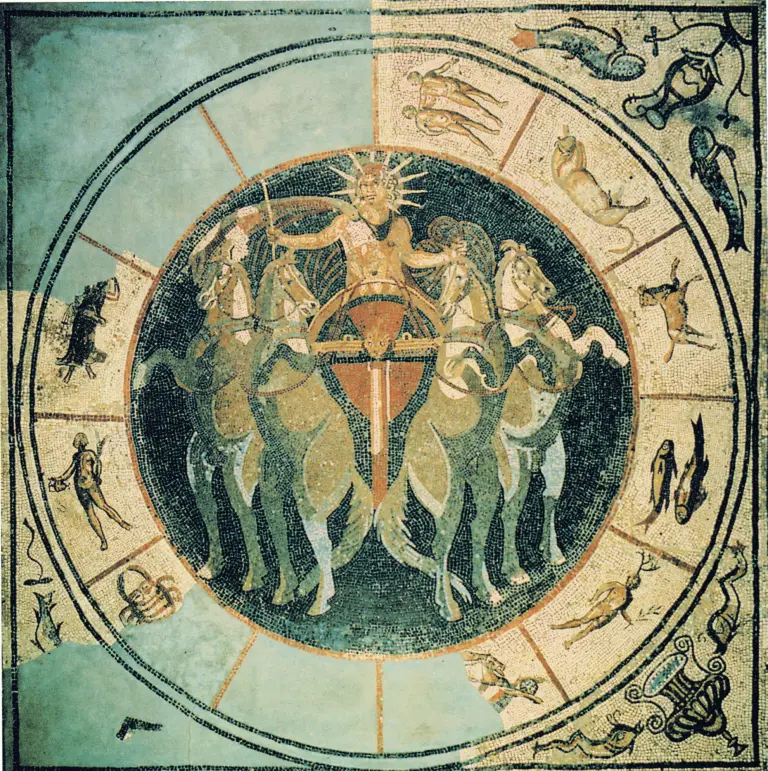
Okay, here is a detailed briefing document summarizing the main themes and important ideas from the provided excerpts of Aleister Crowley’s “Konx Om Pax”: The text is available in the library.
Briefing Document: Aleister Crowley’s Konx Om Pax
Overview:
Konx Om Pax is a collection of essays and stories by Aleister Crowley that explores themes of truth, illusion, morality, and spiritual awakening through a unique and often provocative lens. Crowley utilizes diverse forms including allegorical tales, philosophical dialogues, and poetic expressions. The work is characterized by a rejection of conventional morality and dogma, emphasizing individual experience and the transcendence of dualities. The text is filled with esoteric symbolism and references, including Qabalah, Tarot, and Eastern religions, which serve to illustrate Crowley’s unique worldview. The overall tone is challenging, irreverent, and often satirical, aiming to provoke the reader into a deeper understanding of themselves and the universe.
Main Themes & Key Ideas:
- The Transcendence of Opposites (Konx):
- Central to Crowley’s philosophy is the concept of “Konx,” which represents a state beyond the duality of opposites (A or not-A, good or evil, true or false). He states: “A thing is not necessarily A or not-A. It may be outside the universe of discourse wherein A and not-A exist.”
- This idea is directly tied to the LVX of the Rosicrucians, suggesting an illumination that transcends the limitations of conventional thinking.
- He uses the analogy of spherical trigonometry for those who don’t understand: “But to those who do not, it must (I fear) remain as obscure and ridiculous as spherical trigonometry to the inhabitants of Flatland.”
- The Nature of Truth and Lying:
- Crowley challenges conventional notions of truth, arguing that truth is subjective and dependent on one’s perspective and level of understanding. “Let Mr. Straightforward and Mr. Veracity and Mr. Scorn-to-tell-a-lie and Mr. George Washington Redivivus reflect that there are people in the world with sensoria sighted to a different range from themselves! There is such a thing as a point of view.”
- Lying is not seen as inherently wrong; context and intent are paramount. “If my truth is not the truth of the Divorce Court, it is because my world (thank God!) is not the Divorce Court.”
- Truth is intimately connected to one’s purpose and Work, stating that “This is Truth, that one should be concerned with one’s own business, and with nothing else whatever.”
- He stresses that the Adept, through their advanced perception, might appear to lie to those of a lower consciousness: “Know that the greater the Adept, the more truthful; should he—in error—speak, the more must he appear a liar to those of his fellows who hear his voice.”
- Rejection of Conventional Morality & Dogma:
- The text is highly critical of organized religion and traditional morality, often depicting them as hypocritical or ignorant. He satirizes people: “St. Paul spoke up on the Hill of Mars To the empty-headed Athenians; But I would rather talk to the stars Than to empty-headed Athenians…”
- He attacks the “pedant” with his “Scylla of Ay and the Charybdis of Nay,” and advocates for “infinite skepsis”: “Do not defend thy Christ; attack the place of thine opponent; challenge all his premisses, dispute the validity of his most deepest axioms, impugn his sanity, doubt his existence!”
- He advocates for the breaking of conventional rules: “As above so beneath! said Hermes the thrice greatest. The laws of the physical world are precisely paralleled by those of the moral and intellectual sphere. To the prostitute I prescribe a course of training by which she shall comprehend the holiness of sex.”
- The Path to Illumination (The Great Work):
- Spiritual enlightenment is not achieved through passive faith but through active engagement with the self and the world.
- He talks about the need for action, such as in the allegorical tale The Wake World, as opposed to simply dreaming or passively playing: “The difference is that we are going through. Most people play without a purpose; if you are travelling it is all right, and play makes the journey seem shorter.”
- This journey involves confronting and integrating the shadow self and the “pairs of opposites” to reach a state of union with the Divine, an idea he refers to as “Samadhi.”
- Individualism and Self-Reliance:
- The texts repeatedly emphasize the importance of individual will, challenging readers to follow their own path, rather than conforming to societal pressures.
- He uses the idea of a personal “True Will”: “The Kingdom of Heaven is like unto the Man in the Moon,” suggesting each person is looking at things through their unique individual experience.
- The poem The Symbolists emphasizes the unique nature of individual paths to enlightenment: “To yourselves be slaves and masters; stand or fall to self alone; Human ethics will not loosen our Astarte’s crimson zone. You will never fit your forehead with your father’s fancy hats: You know more about salvation that the Reverend Robert Rats.”
- The Nature of Reality as Illusion (Maya):
- The text suggests that reality as perceived by most people is a construct, an “illusory veil of the Indicible Arcanum.”
- This idea is explored through his critique of language and the limitations of human perception. He writes, “If all’s illusion, gentle youth, All is the enemy of Truth.” and then responds: “I do not think you prove it quite That truth and lies are opposite.”
- This also includes the idea of understanding that the world and everything in it is “Maya”, an illusion in this context: “Mr. Jones, said the doctor, is (on this illusory plane of Maya) one of the wonders of the world. He is never seen or heard, felt or smelt. Nor hath he been at any time tasted of any.”
Specific Examples & Notable Passages
- “The Wake World”: This allegorical tale is a journey through different states of consciousness, filled with symbolic imagery that can be linked to Qabalistic and alchemical concepts. The protagonist Lola’s journey through the palace illustrates the spiritual path, with each “House” representing a different level of understanding and initiation, and challenges her ideas of the nature of truth: “…really only the First House where his Father lived was really a wake-House, all the others had a little sleep-House about them, and the further you got the more awake you were, and began to know just how much was dream and how much wake.”
- “Ali Sloper; or, The Forty Liars”: This section utilizes a satirical dramatic format to explore the nature of truth and falsehood through the dialogues of various characters. It explores the problem of language and the limitations of conventional definitions in a humorous way. “Listen to the Jataka, O child of wonder and the innocent eyes, and if you yell you will be deposited in the coal-hole.”
- The Poem “Ovariotomy”: This poem reflects Crowley’s exploration of bodily experience and the nature of truth through the lens of the physical body. It challenges conventional notions of what is beautiful or grotesque, and posits that the experience itself, with all its flaws, has value in itself: “O fool! to deem dissection truth And paint and patches but a blind! The enthusiasm of a youth Is worth the sage and cynic mind.”
- The Poem “The Return of Messalina”: This poem pushes back on Christian values, and shows that even in supposed “sin”, the person can be considered a hero: “Hear the roar of after aeons that acclaim me Messaline!”
- The recurring theme of “There is none other God than He”: This chant, delivered from varied sources (including the Devil himself), suggests a pantheistic vision where all things are expressions of a single divine source. It emphasizes the unity behind apparent duality: “The riddle’s simple—here’s the key! There is none other God than He.”
- The Story of the Suspicious Earl: This tale illustrates the dangers of fixed ideas and interpretations, showing that they are self-created prisons. It makes the point that “Every one must trust somebody.”
Conclusion:
Konx Om Pax is a complex and challenging text that demands active engagement from the reader. Crowley’s ideas, often presented in a provocative and satirical manner, aim to dismantle conventional thinking and encourage a more individual and experiential approach to understanding life and the universe. The text is an exploration of the nature of truth and reality itself, urging the reader to question their own assumptions and to seek enlightenment by embracing the entirety of human experience, transcending perceived polarities. It’s a call to action, encouraging the reader to embrace their “True Will,” and to walk their own path towards spiritual realization.